Chen Shanshan, Peng Anghui, Chen Muhe, Zhan Meixiao
Zhuhai Interventional Medical Center, Zhuhai Precision Medical Center, Zhuhai People's Hospital, Zhuhai Hospital Affiliated with Jinan University, Jinan University, Zhuhai, China.
Guangdong Provincial Key Laboratory of Tumor Interventional Diagnosis and Treatment, Zhuhai Institute of Translational Medicine, Zhuhai People's Hospital Affiliated with Jinan University, Jinan University, Zhuhai, China.
Front Oncol. 2023 Jan 18;12:1093240. doi: 10.3389/fonc.2022.1093240. eCollection 2022.
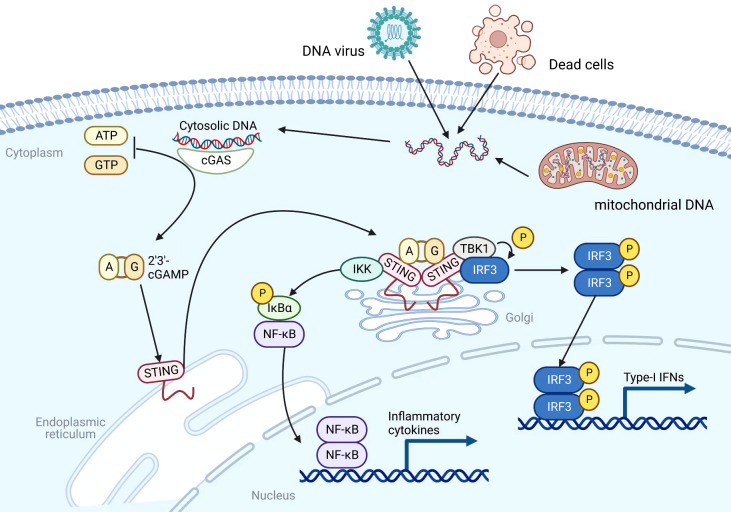
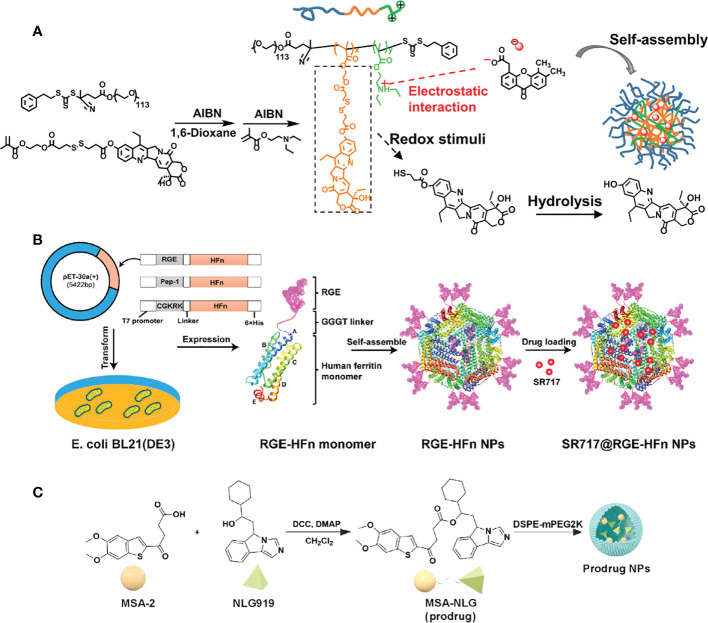
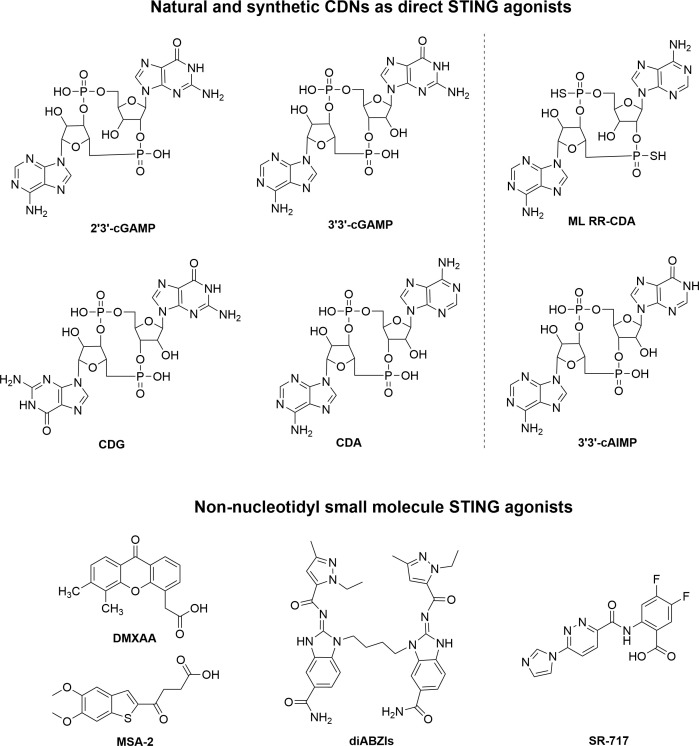
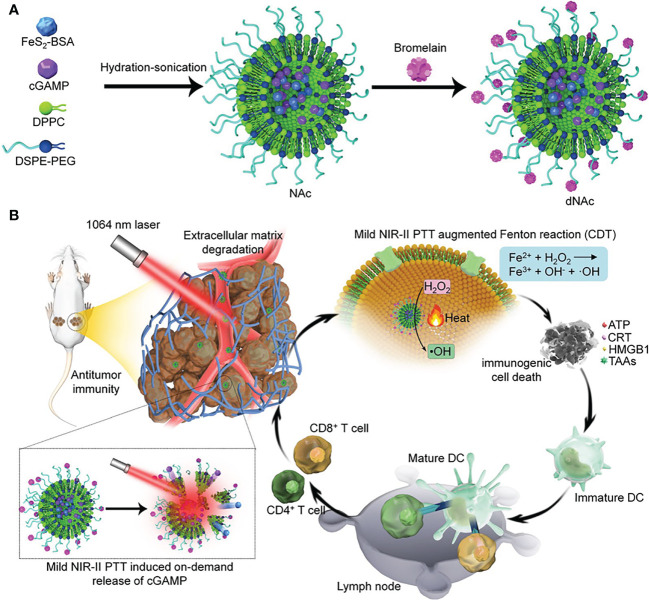
Immunotherapy has greatly enhanced the effectiveness of cancer treatments, but the efficacy of many current immunotherapies is still limited by the tumor-suppressive immune microenvironment. Multiple studies have shown that activating the stimulation of IFN genes (STING) pathway and inducing innate immunity can significantly impact the tumor immune microenvironment and improve antitumor therapy. While natural or synthetic STING agonists have been identified or developed for preclinical and clinical use, small molecule agonists have limited utility due to degradation and lack of targeting. As such, the delivery and release of STING agonists into tumor tissue is a major challenge that must be addressed in order to further advance the use of STING agonists. To address this challenge, various nanomedicines have been developed. In this paper, we concisely review the antitumor immunotherapeutic mechanisms of STING agonists, highlighting the latest developments in STING agonists and the current progress of nanomedicines for activating STING. We classify the different nanomedicines according to the STING agonists they utilize in order to facilitate understanding of recent advances in this field. Finally, we also discuss the prospects and challenges of this field.
免疫疗法极大地提高了癌症治疗的有效性,但目前许多免疫疗法的疗效仍受到肿瘤抑制性免疫微环境的限制。多项研究表明,激活干扰素基因刺激(STING)通路并诱导先天免疫可显著影响肿瘤免疫微环境并改善抗肿瘤治疗。虽然已经鉴定或开发了天然或合成的STING激动剂用于临床前和临床应用,但小分子激动剂由于降解和缺乏靶向性而效用有限。因此,将STING激动剂递送至肿瘤组织并使其释放是进一步推进STING激动剂应用必须解决的主要挑战。为应对这一挑战,已开发出各种纳米药物。在本文中,我们简要回顾了STING激动剂的抗肿瘤免疫治疗机制,重点介绍了STING激动剂的最新进展以及用于激活STING的纳米药物的当前进展。我们根据它们所使用的STING激动剂对不同的纳米药物进行分类,以便于理解该领域的最新进展。最后,我们还讨论了该领域的前景和挑战。