Department of Medicine and Biosystemic Sciences, Kyushu University Graduate School of Medicine, Fukuoka, Japan.
Center for Cellular and Molecular Medicine, Kyushu University Hospital, Fukuoka, Japan.
Blood Adv. 2023 May 23;7(10):2053-2065. doi: 10.1182/bloodadvances.2022008405.
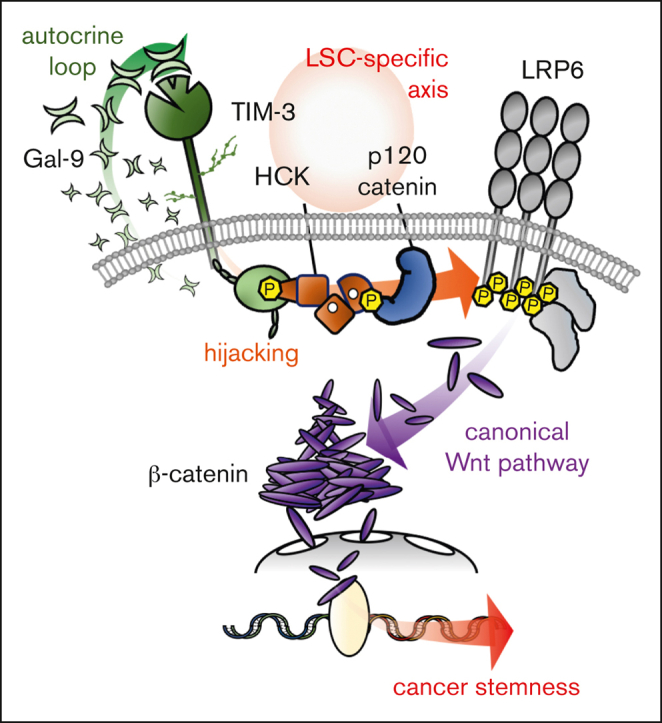
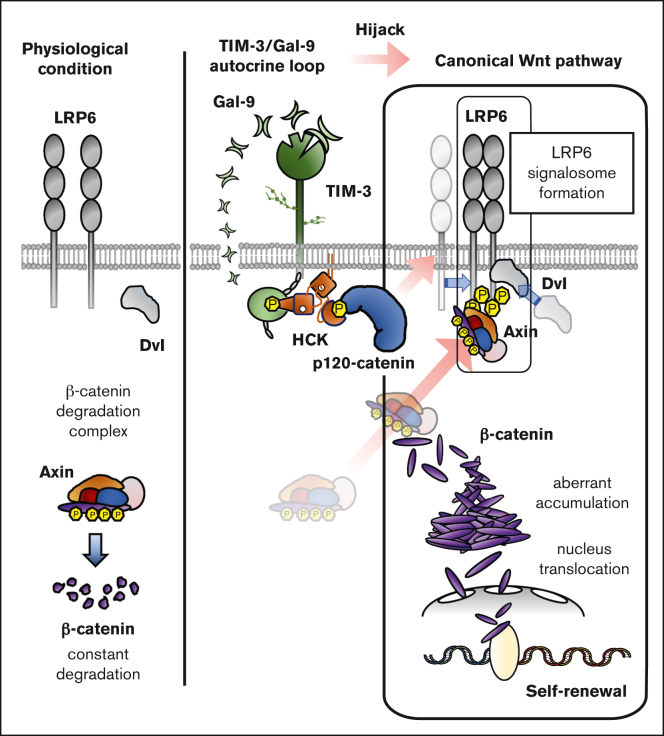
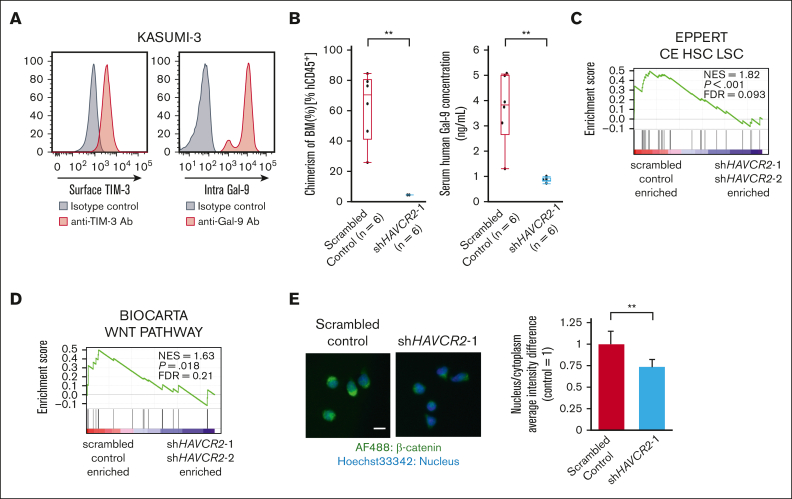
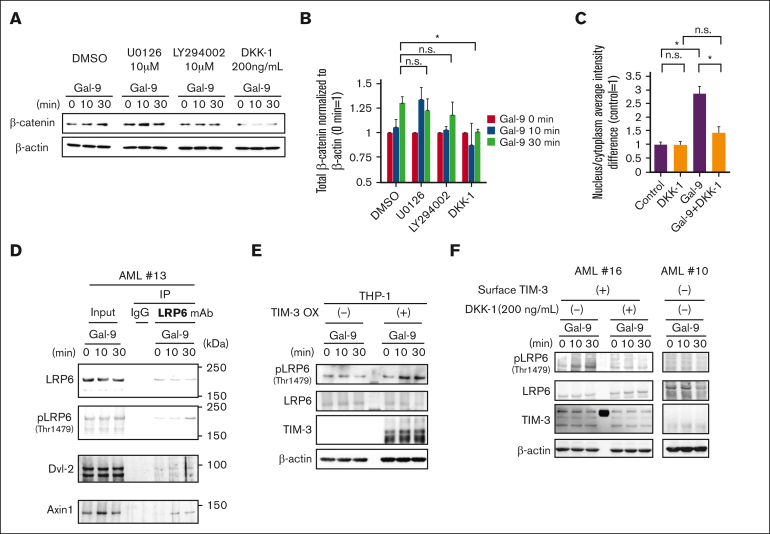
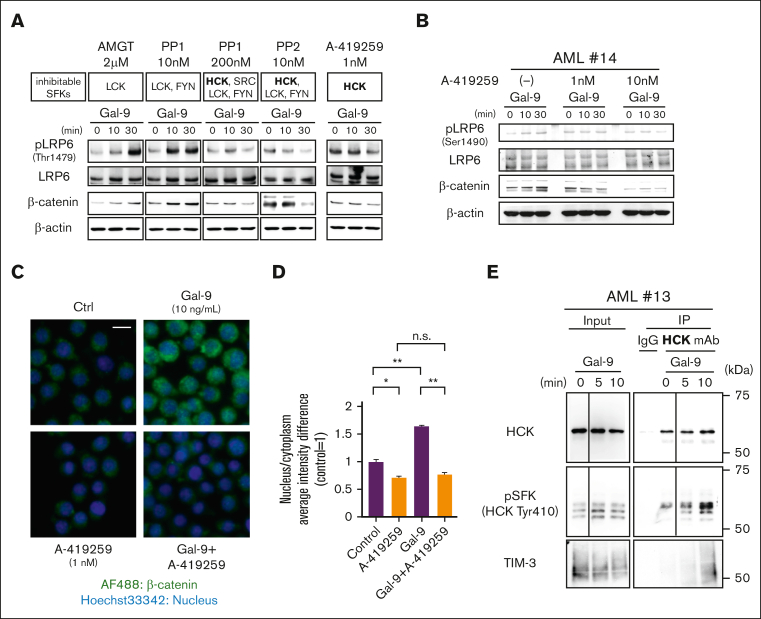
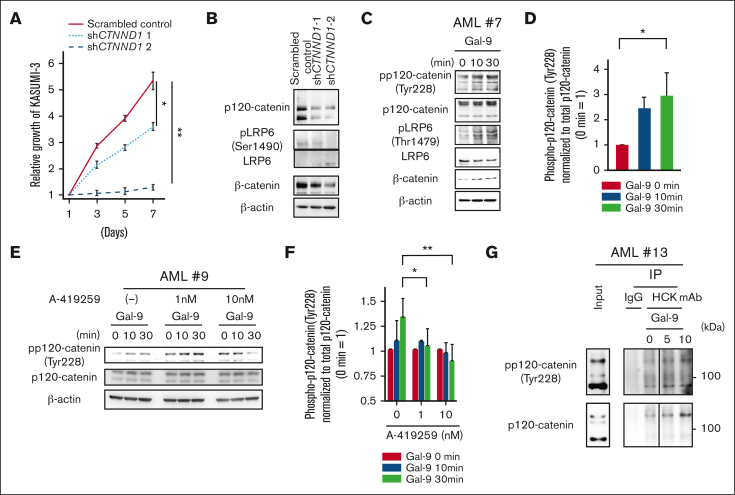
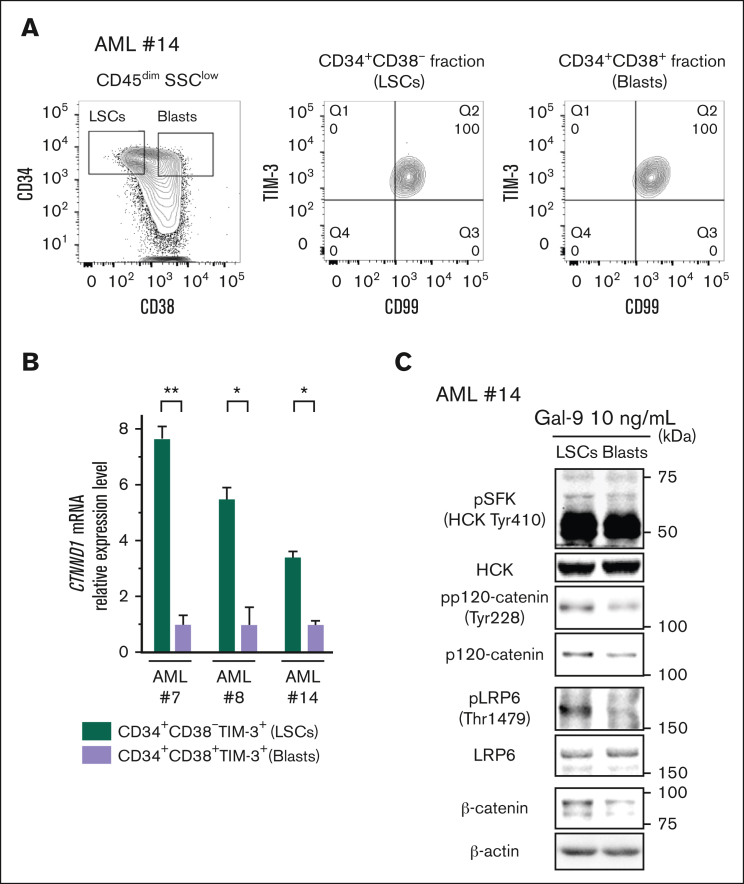
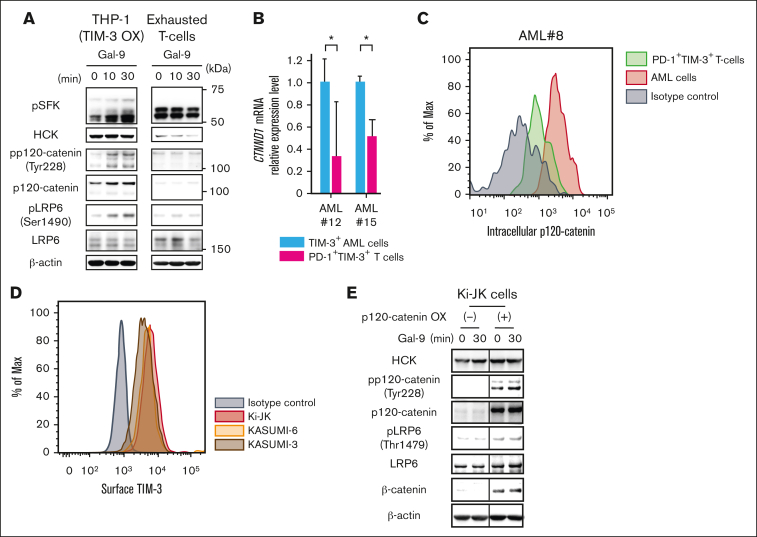
The activation of β-catenin plays critical roles in normal stem cell function, and, when aberrantly activated, the maintenance and enhancement of cancer stemness in many solid cancers. Aberrant β-catenin activation is also observed in acute myeloid leukemia (AML), and crucially contributes to self-renewal and propagation of leukemic stem cells (LSCs) regardless of mutations in contrast with such solid tumors. In this study, we showed that the AML-specific autocrine loop comprised of T-cell immunoglobulin mucin-3 (TIM-3) and its ligand, galectin-9 (Gal-9), drives the canonical Wnt pathway to stimulate self-renewal and propagation of LSCs, independent of Wnt ligands. Gal-9 ligation activates the cytoplasmic Src homology 2 domain of TIM-3 to recruit hematopoietic cell kinase (HCK), a Src family kinase highly expressed in LSCs but not in HSCs, and HCK phosphorylates p120-catenin to promote formation of the LDL receptor-related protein 6 (LRP6) signalosome, hijacking the canonical Wnt pathway. This TIM-3/HCK/p120-catenin axis is principally active in immature LSCs compared with TIM-3-expressed differentiated AML blasts and exhausted T cells. These data suggest that human AML LSCs constitutively activates β-catenin via autocrine TIM-3/HCK/p120-catenin signaling, and that molecules related to this signaling axis should be critical targets for selective eradication of LSCs without impairing normal HSCs.
β-catenin 的激活在正常干细胞功能中起着关键作用,而在许多实体瘤中,当异常激活时,它维持和增强了癌症干细胞的特性。异常的 β-catenin 激活也在急性髓细胞白血病 (AML) 中观察到,并且与这种实体瘤不同,它对白血病干细胞 (LSCs) 的自我更新和增殖至关重要,无论是否存在突变。在这项研究中,我们表明由 T 细胞免疫球蛋白粘蛋白-3 (TIM-3) 和其配体半乳糖凝集素-9 (Gal-9) 组成的 AML 特异性自分泌环驱动经典 Wnt 途径刺激 LSCs 的自我更新和增殖,而不依赖于 Wnt 配体。Gal-9 结合激活 TIM-3 的细胞质Src 同源 2 结构域,募集造血细胞激酶 (HCK),这是一种在 LSCs 中高度表达但不在 HSCs 中表达的Src 家族激酶,HCK 磷酸化 p120-catenin 以促进 LDL 受体相关蛋白 6 (LRP6) 信号体的形成,劫持经典 Wnt 途径。与表达 TIM-3 的分化 AML blasts 和耗尽的 T 细胞相比,该 TIM-3/HCK/p120-catenin 轴主要在不成熟的 LSCs 中活跃。这些数据表明,人类 AML LSCs 通过自分泌 TIM-3/HCK/p120-catenin 信号通路持续激活 β-catenin,并且与该信号通路相关的分子应该是选择性消除 LSCs 而不损害正常 HSCs 的关键靶标。