Saeedifar Amir Mohammad, Ghorban Khodayar, Ganji Ali, Mosayebi Ghasem, Gholami Mohammad, Dadmanesh Maryam, Rouzbahani Negin Hosseini
Department of Medical Immunology, Faculty of Medicine, Aja University of Medical Sciences, Tehran, Iran.
Infectious Diseases Research Center, Aja University of Medical Sciences, Tehran, Iran.
Gene Rep. 2023 Jun;31:101747. doi: 10.1016/j.genrep.2023.101747. Epub 2023 Feb 2.
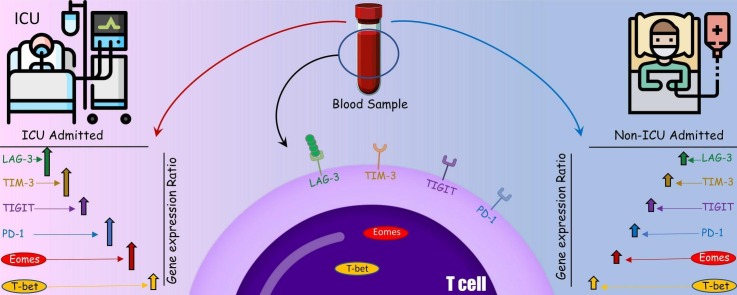
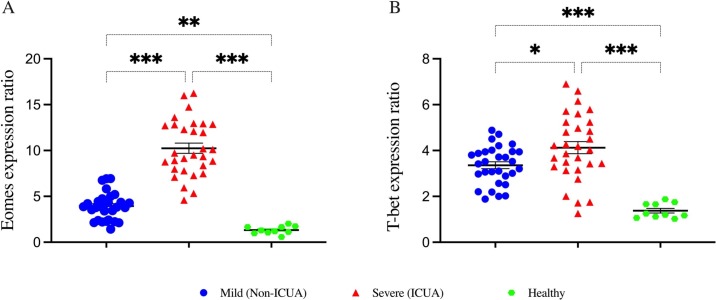
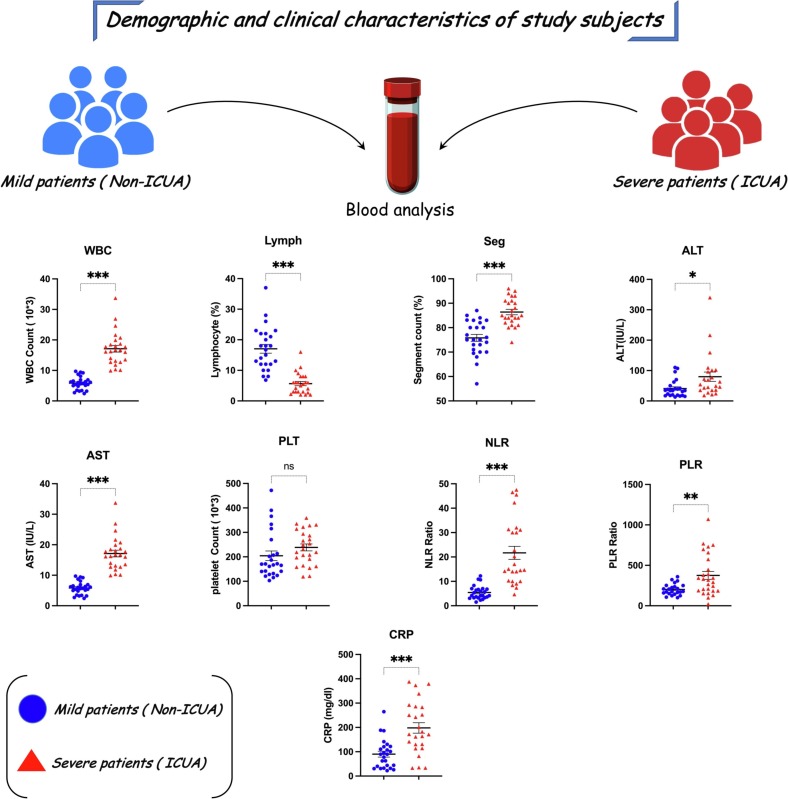
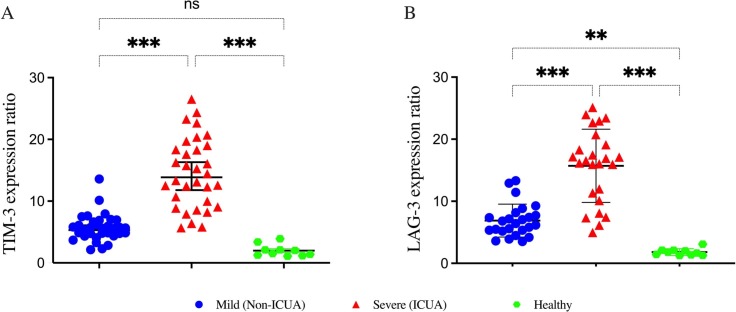
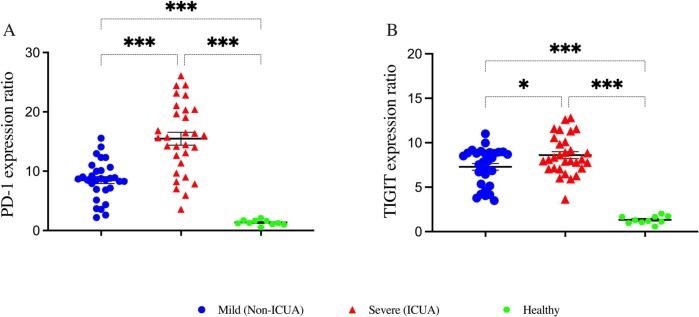
During viral infections, especially Covid-19, Tcell exhaustion plays a crucial role in reducing the activity of lymphocytes and the immune system's antiviral activities. This research aimed to investigate the co-inhibitory receptors and transcription factors involved in the Tcell exhaustion process in ICU-admitted (ICUA) compared to non-ICU admitted (non-ICUA) Covid-19 patients. A total of 60 Covid-19 patients (30 patients in the severe group who were admitted in the ICU (ICUA) and 30 patients in the mild group who were admitted in departments other than the ICU (non-ICUA)) and 10 healthy individuals were included in this study. Laboratory tests and the level of gene expressions related to 4 inhibitory co-receptors, including LAG-3, TIM-3, TIGIT, PD-1, and T-bet and Eomes transcription factors involved in the process of Tcell exhaustion in severe and mild patients of Covid-19 were investigated. The results showed lymphopenia and an increase in other hematologic laboratory factors such as NLR, PLR, CRP, ALT, and AST in people with a severe form of the disease (ICUA) compared to mild groups (non-ICUA) (P < 0.001). Furthermore, a significant increase in 3 co-inhibitory receptors, TIM-3, LAG-3, and PD-1, was observed in severe patients compared to mild and healthy people (P < 0.001). An increase in TIGIT gene expression was lesser than the other three mentioned receptors (P < 0.05). Concerning the transcription factors, we observed a significant increase in Eomes in ICUA patients compared to the non-ICUA group (P < 0.001), and this increment in T-bet gene expression was minor compared to Eomes (P < 0.05). In conclusion, Patients with a severe form of acute respiratory syndrome coronavirus 2 (SARS-CoV-2) represented a higher level of gene expressions in terms of co-inhibitory receptors and transcription factors involved in the T cell exhaustion process.
在病毒感染期间,尤其是新冠病毒感染期间,T细胞耗竭在降低淋巴细胞活性和免疫系统的抗病毒活性方面起着关键作用。本研究旨在调查与入住重症监护病房(ICU)的新冠患者(ICUA)相比,未入住ICU的新冠患者(非ICUA)中参与T细胞耗竭过程的共抑制受体和转录因子。本研究共纳入60例新冠患者(30例为重症组,入住ICU(ICUA);30例为轻症组,入住ICU以外的科室(非ICUA))和10名健康个体。对与4种抑制性共受体相关的实验室检查和基因表达水平进行了研究,这些共受体包括LAG-3、TIM-3、TIGIT、PD-1,以及参与新冠重症和轻症患者T细胞耗竭过程的T-bet和Eomes转录因子。结果显示,与轻症组(非ICUA)相比,重症患者(ICUA)出现淋巴细胞减少,且其他血液学实验室指标如中性粒细胞与淋巴细胞比值(NLR)、血小板与淋巴细胞比值(PLR)、C反应蛋白(CRP)、谷丙转氨酶(ALT)和谷草转氨酶(AST)升高(P<0.001)。此外,与轻症患者和健康人相比,重症患者中3种共抑制受体TIM-3、LAG-3和PD-1显著增加(P<0.001)。TIGIT基因表达的增加低于其他三种上述受体(P<0.05)。关于转录因子,我们观察到ICUA患者的Eomes较非ICUA组显著增加(P<0.001),且T-bet基因表达的增加幅度与Eomes相比很小(P<0.05)。总之,重症急性呼吸综合征冠状病毒2(SARS-CoV-2)患者在参与T细胞耗竭过程的共抑制受体和转录因子方面表现出更高水平的基因表达。