The First Clinical Medical School, Henan University of Chinese Medicine, Zhengzhou, China.
Department of Neuroscience, The First Affiliated Hospital of Henan University of Chinese Medicine, Zhengzhou, China.
Medicine (Baltimore). 2023 Feb 3;102(5):e32661. doi: 10.1097/MD.0000000000032661.
Research on reflexology therapy for multiple sclerosis (MS) is limited, and the evaluation is mixed. Our aim is to confirm the efficacy of reflexology therapy for MS.
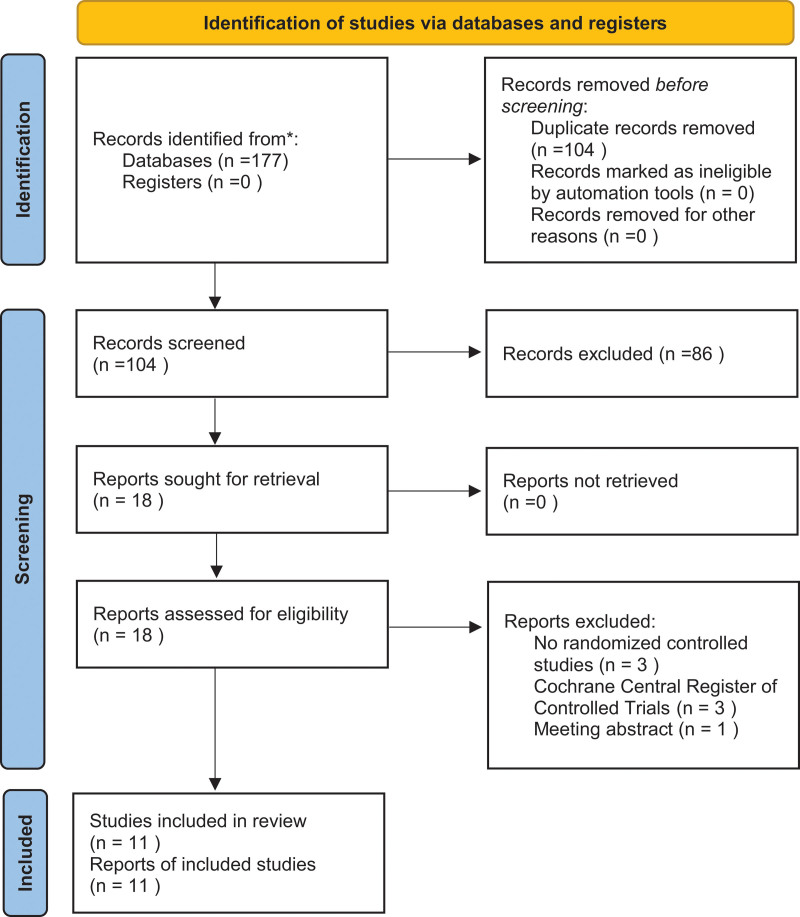
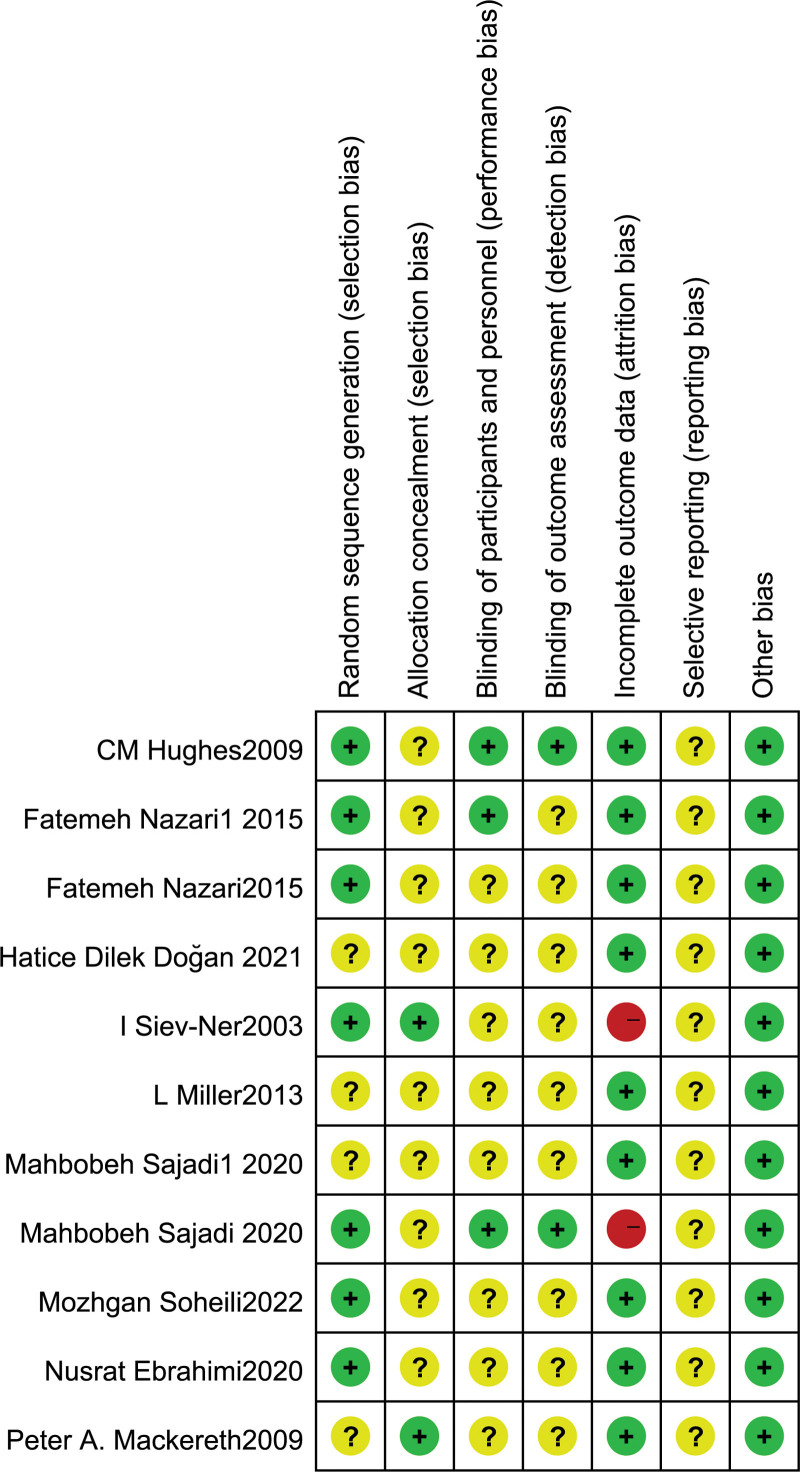
The preferred reporting items for systematic reviews and meta-analyses guidelines were followed. The search strategy was conducted in PubMed, Embase, the Cochrane Library, and the Science Citation Index. The quality of the included trials was assessed by the Cochrane Handbook. The main results were summarized and analyzed in RevMan 5.4.
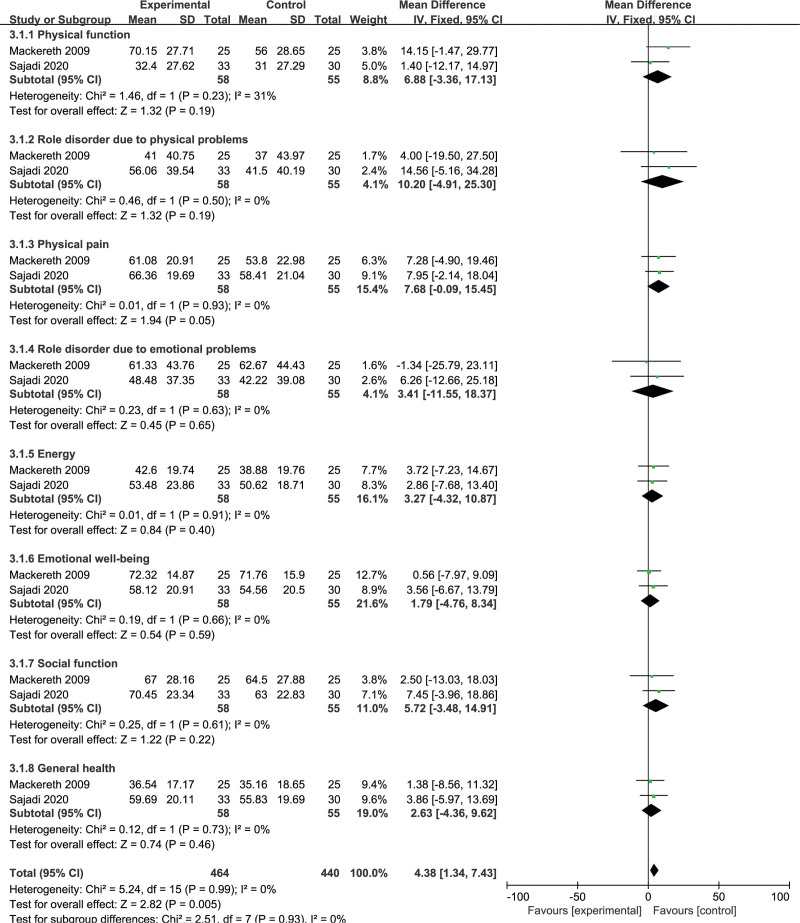
A total of 11 studies were included in the final analysis. There were significant differences [mean difference (MD) -0.90, 95% confidence interval (CI) -1.37 to -0.43, heterogeneity I2 = 0%] between the Precision Reflexology and Sham Reflexology groups in visual analogue scale pain. There was a significant difference (MD -1.00, 95% CI -1.42 to -0.58, heterogeneity I2 = 93%) between the Precision Reflexology and Sham Reflexology groups on the fatigue severity scale. There was no difference between the Precision Reflexology and Sham Reflexology groups in physical function (MD 6.88, 95% CI -3.36 to 17.13, heterogeneity I2 = 31%), role disorder due to physical problems (MD 10.20, 95% CI -4.91 to 25.30, heterogeneity I2 = 0%), physical pain (MD 7.68, 95% CI -0.09 to 15.45, heterogeneity I2 = 0%), role disorder due to emotional problems (MD 3.41, 95% CI -11.55 to 18.37, heterogeneity I2 = 0%), energy (MD 3.27, 95% CI -4.32 to 10.87, heterogeneity I2 = 0%), emotional well-being (MD 1.79, 95% CI -4.76 to 8.34, heterogeneity I2 = 0%), social function (MD 5.72, 95% CI -3.48 to 14.91, heterogeneity I2 = 0%), or general health (MD 2.63, 95% CI -4.36 to 9.62, heterogeneity I2 = 0%).
Reflexology therapy can be used as an effective intervention for the pain and fatigue of MS patients while improving the quality of life.
反射疗法治疗多发性硬化症(MS)的研究有限,评价结果不一。我们旨在证实反射疗法治疗 MS 的疗效。
遵循系统评价和荟萃分析首选报告项目的规定。检索策略在 PubMed、Embase、Cochrane 图书馆和科学引文索引中进行。使用 Cochrane 手册评估纳入试验的质量。使用 RevMan 5.4 汇总和分析主要结果。
最终分析纳入了 11 项研究。在视觉模拟评分疼痛方面,精准反射疗法组和假反射疗法组之间存在显著差异[均数差值(MD)-0.90,95%置信区间(CI)-1.37 至-0.43,异质性 I2=0%]。在疲劳严重程度量表上,精准反射疗法组和假反射疗法组之间存在显著差异(MD-1.00,95%CI-1.42 至-0.58,异质性 I2=93%)。在身体功能(MD 6.88,95%CI-3.36 至 17.13,异质性 I2=31%)、因身体问题导致的角色障碍(MD 10.20,95%CI-4.91 至 25.30,异质性 I2=0%)、身体疼痛(MD 7.68,95%CI-0.09 至 15.45,异质性 I2=0%)、因情绪问题导致的角色障碍(MD 3.41,95%CI-11.55 至 18.37,异质性 I2=0%)、能量(MD 3.27,95%CI-4.32 至 10.87,异质性 I2=0%)、情绪健康(MD 1.79,95%CI-4.76 至 8.34,异质性 I2=0%)、社会功能(MD 5.72,95%CI-3.48 至 14.91,异质性 I2=0%)或一般健康(MD 2.63,95%CI-4.36 至 9.62,异质性 I2=0%)方面,两组间无差异。
反射疗法治疗可作为 MS 患者疼痛和疲劳的有效干预措施,同时改善生活质量。