Department of Neurology, Memory & Aging Center, Weill Institute for Neurosciences, University of California, San Francisco, California, USA.
Global Brain Health Institute, University of California, San Francisco, California, USA.
Alzheimers Dement. 2023 Aug;19(8):3272-3282. doi: 10.1002/alz.12963. Epub 2023 Feb 7.
Sleep-wake disturbances are a prominent feature of Alzheimer's disease (AD). Atypical (non-amnestic) AD syndromes have different patterns of cortical vulnerability to AD. We hypothesized that atypical AD also shows differential vulnerability in subcortical nuclei that will manifest as different patterns of sleep dysfunction.
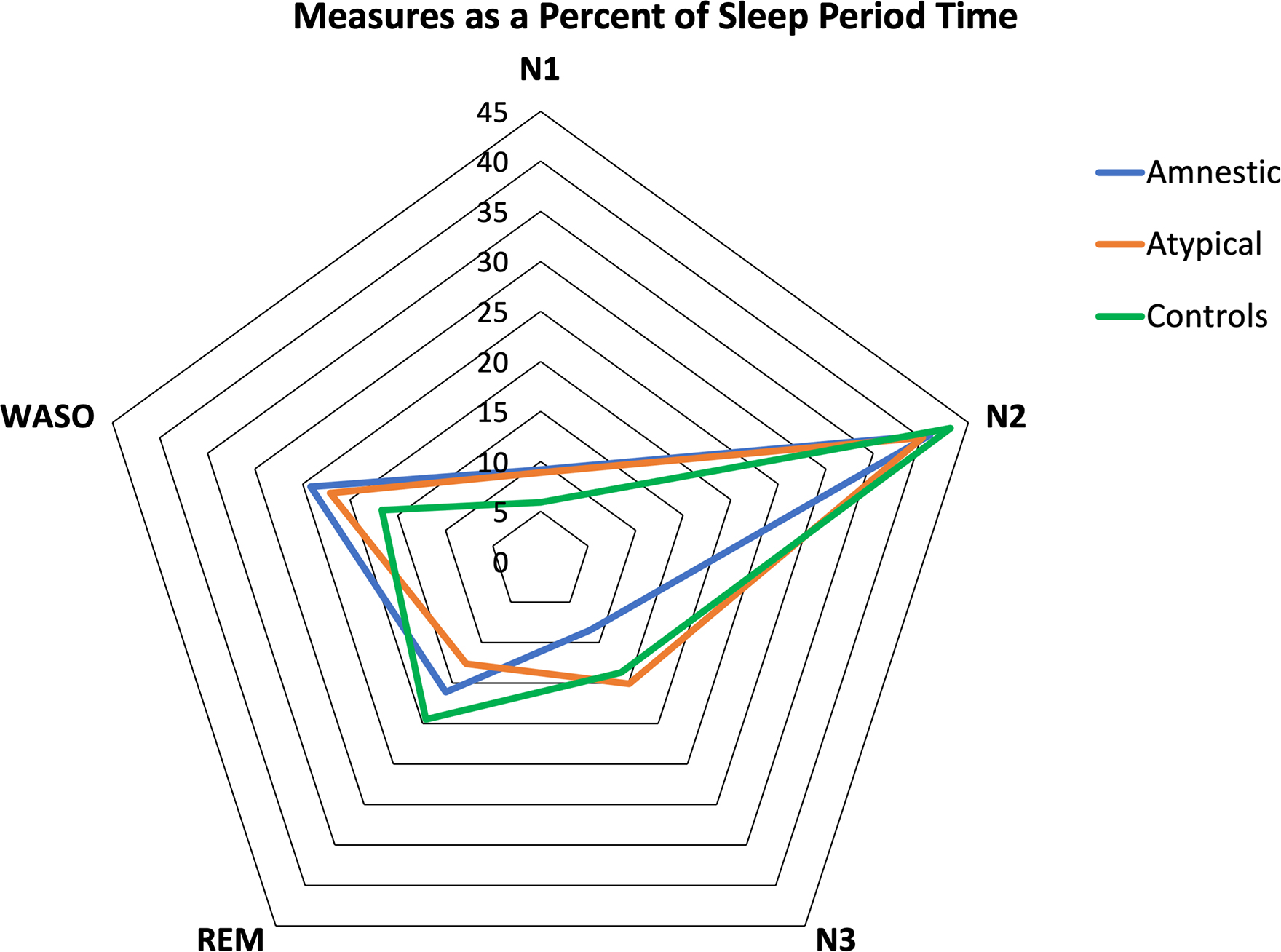
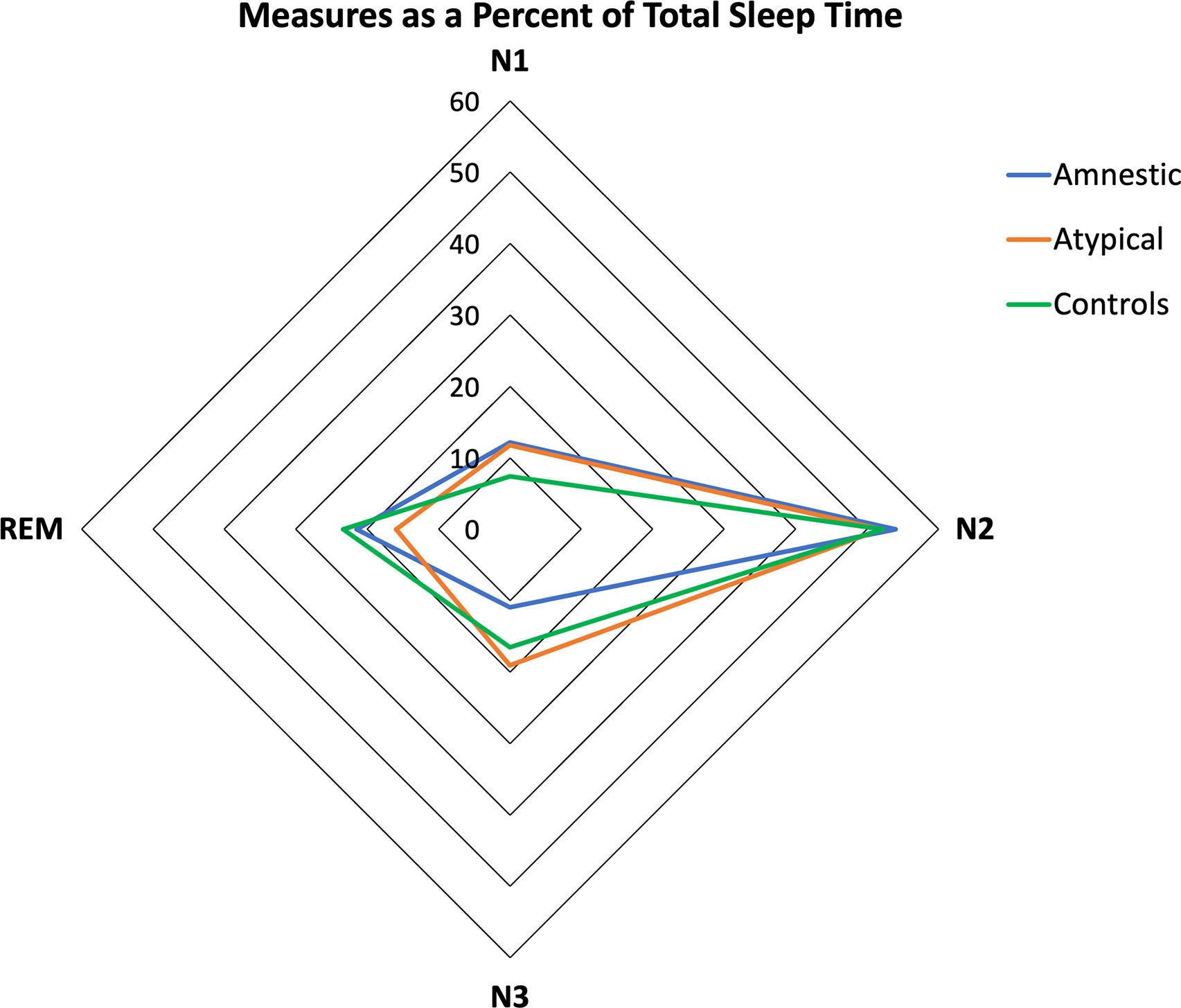
Overnight electroencephalography monitoring was performed on 48 subjects, including 15 amnestic, 19 atypical AD, and 14 controls. AD was defined based on neuropathological or biomarker confirmation. We compared sleep architecture by visual scoring and spectral power analysis in each group.
Overall, AD cases showed increased sleep fragmentation and N1 sleep compared to controls. Compared to atypical AD groups, typical AD showed worse N3 sleep dysfunction and relatively preserved rapid eye movement (REM) sleep.
Results suggest differing effects of amnestic and atypical AD variants on slow wave versus REM sleep, respectively, corroborating the hypothesis of differential selective vulnerability patterns of the subcortical nuclei within variants. Optimal symptomatic treatment for sleep dysfunction in clinical phenotypes may differ.
Alzheimer's disease (AD) variants show distinct patterns of sleep impairment. Amnestic/typical AD has worse N3 slow wave sleep (SWS) impairment compared to atypical AD. Atypical AD shows more rapid eye movement deficits than typical AD. Selective vulnerability patterns in subcortical areas may underlie sleep differences. Relatively preserved SWS may explain better memory scores in atypical versus typical AD.
睡眠-觉醒障碍是阿尔茨海默病(AD)的一个突出特征。非典型(非遗忘型)AD 综合征具有不同的皮质对 AD 易损性模式。我们假设非典型 AD 也表现出不同的皮质下核易损性,表现为不同的睡眠功能障碍模式。
对 48 名受试者进行了整夜脑电图监测,包括 15 名遗忘型、19 名非典型 AD 和 14 名对照。AD 根据神经病理学或生物标志物确认为典型 AD。我们比较了每组的睡眠结构通过视觉评分和频谱功率分析。
总体而言,AD 病例与对照组相比,睡眠碎片化和 N1 睡眠增加。与非典型 AD 组相比,典型 AD 表现出更严重的 N3 睡眠功能障碍和相对保留的快速眼动(REM)睡眠。
结果表明,遗忘型和非典型 AD 变体对慢波与 REM 睡眠的影响不同,这支持了皮质下核变体中存在不同选择性易损性模式的假设。针对不同临床表型的睡眠功能障碍的最佳对症治疗可能有所不同。
AD 变体表现出不同的睡眠障碍模式。遗忘型/典型 AD 与非典型 AD 相比,N3 慢波睡眠(SWS)障碍更严重。非典型 AD 比典型 AD 显示更多的快速眼动缺陷。皮质下区域的选择性易损性模式可能是睡眠差异的基础。相对保留的 SWS 可能解释了非典型 AD 相对于典型 AD 更好的记忆评分。