Department of Cell Biochemistry, Faculty of Biochemistry, Biophysics and Biotechnology, Jagiellonian University, Kraków, Poland.
Department of Biochemistry and Molecular Biology, School of Medicine and the Massey Cancer Center, Virginia Commonwealth University, Richmond, Virginia, USA.
FASEB J. 2023 Mar;37(3):e22798. doi: 10.1096/fj.202201978R.
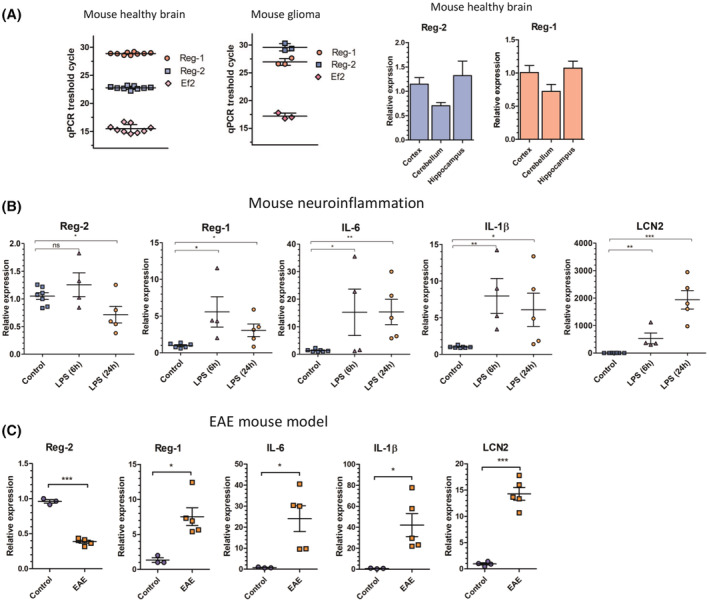
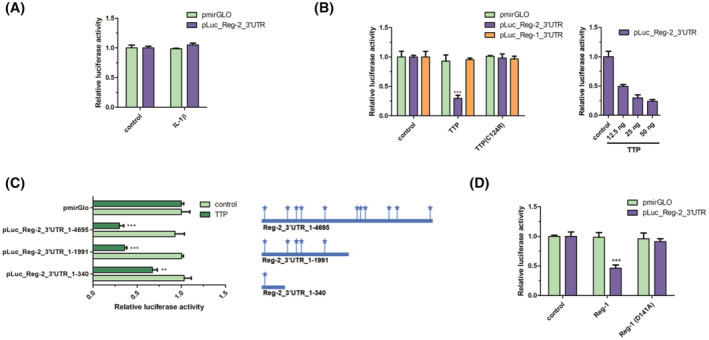
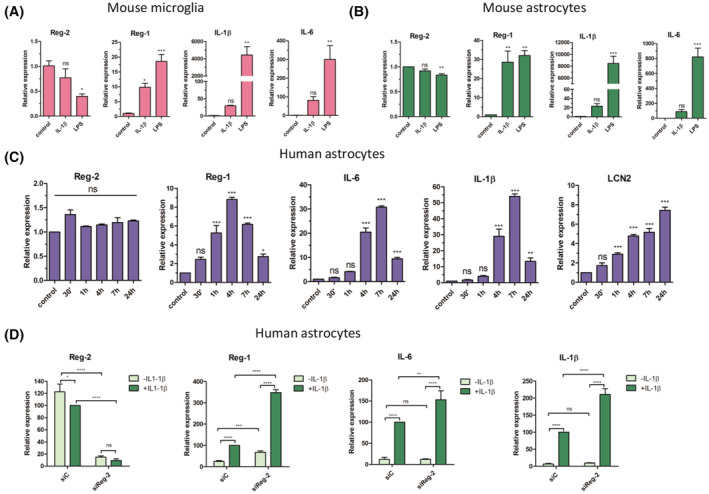
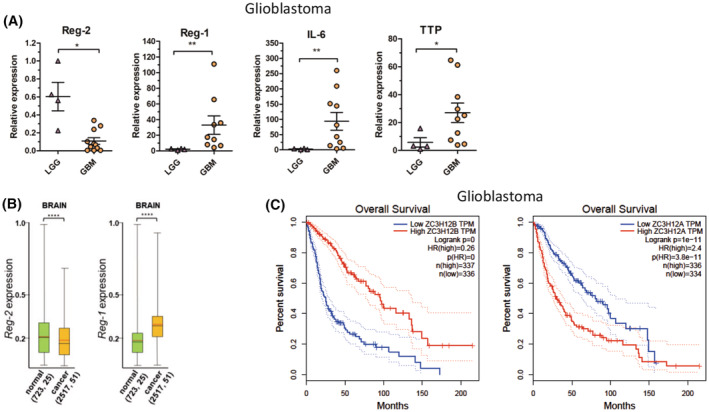
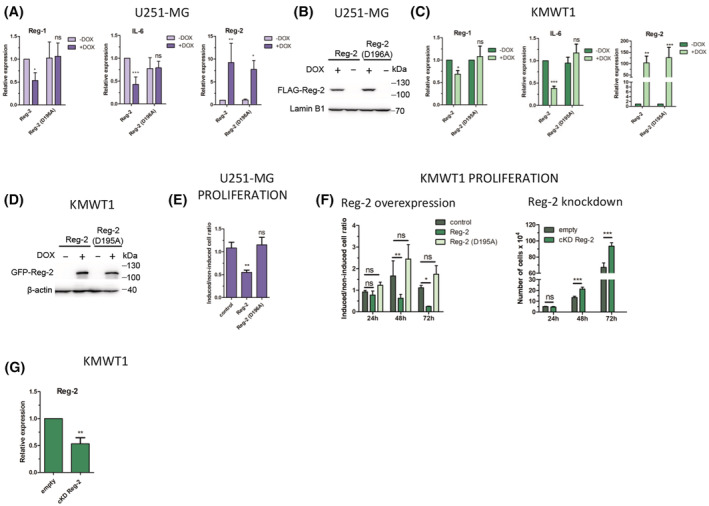
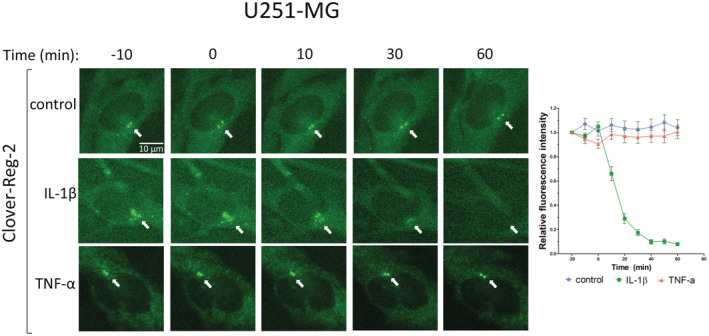
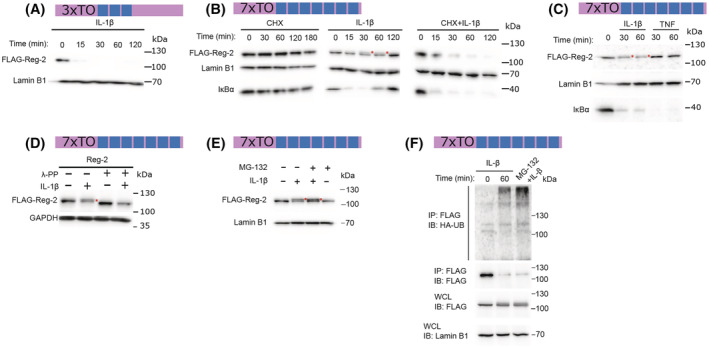
The precise physiological functions and mechanisms regulating RNase Regnase-2 (Reg-2/ZC3H12B/MCPIP2) activity remain enigmatic. We found that Reg-2 actively modulates neuroinflammation in nontransformed cells, including primary astrocytes. Downregulation of Reg-2 in these cells results in increased mRNA levels of proinflammatory cytokines IL-1β and IL-6. In primary astrocytes, Reg-2 also regulates the mRNA level of Regnase-1 (Reg-1/ZC3H12A/MCPIP1). Reg-2 is expressed at high levels in the healthy brain, but its expression is reduced during neuroinflammation as well as glioblastoma progression. This process is associated with the upregulation of Reg-1. Conversely, overexpression of Reg-2 is accompanied by the downregulation of Reg-1 in glioma cells in a nucleolytic NYN/PIN domain-dependent manner. Interestingly, low levels of Reg-2 and high levels of Reg-1 correlate with poor-glioblastoma patients' prognoses. While Reg-2 restricts the basal levels of proinflammatory cytokines in resting astrocytes, its expression is reduced in IL-1β-activated astrocytes. Following IL-1β exposure, Reg-2 is phosphorylated, ubiquitinated, and degraded by proteasomes. Simultaneously, the Reg-2 transcript is destabilized by tristetraprolin (TTP) and Reg-1 through the AREs elements and conservative stem-loop structure present in its 3'UTR. Thus, the peer-control loop, of Reg-1 and Reg-2 opposing each other, exists. The involvement of TTP in Reg-2 mRNA turnover is confirmed by the observation that high TTP levels correlate with the downregulation of the Reg-2 expression in high-grade human gliomas. Additionally, obtained results reveal the importance of Reg-2 in inhibiting human and mouse glioma cell proliferation. Our current studies identify Reg-2 as a critical regulator of homeostasis in the brain.
Regnase-2(Reg-2/ZC3H12B/MCPIP2)的精确生理功能和调控机制仍然是个谜。我们发现 Reg-2 可在非转化细胞(包括原代星形胶质细胞)中主动调节神经炎症。这些细胞中 Reg-2 的下调会导致促炎细胞因子 IL-1β 和 IL-6 的 mRNA 水平升高。在原代星形胶质细胞中,Reg-2 还调节 Regnase-1(Reg-1/ZC3H12A/MCPIP1)的 mRNA 水平。Reg-2 在健康大脑中表达水平较高,但在神经炎症和神经胶质瘤进展过程中其表达降低。这一过程与 Reg-1 的上调有关。相反,Reg-2 的过表达伴随着神经胶质瘤细胞中 Reg-1 的下调,这是一种依赖于核酶 NYN/PIN 结构域的方式。有趣的是,Reg-2 水平低和 Reg-1 水平高与预后不良的胶质母细胞瘤患者相关。Reg-2 在静息星形胶质细胞中限制基础水平的促炎细胞因子,但在 IL-1β 激活的星形胶质细胞中其表达减少。在 IL-1β 暴露后,Reg-2 被磷酸化、泛素化并被蛋白酶体降解。同时,Reg-2 转录本通过 TTP 和 Reg-1 通过 AREs 元件和其 3'UTR 中的保守茎环结构被稳定。因此,Reg-1 和 Reg-2 相互拮抗的对等控制环存在。TTP 在 Reg-2 mRNA 周转中的参与作用通过观察到 TTP 水平高与高级别人类神经胶质瘤中 Reg-2 表达的下调相关而得到证实。此外,研究结果揭示了 Reg-2 在抑制人和小鼠神经胶质瘤细胞增殖中的重要性。我们目前的研究将 Reg-2 确定为大脑内稳态的关键调节因子。