Department of Endocrine and Metabolic Diseases, Shanghai Institute of Endocrine and Metabolic Diseases, Ruijin Hospital, Shanghai Jiao Tong University School of Medicine, 197 Ruijin 2nd Road, Shanghai, 200025, P. R. China.
Shanghai National Clinical Research Center for Metabolic Diseases, Key Laboratory for Endocrine and Metabolic Diseases of the National Health Commission of the PR China, Shanghai National Center for Translational Medicine, Shanghai, 200025, P. R. China.
Adv Sci (Weinh). 2023 Apr;10(12):e2207152. doi: 10.1002/advs.202207152. Epub 2023 Feb 8.
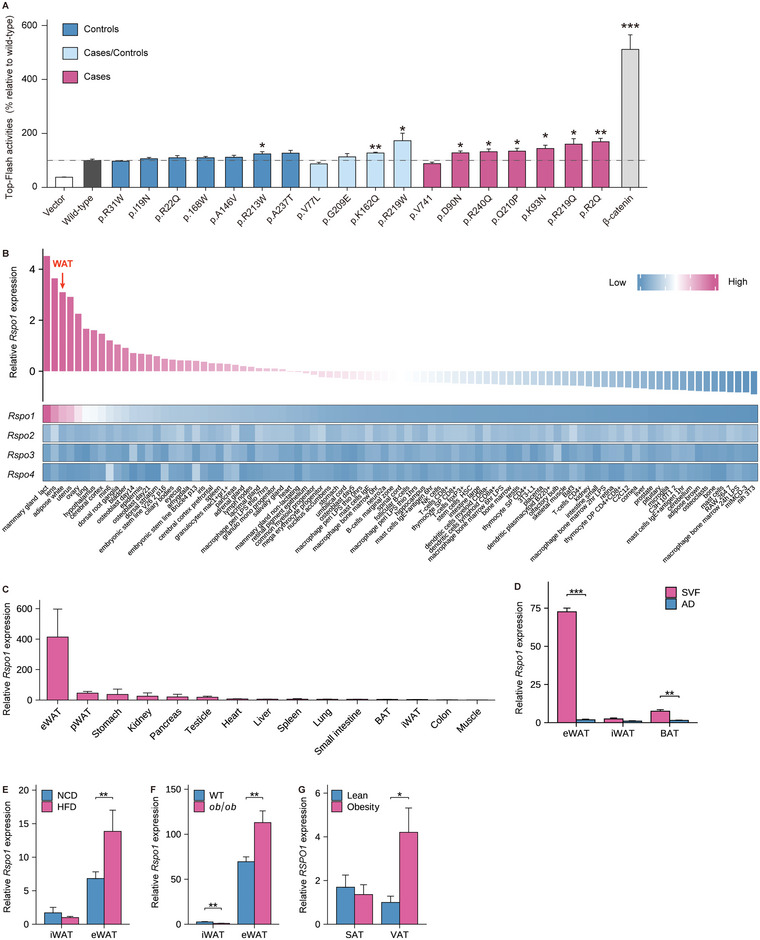
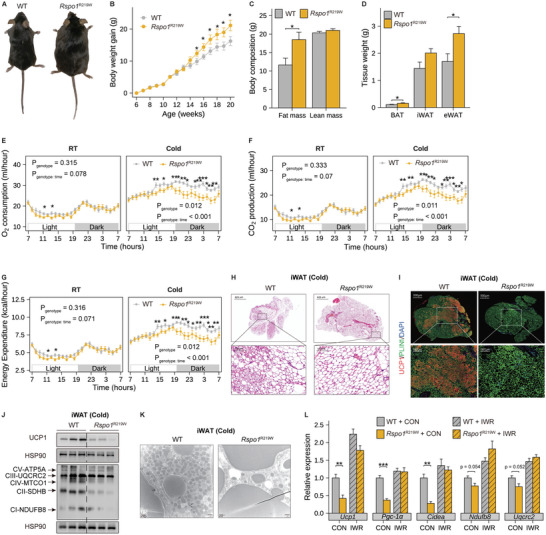
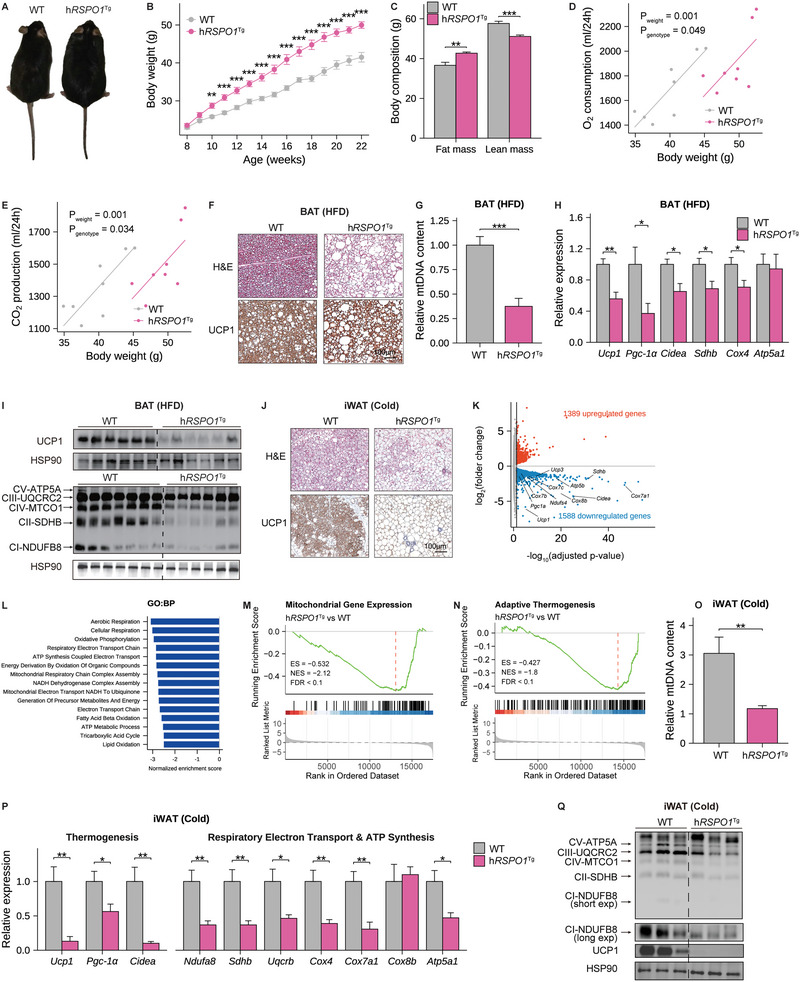
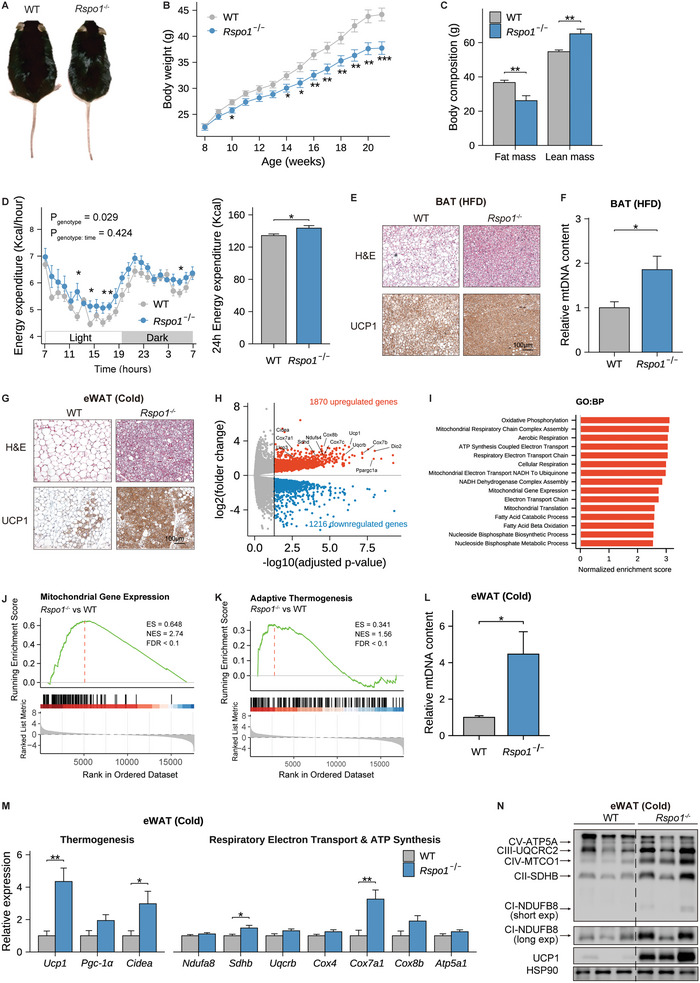
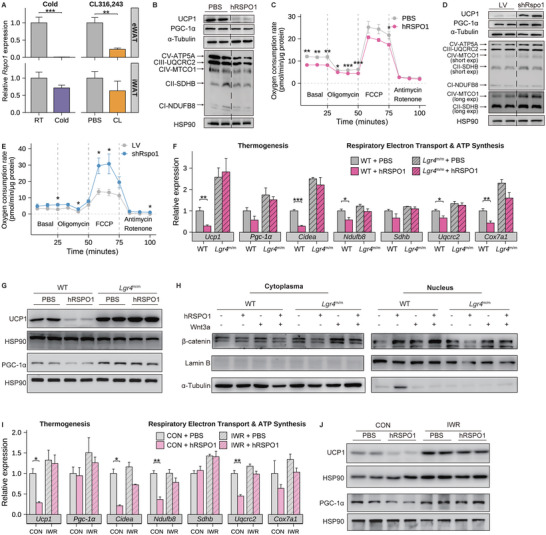
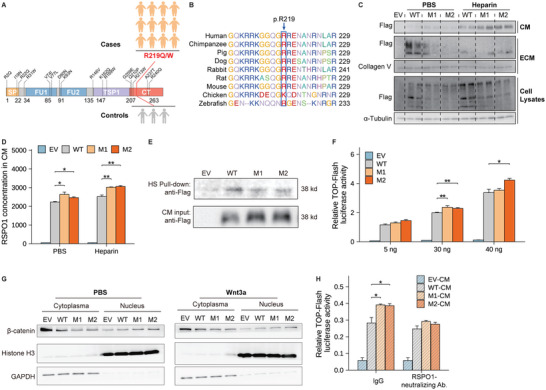
Recent genetic evidence has linked WNT downstream mutations to fat distribution. However, the roles of WNTs in human obesity remain unclear. Here, the authors screen all Wnt-related paracrine factors in 1994 obese cases and 2161 controls using whole-exome sequencing (WES) and identify that 12 obese patients harbor the same mutations in RSPO1 (p.R219W/Q) predisposing to human obesity. RSPO1 is predominantly expressed in visceral fat, primarily in the fibroblast cluster, and is increased with adiposity. Mice overexpressing human RSPO1 in adipose tissues develop obesity under a high-fat diet (HFD) due to reduced brown/beige fat thermogenesis. In contrast, Rspo1 ablation resists HFD-induced adiposity by increasing thermogenesis. Mechanistically, RSPO1 overexpression or administration significantly inhibits adipocyte mitochondrial respiration and thermogenesis via LGR4-Wnt/β-catenin signaling pathway. Importantly, humanized knockin mice carrying the hotspot mutation (p.R219W) display suppressed thermogenesis and recapitulate the adiposity feature of obese carriers. The mutation disrupts RSPO1's electrostatic interaction with the extracellular matrix, leading to excessive RSPO1 release that activates LGR4-Wnt/β-catenin signaling and attenuates thermogenic capacity in differentiated beige adipocytes. Therefore, these findings identify that gain-of-function mutations and excessive expression of RSPO1, acting as a paracrine Wnt activator, suppress fat thermogenesis and contribute to obesity in humans.
最近的遗传证据将 WNT 下游突变与脂肪分布联系起来。然而,WNTs 在人类肥胖中的作用仍不清楚。在这里,作者使用全外显子组测序 (WES) 筛选了 1994 名肥胖病例和 2161 名对照者中的所有 Wnt 相关旁分泌因子,并鉴定出 12 名肥胖患者在 RSPO1 中携带相同的突变(p.R219W/Q),容易发生人类肥胖。RSPO1 主要在内脏脂肪中表达,主要在成纤维细胞簇中表达,并随肥胖而增加。在高脂肪饮食(HFD)下,过表达人 RSPO1 的小鼠由于棕色/米色脂肪产热减少而发展为肥胖。相比之下,Rspo1 缺失通过增加产热来抵抗 HFD 诱导的肥胖。从机制上讲,RSPO1 过表达或给药通过 LGR4-Wnt/β-catenin 信号通路显著抑制脂肪细胞线粒体呼吸和产热。重要的是,携带热点突变(p.R219W)的人源化敲入小鼠显示出抑制产热,并重现肥胖携带者的肥胖特征。该突变破坏了 RSPO1 与细胞外基质的静电相互作用,导致过多的 RSPO1 释放,激活 LGR4-Wnt/β-catenin 信号,并减弱分化的米色脂肪细胞的产热能力。因此,这些发现表明,RSPO1 的功能获得性突变和过度表达,作为旁分泌 Wnt 激活剂,抑制脂肪产热,并导致人类肥胖。