Keogh Alison, Alcock Lisa, Brown Philip, Buckley Ellen, Brozgol Marina, Gazit Eran, Hansen Clint, Scott Kirsty, Schwickert Lars, Becker Clemens, Hausdorff Jeffrey M, Maetzler Walter, Rochester Lynn, Sharrack Basil, Vogiatzis Ioannis, Yarnall Alison, Mazzà Claudia, Caulfield Brian
Insight Centre for Data Analytics, O'Brien Science Centre, University College Dublin, Dublin, Ireland.
School of Public Health, Physiotherapy and Sports Science, University College Dublin, Dublin, Ireland.
Digit Health. 2023 Feb 1;9:20552076221150745. doi: 10.1177/20552076221150745. eCollection 2023 Jan-Dec.
This study aimed to explore the acceptability of a wearable device for remotely measuring mobility in the Mobilise-D technical validation study (TVS), and to explore the acceptability of using digital tools to monitor health.
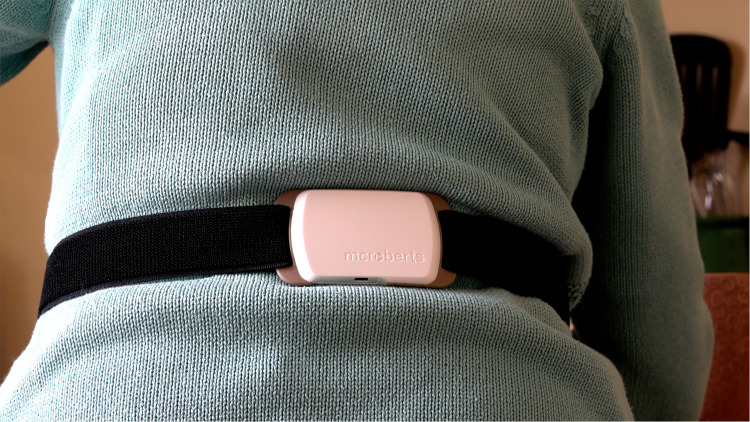
Participants ( = 106) in the TVS wore a waist-worn device (McRoberts Dynaport MM + ) for one week. Following this, acceptability of the device was measured using two questionnaires: The Comfort Rating Scale (CRS) and a previously validated questionnaire. A subset of participants ( = 36) also completed semi-structured interviews to further determine device acceptability and to explore their opinions of the use of digital tools to monitor their health. Questionnaire results were analysed descriptively and interviews using a content analysis.
The device was considered both comfortable (median CRS (IQR; min-max) = 0.0 (0.0; 0-20) on a scale from 0-20 where lower scores signify better comfort) and acceptable (5.0 (0.5; 3.0-5.0) on a scale from 1-5 where higher scores signify better acceptability). Interviews showed it was easy to use, did not interfere with daily activities, and was comfortable. The following themes emerged from participants' as being important to digital technology: altered expectations for themselves, the use of technology, trust, and communication with healthcare professionals.
Digital tools may bridge existing communication gaps between patients and clinicians and participants are open to this. This work indicates that waist-worn devices are supported, but further work with patient advisors should be undertaken to understand some of the key issues highlighted. This will form part of the ongoing work of the Mobilise-D consortium.
本研究旨在探讨在Mobilise-D技术验证研究(TVS)中,可穿戴设备用于远程测量活动能力的可接受性,并探索使用数字工具监测健康状况的可接受性。
TVS研究中的参与者(n = 106)佩戴腰部穿戴设备(McRoberts Dynaport MM +)一周。在此之后,使用两份问卷来测量该设备的可接受性:舒适度评定量表(CRS)和一份先前验证过的问卷。一部分参与者(n = 36)还完成了半结构化访谈,以进一步确定设备的可接受性,并探讨他们对使用数字工具监测健康状况的看法。问卷结果进行描述性分析,访谈采用内容分析法。
该设备被认为既舒适(CRS中位数(四分位间距;最小值 - 最大值)在0 - 20的量表上为0.0(0.0;0 - 20),分数越低表示舒适度越高)又可接受(在1 - 5的量表上为5.0(0.5;3.0 - 5.0),分数越高表示可接受性越高)。访谈表明该设备易于使用,不干扰日常活动,且佩戴舒适。参与者提出了以下对数字技术很重要的主题:对自身期望的改变、技术的使用、信任以及与医疗保健专业人员的沟通。
数字工具可能弥合患者与临床医生之间现有的沟通差距,参与者对此持开放态度。这项工作表明腰部穿戴设备是可行的,但应与患者顾问进一步合作,以了解所强调的一些关键问题。这将成为Mobilise-D联盟正在进行的工作的一部分。