Keogh Alison, Brennan Carol, Johnston William, Dickson Jane, Leslie Stephen J, Burke David, Megyesi Peter, Caulfield Brian
Insight Centre Data Analytics, University College Dublin, Dublin, Ireland.
School of Medicine, Trinity College Dublin, Dublin, Ireland.
JMIR Form Res. 2024 Mar 1;8:e52442. doi: 10.2196/52442.
Digital tools may support people to self-manage their heart failure (HF). Having previously outlined the human-centered design development of a digital tool to support self-care of HF, the next step was to pilot the tool over a period of time to establish people's acceptance of it in practice.
This study aims to conduct an observational pilot study to examine the usability, adherence, and feasibility of a digital health tool for HF within the Irish health care system.
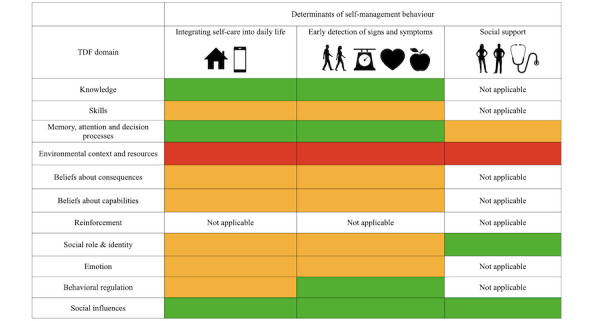
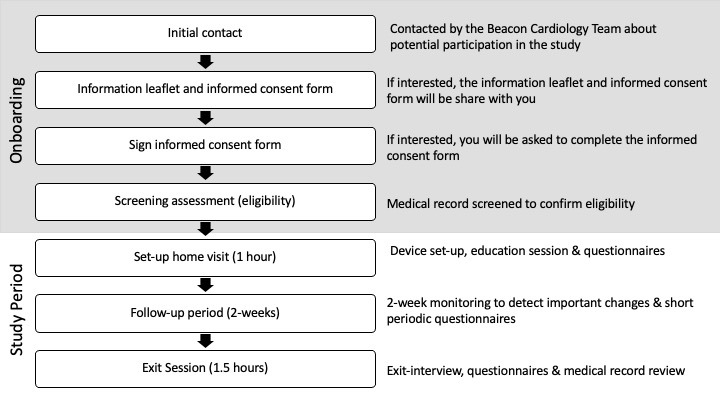
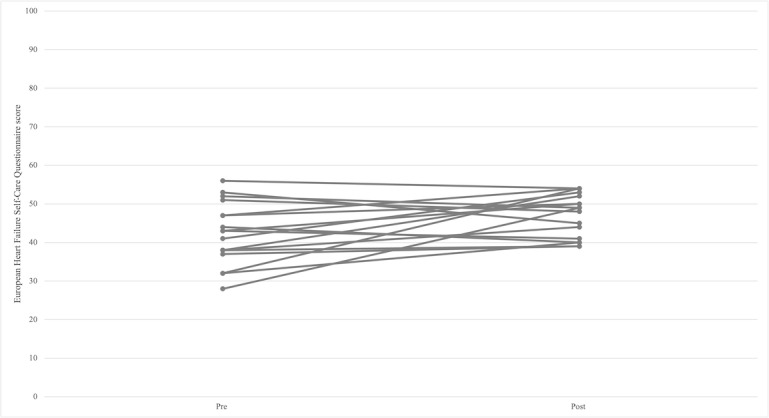
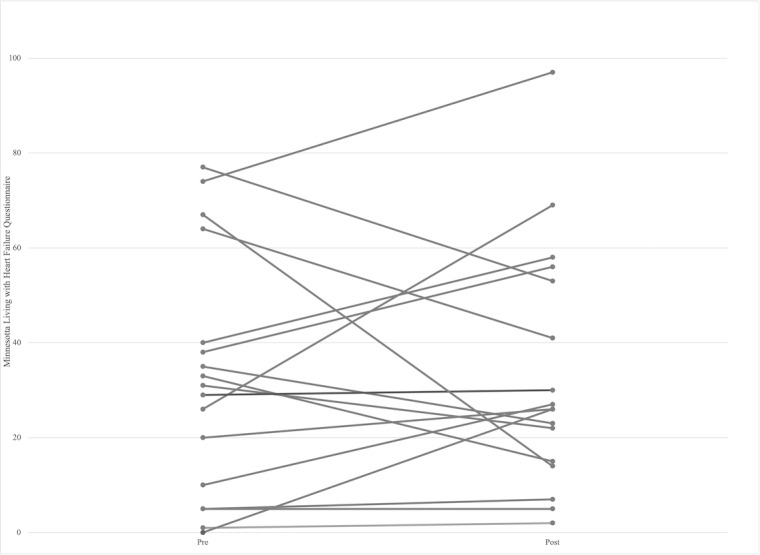
A total of 19 participants with HF were provided with a digital tool comprising a mobile app and the Fitbit Charge 4 and Aria Air smart scales for a period of 6 months. Changes to their self-care were assessed before and after the study with the 9-item European HF Self-care Behavior Scale (EHFScBS) and the Minnesota Living with HF Questionnaire (MLwHFQ) using a Wilcoxon signed rank test. After the study, 3 usability questionnaires were implemented and descriptively analyzed: the System Usability Scale (SUS), Wearable Technology Motivation Scale (WTMS), and Comfort Rating Scale (CRS). Participants also undertook a semistructured interview regarding their experiences with the digital tool. Interviews were analyzed deductively using the Theoretical Domains Framework.
Participants wore their devices for an average of 86.2% of the days in the 6-month testing period ranging from 40.6% to 98%. Although improvements in the EHFScBS and MLwHFQ were seen, these changes were not significant (P=.10 and P=.70, respectively, where P>.03, after a Bonferroni correction). SUS results suggest that the usability of this system was not acceptable with a median score of 58.8 (IQR 55.0-60.0; range 45.0-67.5). Participants demonstrated a strong motivation to use the system according to the WTMS (median 6.0, IQR 5.0-7.0; range 1.0-7.0), whereas the Fitbit was considered very comfortable as demonstrated by the low CRS results (median 0.0, IQR 0.0-0.0; range 0.0-2.0). According to participant interviews, the digital tool supported self-management through increased knowledge, improved awareness, decision-making, and confidence in their own data, and improving their social support through a feeling of comfort in being watched.
The digital health tool demonstrated high levels of adherence and acceptance among participants. Although the SUS results suggest low usability, this may be explained by participants uncertainty that they were using it fully, rather than it being unusable, especially given the experiences documented in their interviews. The digital tool targeted key self-management behaviors and feelings of social support. However, a number of changes to the tool, and the health service, are required before it can be implemented at scale. A full-scale feasibility trial conducted at a wider level is required to fully determine its potential effectiveness and wider implementation needs.
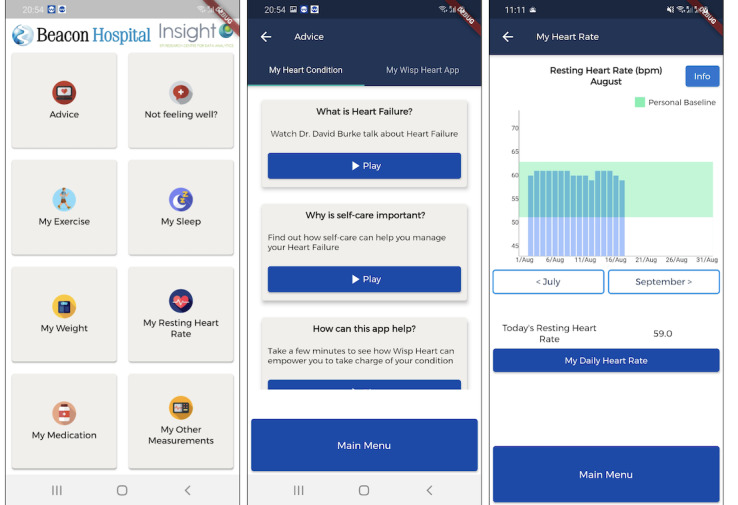
数字工具可能有助于人们自我管理心力衰竭(HF)。此前已概述了一种支持HF自我护理的数字工具的以人为本的设计开发,下一步是在一段时间内对该工具进行试点,以确定人们在实际使用中对它的接受程度。
本研究旨在进行一项观察性试点研究,以检验爱尔兰医疗保健系统中一种用于HF的数字健康工具的可用性、依从性和可行性。
共有19名HF患者在6个月的时间里使用了一种数字工具,该工具包括一个移动应用程序以及Fitbit Charge 4和Aria Air智能秤。在研究前后,使用9项欧洲HF自我护理行为量表(EHFScBS)和明尼苏达HF生活问卷(MLwHFQ)通过Wilcoxon符号秩检验评估他们自我护理的变化。研究结束后,实施了3份可用性问卷并进行描述性分析:系统可用性量表(SUS)、可穿戴技术动机量表(WTMS)和舒适度评定量表(CRS)。参与者还就他们使用数字工具的体验进行了半结构化访谈。访谈使用理论领域框架进行演绎分析。
在6个月的测试期内,参与者平均86.2%的日子佩戴了设备,佩戴天数从40.6%到98%不等。虽然在EHFScBS和MLwHFQ上有改善,但这些变化并不显著(分别为P = 0.10和P = 0.70,经Bonferroni校正后P>0.03)。SUS结果表明该系统的可用性不可接受,中位数得分为58.8(四分位距55.0 - 60.0;范围45.0 - 67.5)。根据WTMS,参与者表现出使用该系统的强烈动机(中位数6.0,四分位距5.0 - 7.0;范围1.0 - 7.0),而低CRS结果表明Fitbit被认为非常舒适(中位数0.0,四分位距0.0 - 0.0;范围0.0 - 2.0)。根据参与者访谈,数字工具通过增加知识、提高意识、决策能力以及对自身数据的信心来支持自我管理,并通过被关注时的舒适感改善他们的社会支持。
数字健康工具在参与者中表现出较高的依从性和接受度。虽然SUS结果表明可用性较低,但这可能是因为参与者不确定自己是否充分使用了该工具,而不是它不可用,特别是考虑到他们访谈中记录的体验。该数字工具针对关键的自我管理行为和社会支持感受。然而,在大规模实施之前,需要对该工具以及医疗服务进行一些改进。需要在更广泛的层面进行全面的可行性试验,以充分确定其潜在效果和更广泛的实施需求。