Scherer Julian, Yogarasa Vithush, Rauer Thomas, Pape Hans-Christoph, Heining Sandro-Michael
Department of Traumatology, University Hospital of Zurich, Zurich, Switzerland.
Orthopaedic Research Unit, University of Cape Town, Cape Town, South Africa.
JMIR Form Res. 2023 Feb 9;7:e35312. doi: 10.2196/35312.
The automated digital surveillance of physical activity at home after surgical procedures could facilitate the monitoring of postoperative follow-up, reduce costs, and enhance patients' satisfaction. Data on the willingness of patients with orthopedic trauma to undergo automated home surveillance postoperatively are lacking.
The aims of this study were to assess whether patients with orthopedic trauma would be generally willing to use the proposed automated digital home surveillance system and determine what advantages and disadvantages the system could bring with it.
Between June 2021 and October 2021, a survey among outpatients with orthopedic trauma who were treated at a European level 1 trauma center was conducted. The only inclusion criterion was an age of at least 16 years. The paper questionnaire first described the possibility of fully automated movement and motion detection (via cameras or sensors) at home without any action required from the patient. The questionnaire then asked for the participants' demographics and presented 6 specific questions on the study topic.
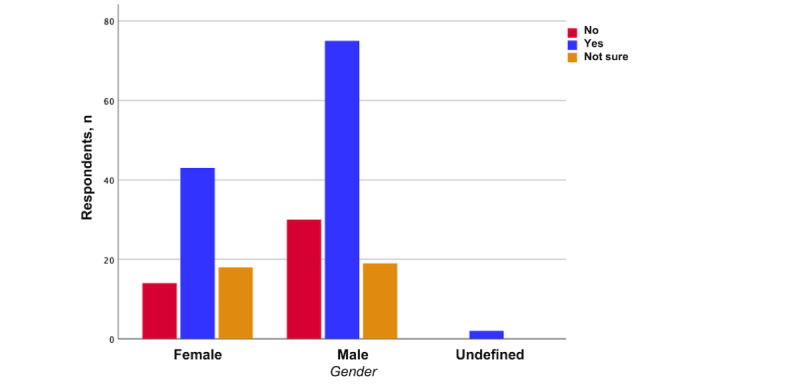
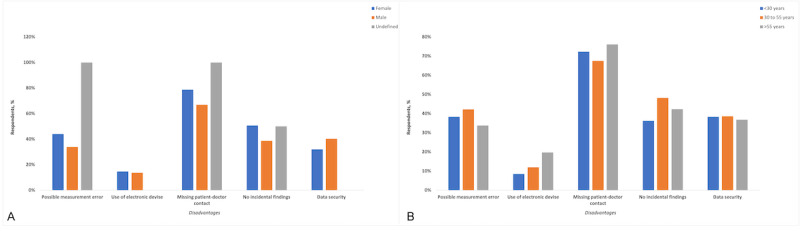
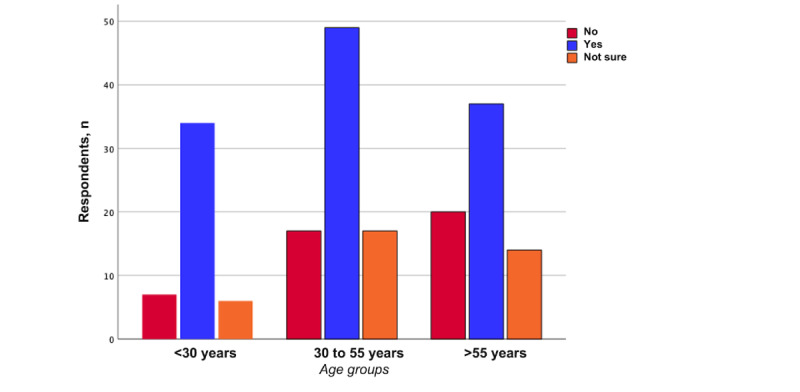
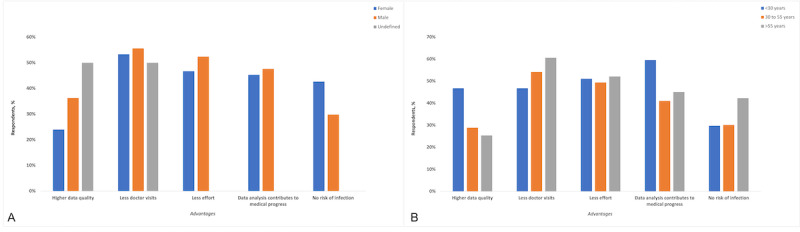
In total, we included 201 patients whose mean age was 46.9 (SD 18.6) years. Most of the assessed patients (124/201, 61.7%) were male. Almost half of the patients (83/201, 41.3%) were aged between 30 and 55 years. The most stated occupation was a nine-to-five job (62/199, 30.8%). The majority of the participants (120/201, 59.7%) could imagine using the proposed measurement system, with no significant differences among the genders. An insignificant higher number of younger patients stated that they would use the automated surveillance system. No significant difference was seen among different occupations (P=.41). Significantly more young patients were using smartphones (P=.004) or electronic devices with a camera (P=.008). Less than half of the surveyed patients (95/201, 47.3%) stated that they were using tracking apps. The most stated advantages were fewer physician visits (110/201, 54.7%) and less effort (102/201, 50.7%), whereas the most prevalent disadvantage was the missing physician-patient contact (144/201, 71.6%). Significantly more patients with a part-time job or a nine-to-five job stated that data analysis contributes to medical progress (P=.047).
Most of the assessed participants (120/201, 59.7%) stated that they would use the automated digital measurement system to observe their postoperative follow-up and recovery. The proposed system could be used to reduce costs and ease hospital capacity issues. In order to successfully implement such systems, patients' concerns must be addressed, and further studies on the feasibility of these systems are needed.
手术后在家中对身体活动进行自动数字监测有助于术后随访监测,降低成本,并提高患者满意度。目前缺乏关于骨科创伤患者术后接受自动家庭监测意愿的数据。
本研究旨在评估骨科创伤患者是否普遍愿意使用提议的自动数字家庭监测系统,并确定该系统可能带来的优缺点。
在2021年6月至2021年10月期间,对一家欧洲一级创伤中心治疗的骨科创伤门诊患者进行了一项调查。唯一的纳入标准是年龄至少16岁。纸质问卷首先描述了在家中通过摄像头或传感器进行全自动运动和动作检测的可能性,患者无需采取任何行动。问卷随后询问了参与者的人口统计学信息,并就研究主题提出了6个具体问题。
我们总共纳入了201名患者,他们的平均年龄为46.9(标准差18.6)岁。大多数接受评估的患者(124/201,61.7%)为男性。几乎一半的患者(83/201,41.3%)年龄在30至55岁之间。最常见的职业是朝九晚五的工作(62/199,30.8%)。大多数参与者(120/201,59.7%)可以想象使用提议的测量系统,不同性别之间没有显著差异。表示会使用自动监测系统的年轻患者数量略多,但差异不显著。不同职业之间没有显著差异(P = 0.41)。明显更多的年轻患者使用智能手机(P = 0.004)或带摄像头的电子设备(P = 0.008)。不到一半的受访患者(95/201,47.3%)表示他们在使用跟踪应用程序。最常提到的优点是看医生的次数减少(110/201,54.7%)和工作量减少(102/201,50.7%),而最普遍的缺点是缺乏医患接触(144/201,71.6%)。从事兼职工作或朝九晚五工作的患者中,明显更多的人表示数据分析有助于医学进步(P = 0.047)。
大多数接受评估的参与者(120/201,59.7%)表示他们会使用自动数字测量系统来观察术后随访和恢复情况。提议的系统可用于降低成本和缓解医院容量问题。为了成功实施此类系统,必须解决患者的担忧,并且需要对这些系统的可行性进行进一步研究。