Sanmukh Swapnil Ganesh, Dos Santos Nilton José, Nascimento Barquilha Caroline, De Carvalho Márcio, Pintor Dos Reis Patricia, Delella Flávia Karina, Carvalho Hernandes F, Latek Dorota, Fehér Tamás, Felisbino Sérgio Luis
Laboratory of Extracellular Matrix Biology, Department of Structural and Functional Biology, Institute of Biosciences of Botucatu, Sao Paulo State University, Botucatu, São Paulo 18618-689, Brazil.
Synthetic and Systems Biology Unit, Biological Research Center, Eötvös Loránd Research Network, 6726 Szeged, Hungary.
Oncol Lett. 2023 Jan 17;25(2):86. doi: 10.3892/ol.2023.13672. eCollection 2023 Feb.
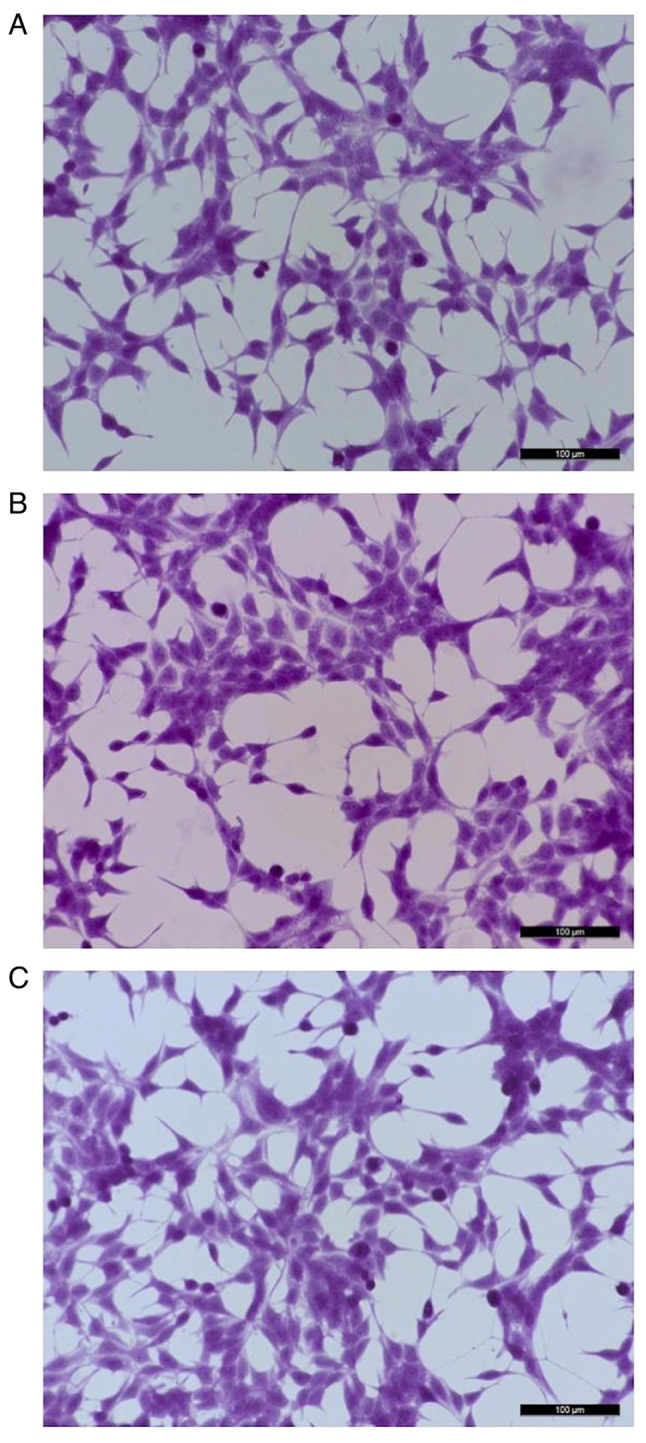
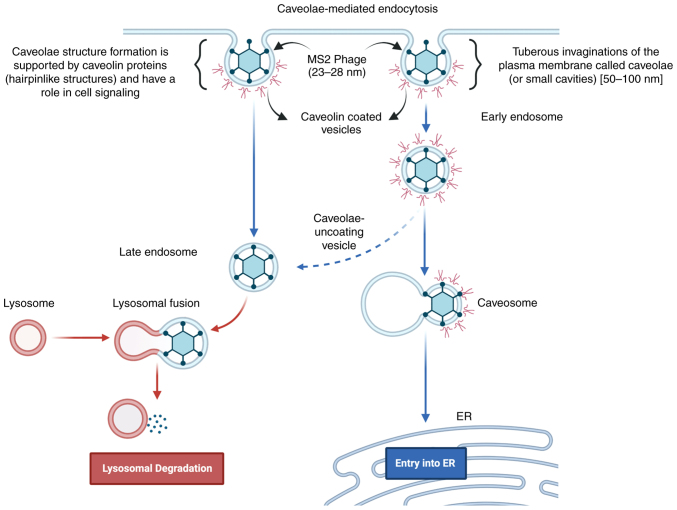
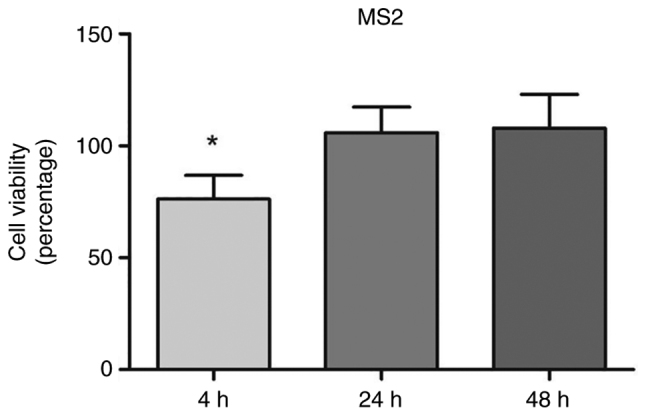
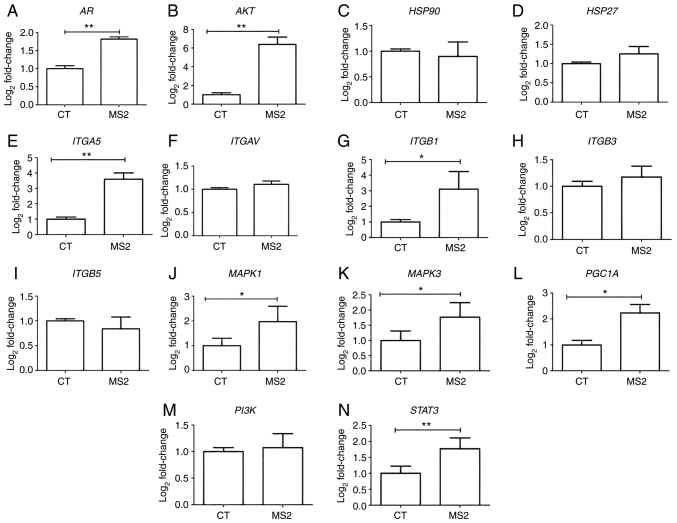
Bacteriophages effectively counteract diverse bacterial infections, and their ability to treat most types of cancer has been explored using phage engineering or phage-virus hybrid platforms. In the present study, it was demonstrated that the bacteriophage MS2 can affect the expression of genes associated with the proliferation and survival of LNCaP prostate epithelial cells. LNCaP cells were exposed to bacteriophage MS2 at a concentration of 1×10 plaque forming units/ml for 24-48 h. After exposure, various cellular parameters, including cell viability, morphology, and changes in gene expression, were examined. MS2 affected cell viability adversely, reducing viability by 25% in the first 4 h of treatment; however, cell viability recovered within 24-48 h. Similarly, the , androgen receptor, integrin α5, integrin β1, , and peroxisome proliferator-activated receptor-γ coactivator 1α genes, which are involved in various normal cellular processes and tumor progression, were significantly upregulated, whereas the expression levels of , and genes were unchanged. Therefore, based on viability and gene expression changes, bacteriophage MS2 severely impaired LNCaP cells by reducing anchorage-dependent survival and androgen signaling. A caveolin-mediated endocytosis mechanism for MS2-mediated signaling in prostate cancer cells was proposed based on reports involving bacteriophages T4, M13, and MS2, and their interactions with LNCaP and PC3 cell lines.
噬菌体能有效对抗多种细菌感染,人们已利用噬菌体工程或噬菌体 - 病毒杂交平台探索其治疗大多数癌症类型的能力。在本研究中,已证明噬菌体MS2可影响与LNCaP前列腺上皮细胞增殖和存活相关的基因表达。将LNCaP细胞暴露于浓度为1×10噬菌斑形成单位/毫升的噬菌体MS2中24至48小时。暴露后,检测各种细胞参数,包括细胞活力、形态以及基因表达变化。MS2对细胞活力有不利影响,在处理的前4小时内使活力降低25%;然而,细胞活力在24至48小时内恢复。同样,参与各种正常细胞过程和肿瘤进展的雄激素受体、整合素α5、整合素β1以及过氧化物酶体增殖物激活受体γ共激活因子1α基因显著上调,而某些基因的表达水平未改变。因此,基于活力和基因表达变化,噬菌体MS2通过降低锚定依赖性存活和雄激素信号传导严重损害了LNCaP细胞。基于涉及噬菌体T4、M13和MS2及其与LNCaP和PC3细胞系相互作用的报道,提出了一种小窝蛋白介导的内吞作用机制,用于MS2介导的前列腺癌细胞信号传导。