Department of Neurosurgery, Penn State College of Medicine, Hershey, Pennsylvania, USA.
Department of Pharmacology, Penn State College of Medicine, Hershey, Pennsylvania, USA.
J Neurochem. 2023 May;165(4):536-549. doi: 10.1111/jnc.15781. Epub 2023 Mar 1.
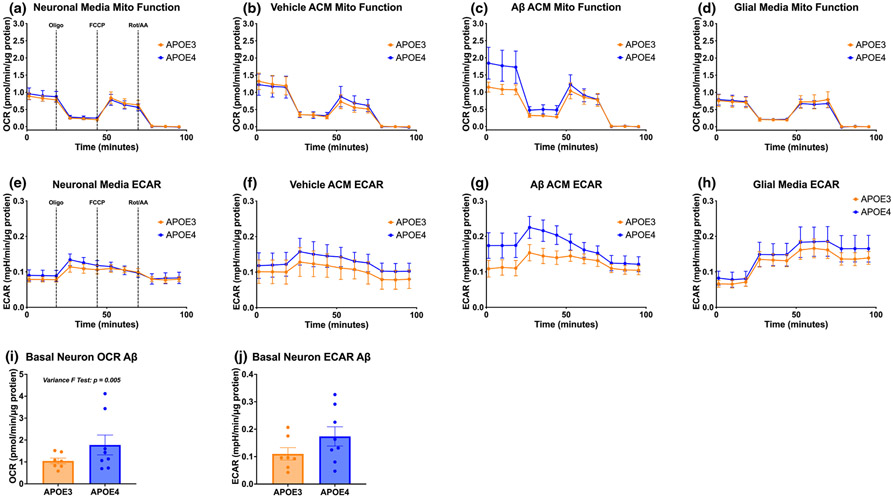
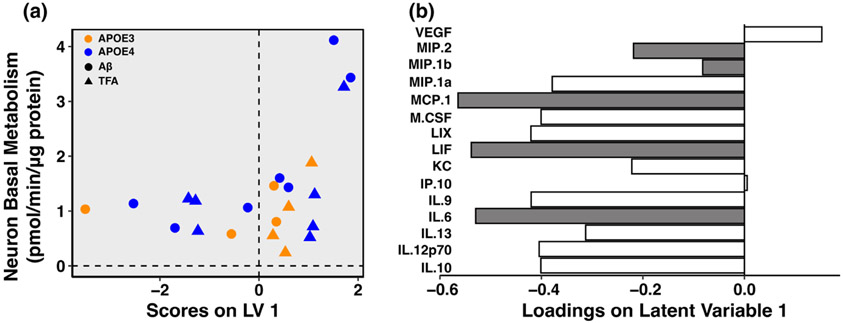
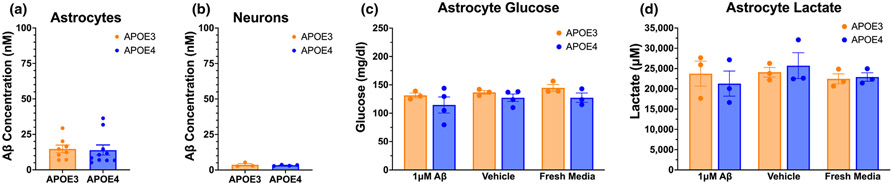
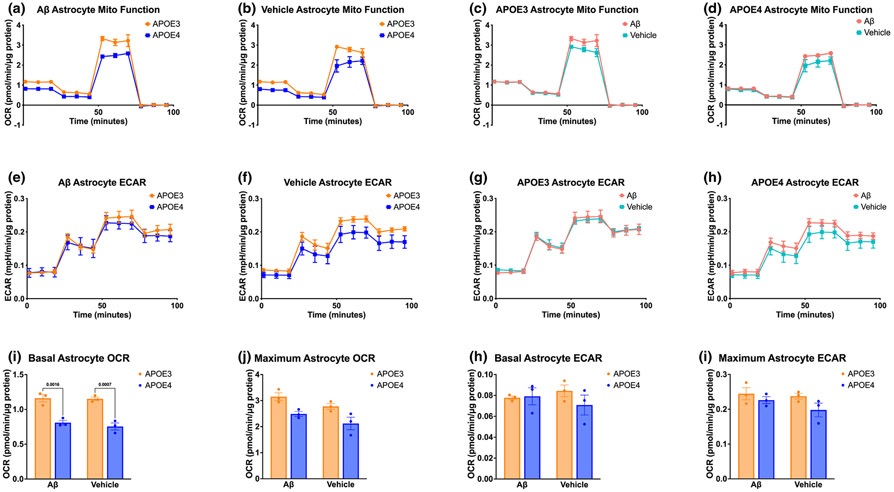
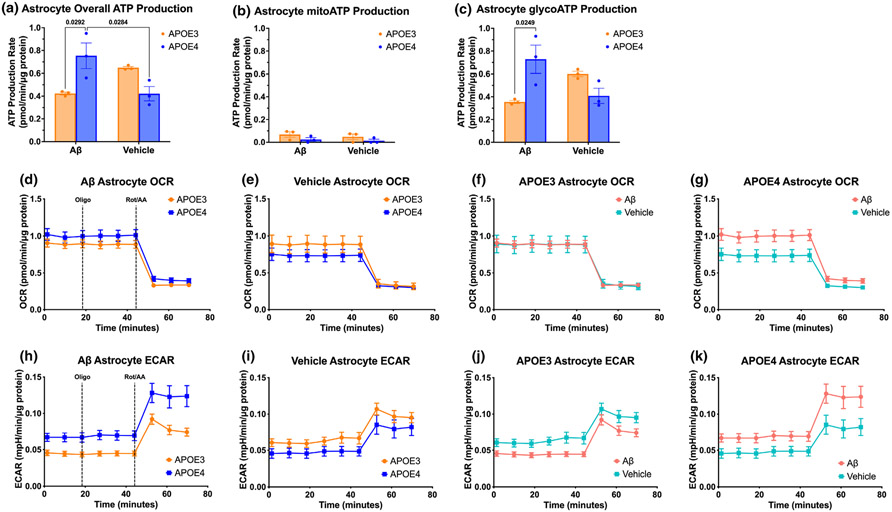
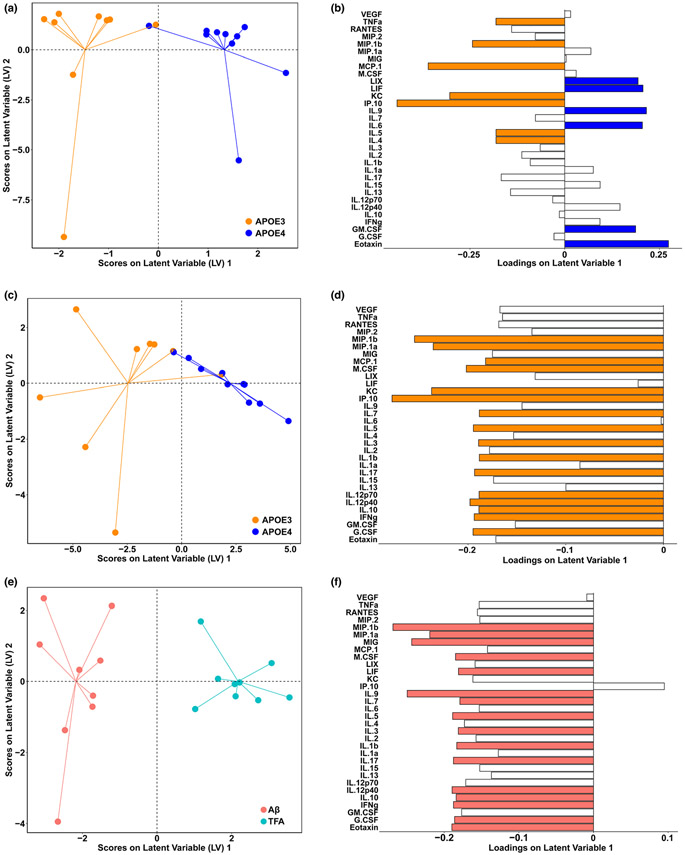
Apolipoprotein E (APOE) is a lipid transporter produced predominantly by astrocytes in the brain. The ε4 variant of APOE (APOE4) is the strongest and most common genetic risk factor for Alzheimer's disease (AD). Although the molecular mechanisms of this increased risk are unclear, APOE4 is known to alter immune signaling and lipid and glucose metabolism. Astrocytes provide various forms of support to neurons, including regulating neuronal metabolism and immune responses through cytokine signaling. Changes in astrocyte function because of APOE4 may therefore decrease neuronal support, leaving neurons more vulnerable to stress and disease insults. To determine whether APOE4 alters astrocyte neuronal support functions, we measured glycolytic and oxidative metabolism of neurons treated with conditioned media from APOE4 or APOE3 (the common, risk-neutral variant) primary astrocyte cultures. We found that APOE4 neurons treated with conditioned media from resting APOE4 astrocytes had similar metabolism to APOE3 neurons treated with media from resting APOE3 astrocytes, but treatment with astrocytic conditioned media from astrocytes challenged with amyloid-β (Aβ), a key pathological protein in AD, caused APOE4 neurons to increase their basal mitochondrial and glycolytic metabolic rates more than APOE3 neurons. These changes were not because of differences in astrocytic lactate production or glucose utilization, but instead correlated with increased glycolytic ATP production and a lack of cytokine secretion in response to Aβ. Additionally, we identified that astrocytic cytokine signatures could predict basal metabolism of neurons treated with the astrocytic conditioned media. Together, these findings suggest that in the presence of Aβ, APOE4 astrocytes alter immune and metabolic functions that result in a compensatory increase in neuronal metabolic stress.
载脂蛋白 E(APOE)是一种主要由大脑中的星形胶质细胞产生的脂质转运蛋白。APOE 的 ε4 变体(APOE4)是阿尔茨海默病(AD)最强和最常见的遗传风险因素。尽管这种风险增加的分子机制尚不清楚,但已知 APOE4 会改变免疫信号和脂质及葡萄糖代谢。星形胶质细胞为神经元提供各种形式的支持,包括通过细胞因子信号调节神经元代谢和免疫反应。由于 APOE4,星形胶质细胞功能发生变化,可能会减少神经元的支持,使神经元更容易受到压力和疾病的侵袭。为了确定 APOE4 是否改变星形胶质细胞对神经元的支持功能,我们测量了用 APOE4 或 APOE3(常见的、无风险的变体)原代星形胶质细胞培养物的条件培养基处理的神经元的糖酵解和氧化代谢。我们发现,用静止 APOE4 星形胶质细胞的条件培养基处理的 APOE4 神经元的代谢与用静止 APOE3 星形胶质细胞的条件培养基处理的 APOE3 神经元的代谢相似,但用来自受淀粉样蛋白-β(Aβ)挑战的星形胶质细胞的星形胶质细胞条件培养基处理时,APOE4 神经元比 APOE3 神经元增加其基础线粒体和糖酵解代谢率更多。这些变化不是由于星形胶质细胞乳酸生成或葡萄糖利用的差异,而是与 Aβ 刺激下糖酵解 ATP 产生增加和细胞因子分泌减少有关。此外,我们还发现星形胶质细胞细胞因子特征可以预测用星形胶质细胞条件培养基处理的神经元的基础代谢。总之,这些发现表明,在 Aβ 存在的情况下,APOE4 星形胶质细胞改变了免疫和代谢功能,导致神经元代谢应激的代偿性增加。