Institut de Biologie de L'ENS (IBENS), Département de Biologie, École Normale Supérieure, CNRS, INSERM, Université PSL, 75005, Paris, France.
Faculté des Sciences et Technologie, Université Paris Est-Créteil (UPEC), 61, Avenue du Général De Gaulle, 94000, Créteil, France.
Sci Rep. 2023 Feb 10;13(1):2440. doi: 10.1038/s41598-023-29489-w.
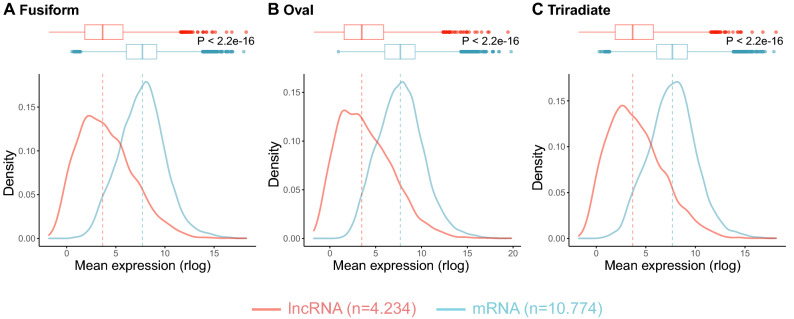
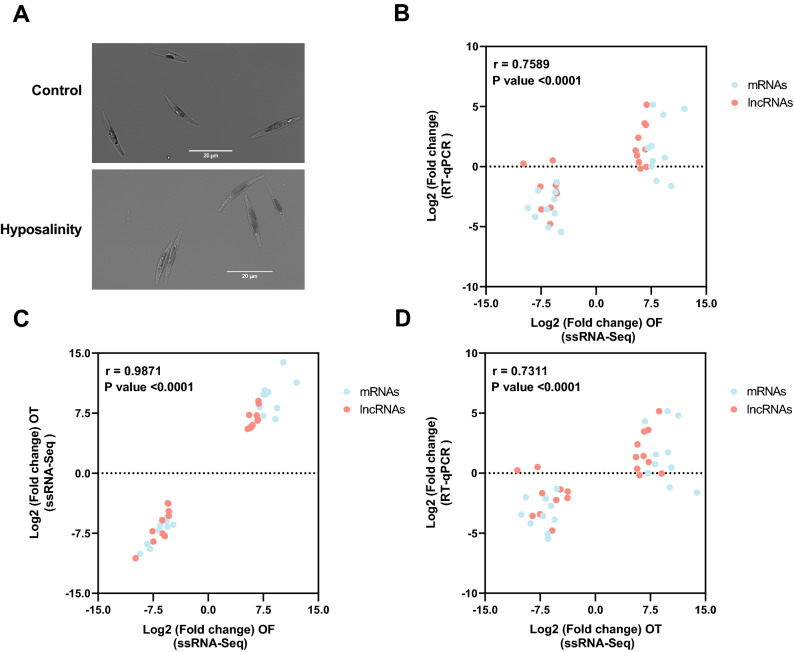
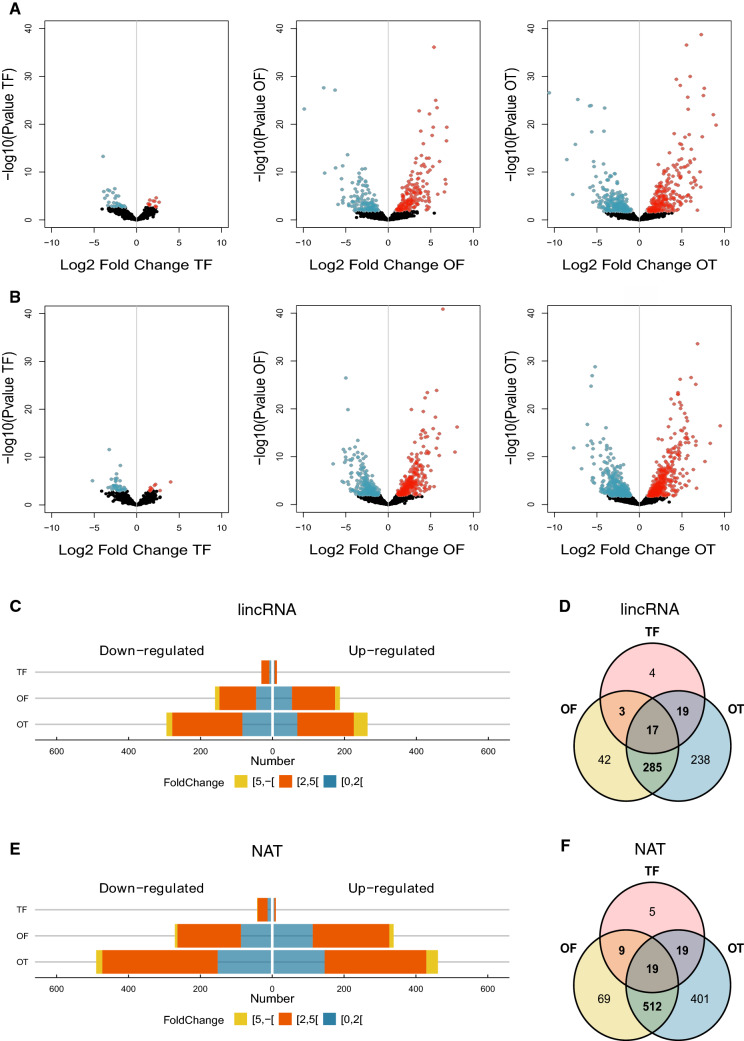
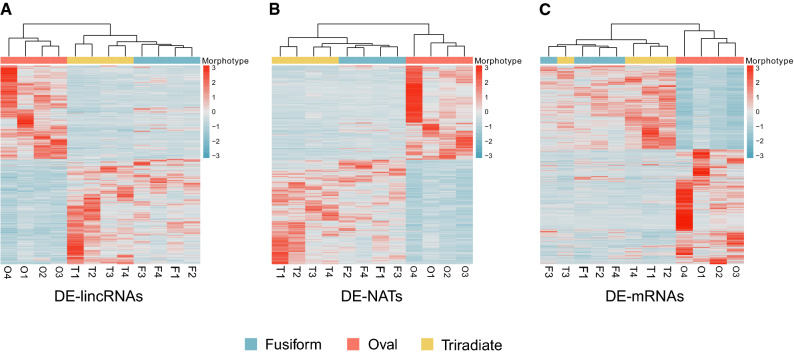
Long non-coding (lnc)RNAs have been shown to have central roles in stress responses, cell identity and developmental processes in multicellular organisms as well as in unicellular fungi. Previous works have shown the occurrence of lncRNAs in diatoms, namely in Phaeodactylum tricornutum, many of which being expressed under specific stress conditions. Interestingly, P. tricornutum is the only known diatom that has a demonstrated morphological plasticity, occurring in three distinct morphotypes: fusiform, triradiate and oval. Although the morphotypes are interchangeable, the fusiform is the dominant one while both the triradiate and the oval forms are less common, the latter often being associated with stress conditions such as low salinity and solid culture media, amongst others. Nonetheless, the molecular basis underpinning morphotype identity in P. tricornutum remains elusive. Using twelve previously published transcriptomic datasets originating from the three morphotypes of P. tricornutum, we sought to investigate the expression patterns of lncRNAs (lincRNAs and NATs) in these distinct morphotypes, using pairwise comparisons, in order to explore the putative involvement of these noncoding molecules in morphotype identity. We found that differentially expressed lncRNAs cluster according to morphotype, indicating that lncRNAs are not randomly expressed, but rather seem to provide a specific (noncoding) transcriptomic signature of the morphotype. We also present evidence to suggest that the major differences in DE genes (both noncoding and coding) between the stress related oval morphotype and the most common fusiform morphotype could be due, to a large extent, to the hyposaline culture conditions rather than to the morphotype itself. However, several lncRNAs associated to each one of the three morphotypes were identified, which could have a potential role in morphotype (or cell) identity in P. tricornutum, similar to what has been found in both animals and plant development.
长非编码 (lnc)RNAs 在多细胞生物的应激反应、细胞身份和发育过程中以及单细胞真菌中都具有核心作用。先前的工作表明,在硅藻中存在 lncRNAs,即在三角褐指藻中,其中许多在特定的应激条件下表达。有趣的是,三角褐指藻是唯一已知的具有形态可塑性的硅藻,存在三种不同的形态类型:梭形、三辐射和椭圆形。尽管形态类型可以互换,但梭形是占主导地位的,而三辐射和椭圆形的形态则较为罕见,后者通常与低盐和固体培养基等应激条件有关。尽管如此,三角褐指藻形态类型身份的分子基础仍然难以捉摸。使用来自三角褐指藻三种形态类型的十二个先前发表的转录组数据集,我们试图通过成对比较来研究 lncRNAs(lncRNAs 和 NATs)在这些不同形态类型中的表达模式,以探索这些非编码分子在形态类型身份中的潜在作用。我们发现差异表达的 lncRNAs 根据形态类型聚类,表明 lncRNAs 不是随机表达的,而是似乎为形态类型提供了特定的(非编码)转录组特征。我们还提供了证据表明,与最常见的梭形形态相比,与应激相关的椭圆形形态之间差异表达基因(包括非编码和编码基因)的主要差异可能在很大程度上归因于低盐培养条件,而不是形态类型本身。然而,鉴定出与三种形态类型中的每一种相关的几个 lncRNAs,它们可能在三角褐指藻的形态(或细胞)身份中发挥潜在作用,类似于在动物和植物发育中发现的情况。