Department of Pediatric Surgery, University Medical Center Mannheim, Heidelberg University, Theodor-Kutzer-Ufer 1-3, 68167 Mannheim, Germany.
Department of Pediatric Surgery, University Medical Center Hamburg-Eppendorf, Martinistrasse 52, 20246 Hamburg, Germany.
Cells. 2023 Jan 19;12(3):366. doi: 10.3390/cells12030366.
Severe infections that culminate in sepsis are associated with high morbidity and mortality. Despite continuous efforts in basis science and clinical research, evidence based-therapy is mostly limited to basic causal and supportive measures. Adjuvant therapies often remain without clear evidence. The objective of this study was to evaluate the septic volvulus ischemia-reperfusion model in comparison to two already established models and the role of neutrophil extacellular traps (NETs) in this model.
The technique of the murine model of midgut volvulus was optimized and was compared to two established models of murine sepsis, namely cecal ligation and puncture (CLP) and intra-peritoneal (i.p.) injection of lipopolysaccharide (LPS).
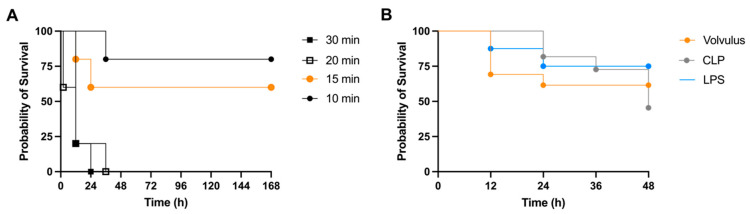
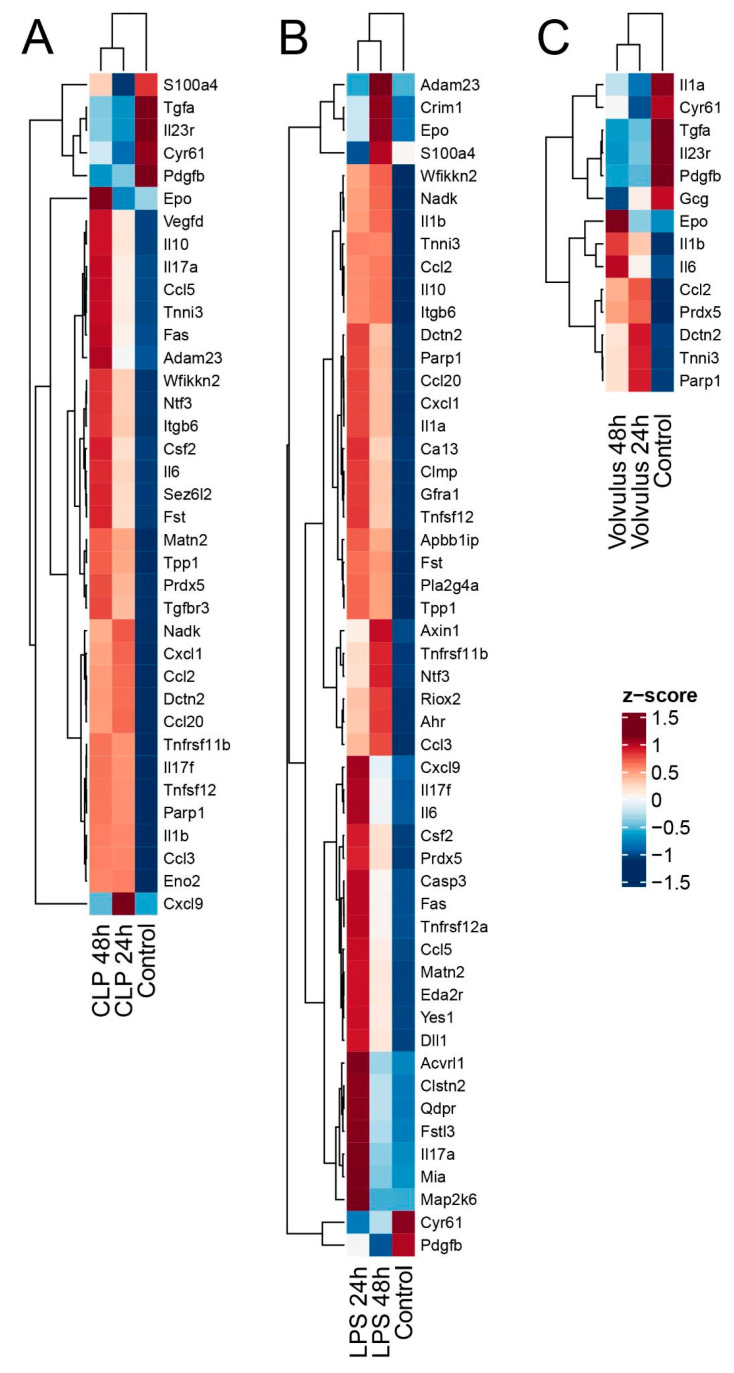
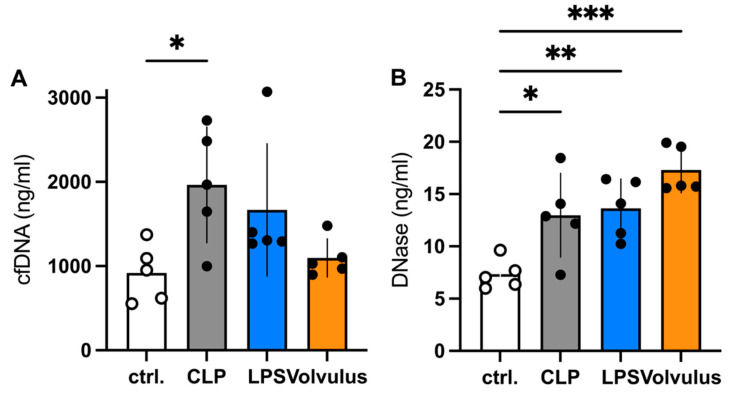
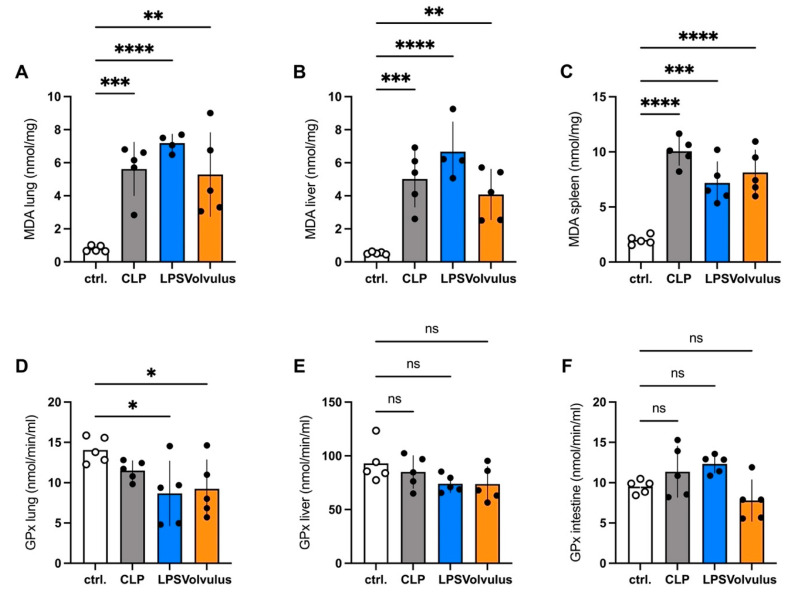
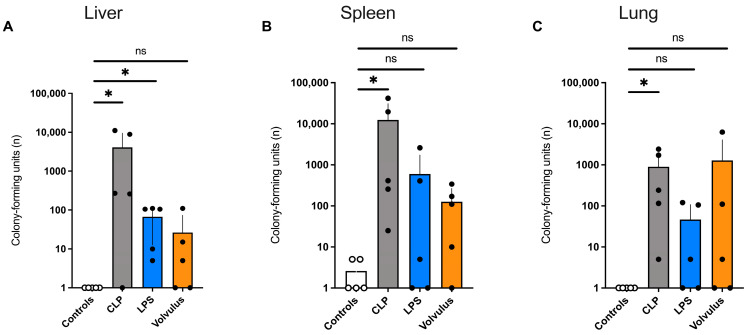
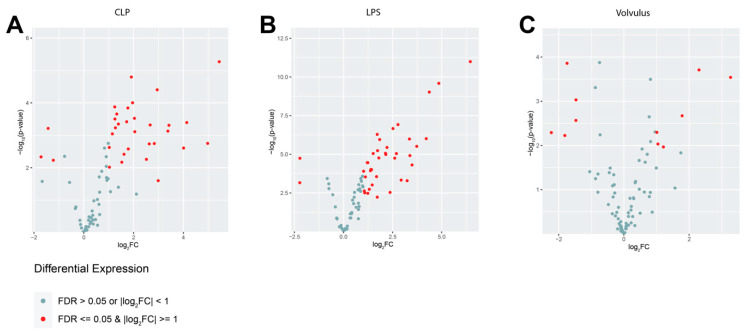
Midgut volvulus for 15 min caused a comparable mortality (38%) as CLP (55%) and peritoneal LPS injection (25%) at 48 h. While oxidative stress was comparable, levels of circulating free DNA (cfDNA), and splenic/hepatic and pulmonary translocation of bacteria were decreased and increased, respectively at 48 h. DNases were increased compared to the established models. Proteomic analysis revealed an upregulation of systemic Epo, IL-1b, Prdx5, Parp1, Ccl2 and IL-6 at 48 h in comparison to the healthy controls.
Midgut volvulus is a stable and physiological model for sepsis. Depending on the duration and subsequent tissue damage, it represents a combination of ischemia-reperfusion injury and hyperinflammation.
以败血症为结局的严重感染与高发病率和高死亡率相关。尽管在基础科学和临床研究方面不断努力,但循证治疗大多仅限于基本的因果和支持措施。辅助治疗往往仍然缺乏明确的证据。本研究的目的是评估与两种已建立的模型相比,脓毒性肠扭转缺血再灌注模型的情况,以及中性粒细胞细胞外陷阱(NETs)在该模型中的作用。
优化了鼠肠扭转模型的技术,并将其与两种已建立的鼠败血症模型(盲肠结扎和穿刺(CLP)和腹腔内(i.p.)注射脂多糖(LPS))进行了比较。
15 分钟的肠扭转导致 48 小时的死亡率与 CLP(55%)和腹膜内 LPS 注射(25%)相当(38%)。虽然氧化应激相当,但循环游离 DNA(cfDNA)水平以及脾/肝和肺细菌移位分别在 48 小时时降低和增加。与已建立的模型相比,DNases 增加。与健康对照组相比,蛋白质组学分析显示,在 48 小时时,系统性 Epo、IL-1b、Prdx5、Parp1、Ccl2 和 IL-6 呈上调。
肠扭转是一种稳定的、生理性的败血症模型。根据持续时间和随后的组织损伤,它代表了缺血再灌注损伤和过度炎症的结合。