Fondazione Banca degli Occhi del Veneto Onlus, Via Paccagnella, 11, 30174 Venice, Italy.
Clinical Genetics Unit, University Hospital of Padua, 35128 Padua, Italy.
Cells. 2023 Feb 2;12(3):495. doi: 10.3390/cells12030495.
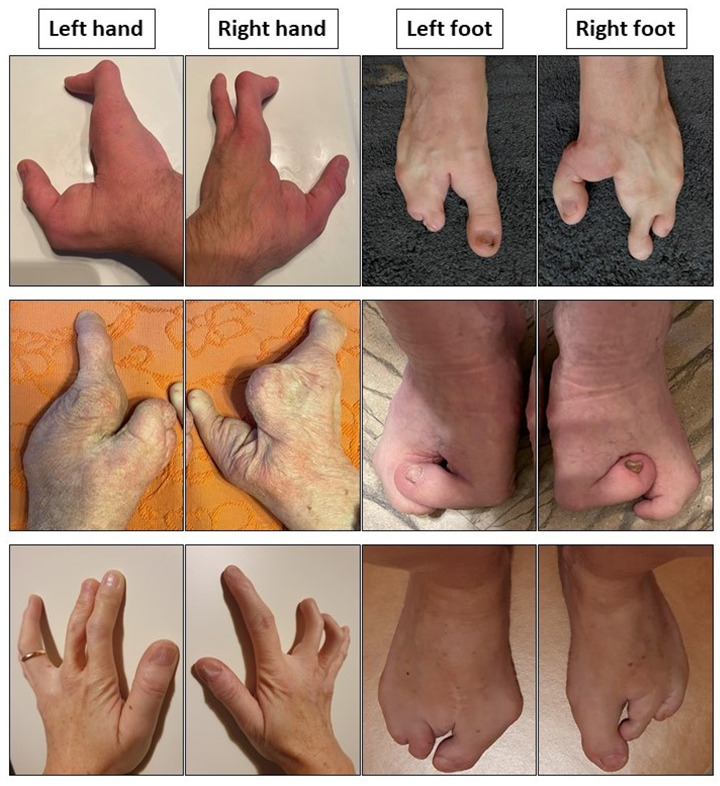
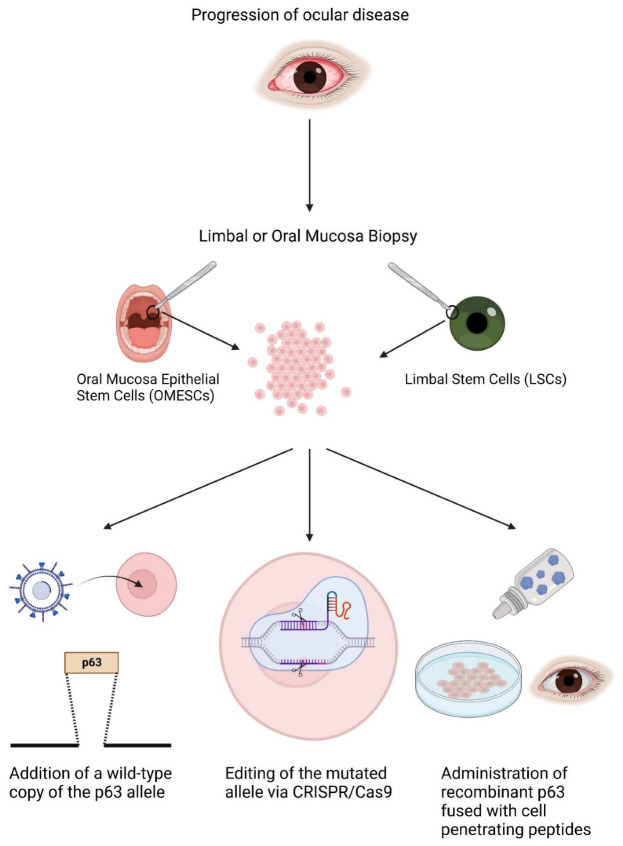
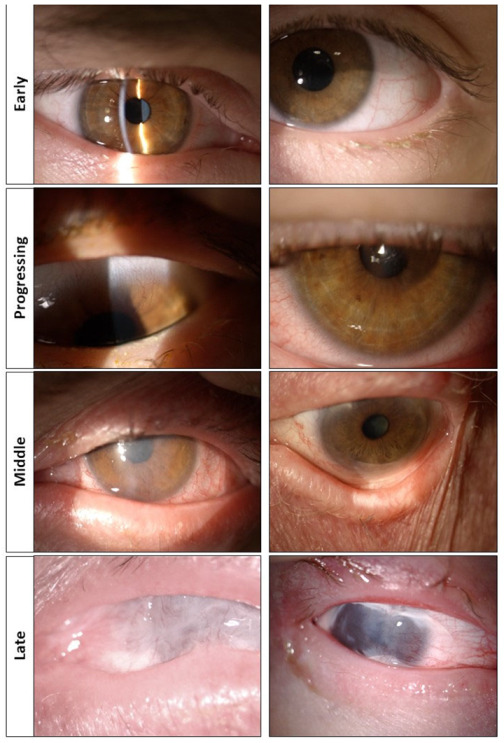
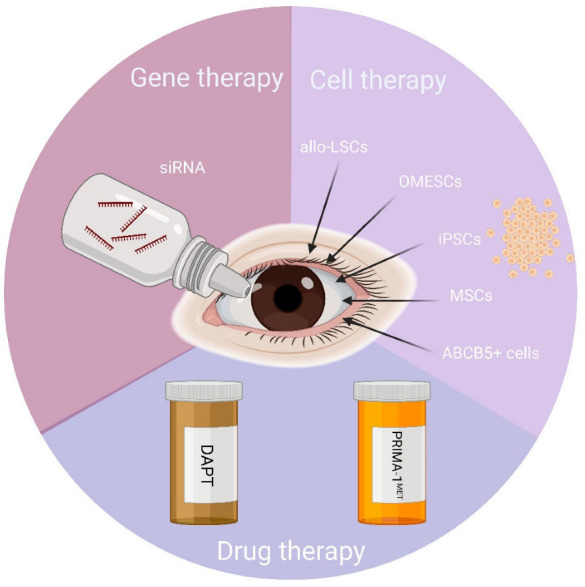
Ectrodactyly-Ectodermal dysplasia-Clefting (EEC) syndrome is caused by heterozygous missense point mutations in the gene, an important transcription factor during embryogenesis and for stem cell differentiation in stratified epithelia. Most of the cases are sporadic, related to de novo mutations arising during early-stage development. Familial cases show an autosomic dominant inheritance. The major cause of visual morbidity is limbal stem cell failure, which develops in the second to third decade of life. Patients often show ocular surface alterations, such as recurrent blepharitis and conjunctivitis, superficial microlesions of the cornea, and spontaneous corneal perforation and ulceration, leading to progressive corneal clouding and eventually visual loss. No definitive cures are currently available, and treatments to alleviate symptoms are only palliative. In this review, we will discuss the proposed therapeutic strategies that have been tested or are under development for the management of the ocular defects in patients affected by EEC syndrome: (i) gene therapy-based approaches by means of Allele-Specific (AS) siRNAs to correct the p63 mutations; (ii) cell therapy-based approaches to replenish the pool of limbal stem cells; and (iii) drug therapy to correct/bypass the genetic defect. However, as the number of patients with EEC syndrome is too limited, further studies are still necessary to prove the effectiveness (and safety) of these innovative therapeutic approaches to counteract the premature differentiation of limbal stem cells.
并指-外胚层发育不良-裂(EEC)综合征是由基因中的杂合错义点突变引起的,该基因为胚胎发生过程中的重要转录因子,也是分层上皮细胞中干细胞分化的重要转录因子。大多数病例为散发性,与早期发育过程中出现的新生突变有关。家族性病例表现为常染色体显性遗传。导致视觉发病率的主要原因是角膜缘干细胞衰竭,其在生命的第二到第三个十年发展。患者常表现出眼部表面改变,如复发性睑缘炎和结膜炎、角膜浅层微损伤以及自发性角膜穿孔和溃疡,导致进行性角膜混浊,最终导致视力丧失。目前尚无明确的治愈方法,缓解症状的治疗方法仅为姑息性。在这篇综述中,我们将讨论已经测试或正在开发用于治疗 EEC 综合征患者眼部缺陷的治疗策略:(i)通过等位基因特异性(AS)siRNA 的基因治疗方法来纠正 p63 突变;(ii)通过补充角膜缘干细胞池的细胞治疗方法;以及(iii)用于纠正/绕过遗传缺陷的药物治疗。然而,由于 EEC 综合征患者的数量非常有限,仍需要进一步的研究来证明这些创新治疗方法的有效性(和安全性),以对抗角膜缘干细胞的过早分化。