Actinium Chemical Research, Via Casilina 1626A, 00133 Rome, Italy.
Int J Mol Sci. 2023 Jan 30;24(3):2623. doi: 10.3390/ijms24032623.
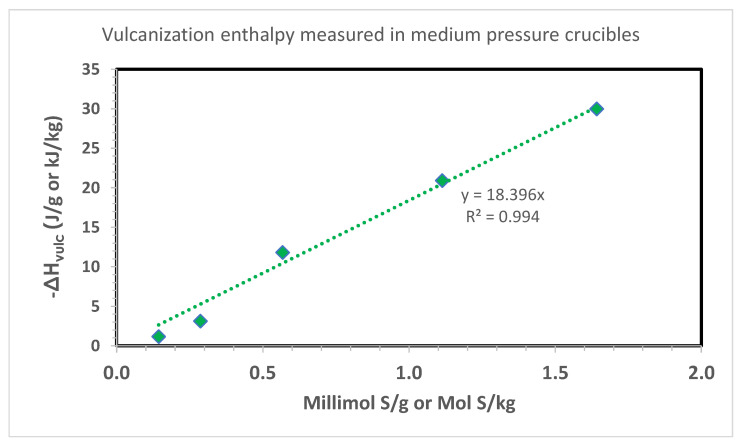
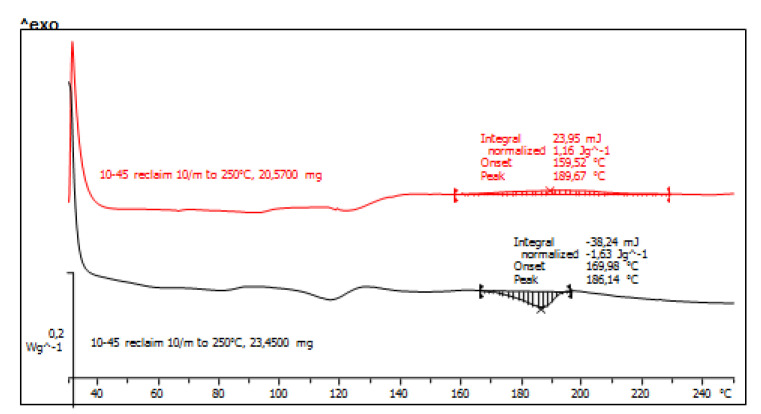
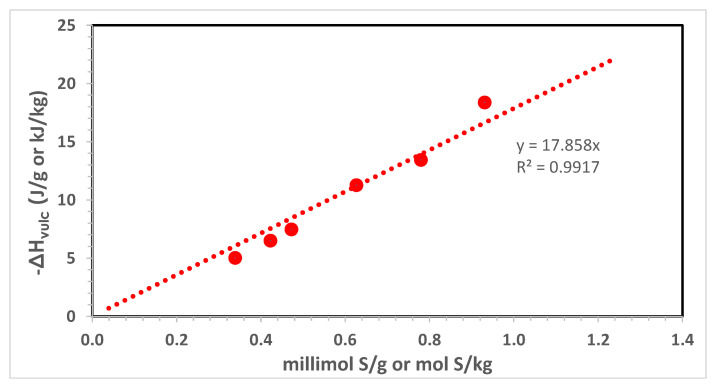
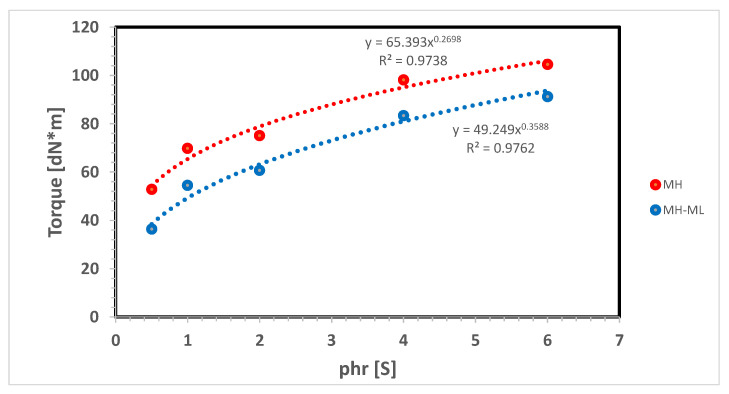
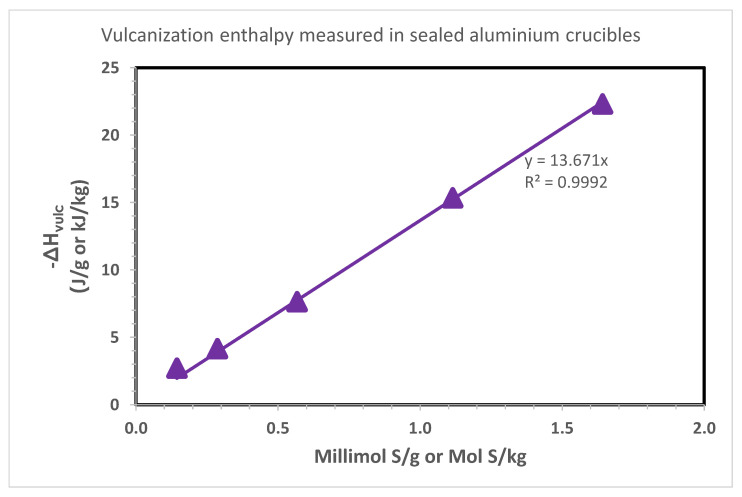
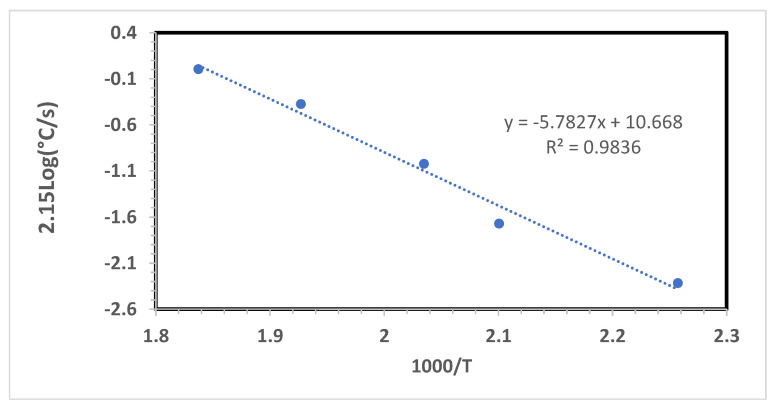
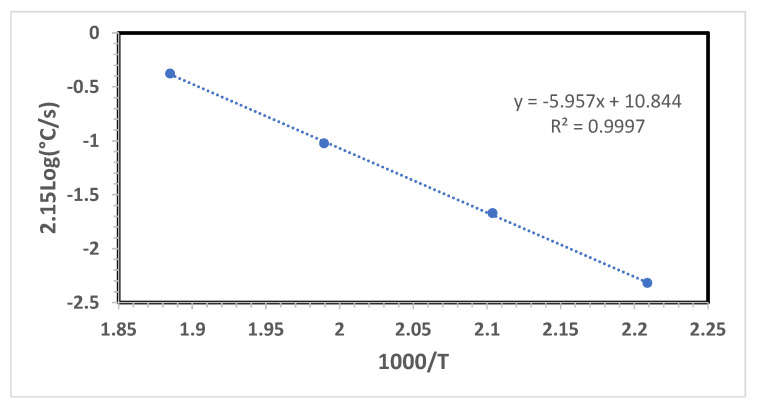
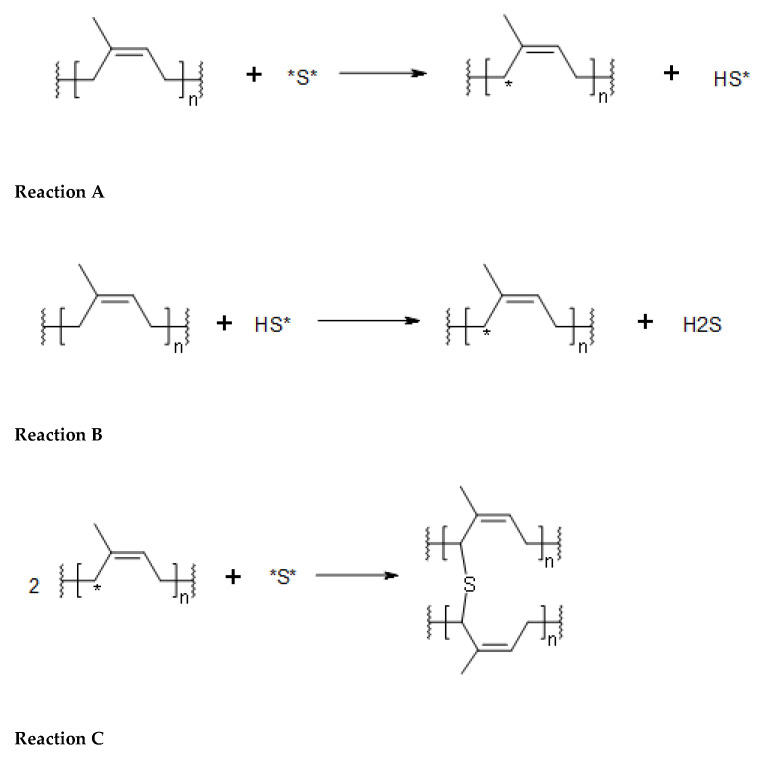
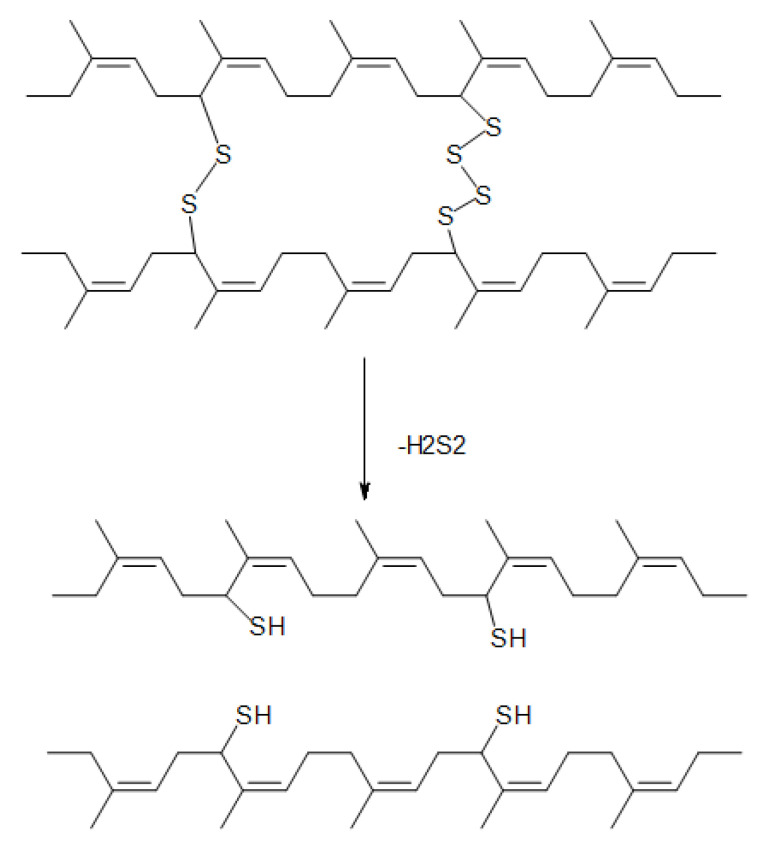
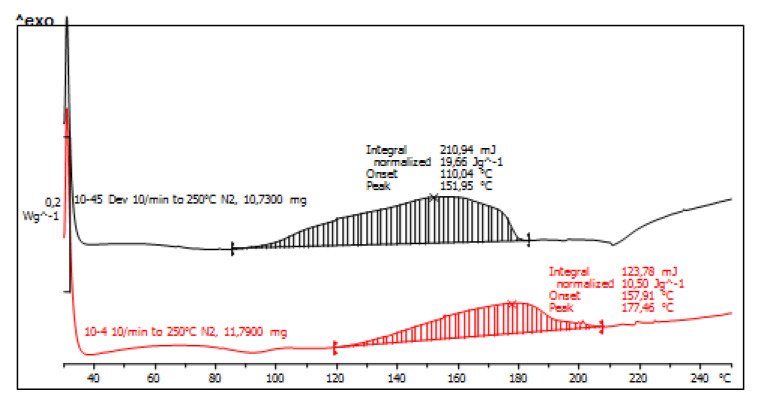
The vulcanization of rubber compounds is an exothermal process. A carbon black-filled and natural rubber-based (NR) formulation was mixed with different levels of sulfur (0.5, 1.0, 2.0, 4.0 and 6.0 phr) and studied with differential scanning calorimetry (DSC) for the determination of the vulcanization enthalpy. It was found that the vulcanization enthalpy is dependent on the amount of sulfur present in the compound and the vulcanization heat released was -18.4 kJ/mol S if referred to the entire rubber compound formulation or -46.0 kJ/mol S if the heat released is referred only to the NR present in the compound. The activation energy for the vulcanization of the rubber compounds was also determined by a DSC study at 49 kJ/mol and found to be quite independent from the sulfur content of the compounds under study. A simplified thermochemical model is proposed to explain the main reactions occurring during the vulcanization. The model correctly predicts that the vulcanization is an exothermal process although it gives an overestimation of the vulcanization enthalpy (which is larger for the EV vulcanization package and smaller for the conventional vulcanization system). If the devulcanization is conducted mechanochemically in order to break selectively the sulfur-based crosslinks, then the natural rubber compounds recovered from used tires can be re-vulcanized again and the exothermicity of such process can be measured satisfactorily with DSC analysis. This paper not only proposes a simplified mechanism of vulcanization and devulcanization but also proposes an analytical method to check the devulcanization status of the recycled rubber compound in order to distinguish truly devulcanized rubber from reclaimed rubber.
橡胶化合物的硫化是一个放热过程。一种炭黑填充的天然橡胶(NR)配方与不同水平的硫(0.5、1.0、2.0、4.0 和 6.0 phr)混合,并通过差示扫描量热法(DSC)进行研究,以确定硫化焓。结果表明,硫化焓取决于化合物中硫的含量,且如果参考整个橡胶化合物配方,则释放的硫化热为-18.4 kJ/mol S,如果仅参考化合物中存在的 NR,则释放的硫化热为-46.0 kJ/mol S。通过 DSC 研究还确定了橡胶化合物硫化的活化能为 49 kJ/mol,且发现其与研究中化合物的硫含量相当独立。提出了一个简化的热化学模型来解释硫化过程中发生的主要反应。该模型正确地预测了硫化是一个放热过程,尽管它对硫化焓的估计过高(EV 硫化体系的硫化焓过高,常规硫化体系的硫化焓过低)。如果为了选择性地破坏基于硫的交联而进行机械化学脱硫,则可以将从旧轮胎中回收的天然橡胶化合物再次进行硫化,并且可以通过 DSC 分析令人满意地测量该过程的放热性。本文不仅提出了硫化和脱硫的简化机制,还提出了一种分析方法来检查回收橡胶化合物的脱硫状态,以区分真正脱硫的橡胶和再生橡胶。