Ito Kei, Kise Hideki, Suzuki Satoshi, Nagai Sota, Hachiya Kurenai, Takeda Hiroki, Kawabata Soya, Ikeda Daiki, Takubo Keiyo, Kaneko Shinjiro, Fujita Nobuyuki
Department of Orthopaedic Surgery, School of Medicine, Fujita Health University, Toyoake 470-1192, Japan.
Department of Orthopaedic Surgery, Keio University School of Medicine, Tokyo 108-8345, Japan.
J Clin Med. 2023 Jan 19;12(3):808. doi: 10.3390/jcm12030808.
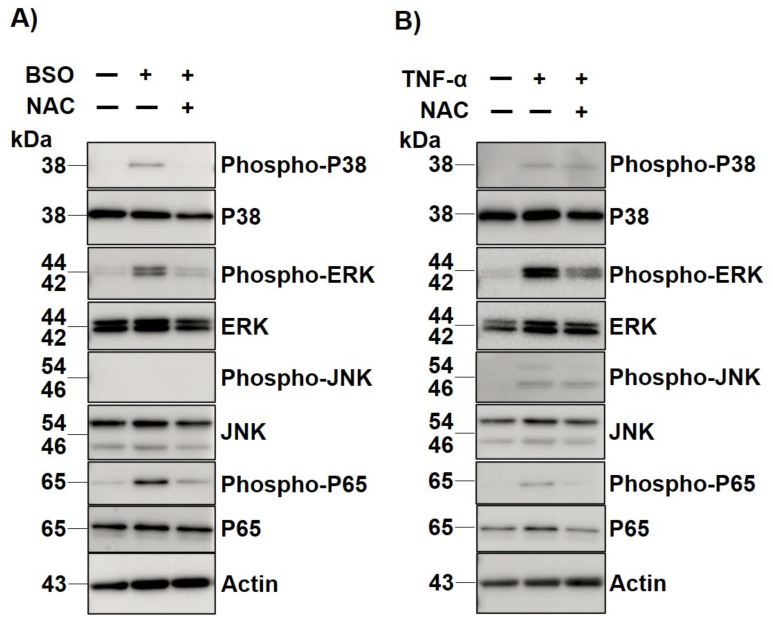
Oxidative stress (OS) results in many disorders, of which degenerative musculoskeletal conditions are no exception. However, the interaction between OS and ligamentum flavum (LF) hypertrophy in lumbar spinal canal stenosis is not clearly understood. The first research question was whether OS was involved in LF hypertrophy, and the second was whether the antioxidant N-acetylcysteine (NAC) was effective on LF hypertrophy. In total, 47 LF samples were collected from patients with lumbar spinal disorders. The cross-sectional area of LF was measured on axial magnetic resonance imaging. Immunohistochemistry of 8-OHdG and TNF-α were conducted on human LF samples. A positive association was found between 8-OHdG or TNF-α expression and cross-sectional area of LF. Flow cytometry analysis showed that HO, buthionine sulfoximine, and TNF-α treatment significantly increased intracellular reactive oxygen species in primary LF cells. NAC inhibited the induction of LF hypertrophy markers by OS or TNF in a real-time reverse transcriptase polymerase chain reaction and enzyme-linked immunosorbent assay. Western blotting analysis indicated that p38, Erk, and p65 phosphorylation were involved in intracellular OS signaling in LF cells. In conclusion, our results indicated that OS could be a therapeutic target for LF hypertrophy. Although this study included no in vivo studies to examine the longitudinal efficacy of NAC on LF hypertrophy, NAC may have potential as a therapeutic agent against lumbar spinal canal stenosis.
氧化应激(OS)会引发多种疾病,退行性肌肉骨骼疾病也不例外。然而,目前尚不清楚OS与腰椎管狭窄症中黄韧带(LF)肥厚之间的相互作用。第一个研究问题是OS是否参与LF肥厚,第二个问题是抗氧化剂N-乙酰半胱氨酸(NAC)对LF肥厚是否有效。总共从腰椎疾病患者中收集了47个LF样本。通过轴向磁共振成像测量LF的横截面积。对人类LF样本进行8-OHdG和TNF-α的免疫组织化学检测。发现8-OHdG或TNF-α表达与LF横截面积之间存在正相关。流式细胞术分析表明,HO、丁硫氨酸亚砜胺和TNF-α处理显著增加了原代LF细胞内的活性氧。在实时逆转录聚合酶链反应和酶联免疫吸附测定中,NAC抑制了OS或TNF对LF肥厚标志物的诱导。蛋白质印迹分析表明,p38、Erk和p65磷酸化参与了LF细胞内的OS信号传导。总之,我们的结果表明OS可能是LF肥厚的治疗靶点。尽管本研究未进行体内研究以检验NAC对LF肥厚的长期疗效,但NAC可能具有作为治疗腰椎管狭窄症药物的潜力。