Graduate Program in Medicinal Chemistry and Molecular Modeling, Health Science Institute, Federal University of Pará, Belém 66075-110, Brazil.
Laboratory of Modeling and Computational Chemistry, Department of Biological and Health Sciences, Federal University of Amapá, Macapá 68902-280, Brazil.
Molecules. 2023 Jan 19;28(3):1035. doi: 10.3390/molecules28031035.
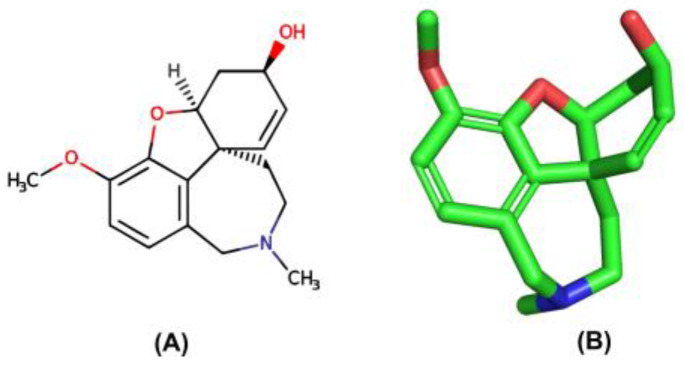
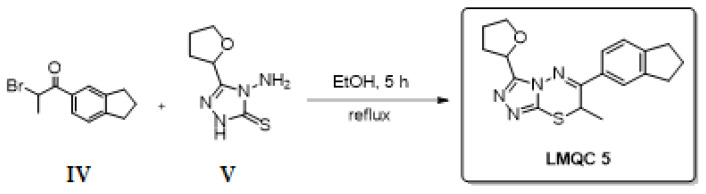
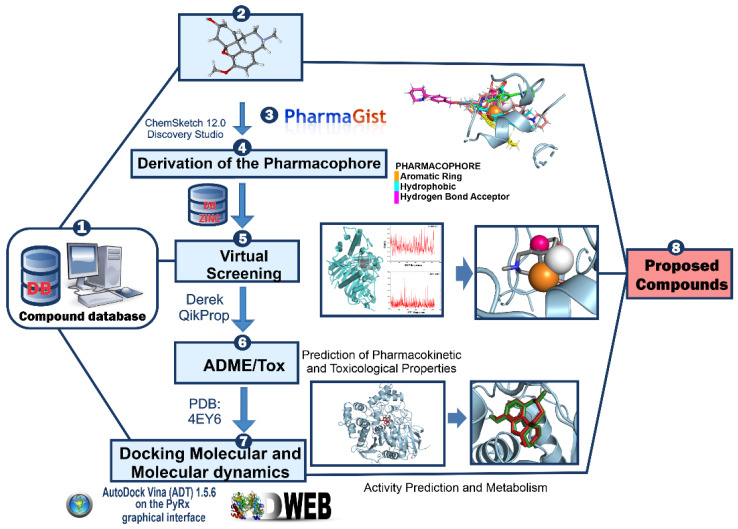
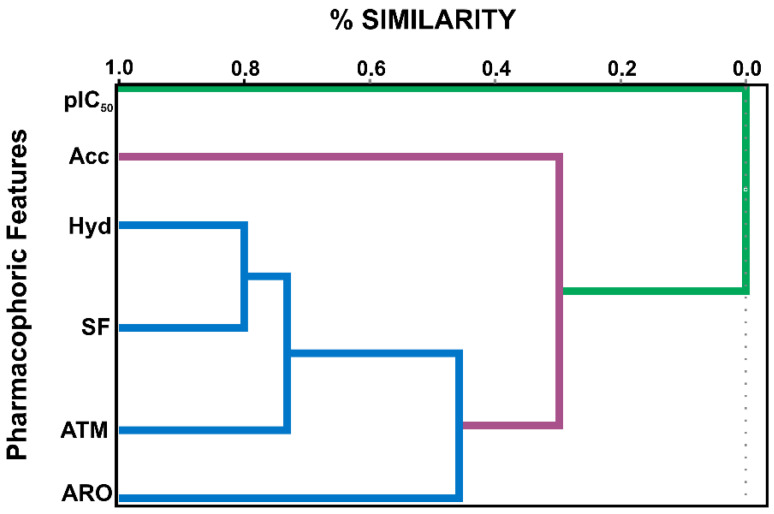
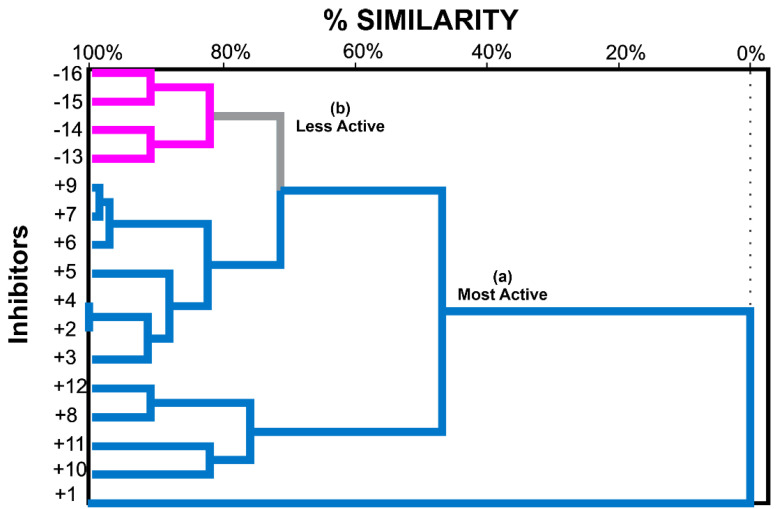
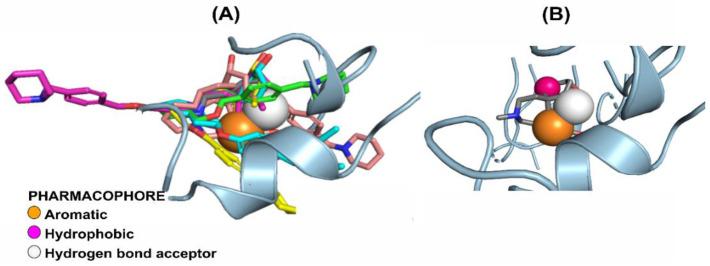
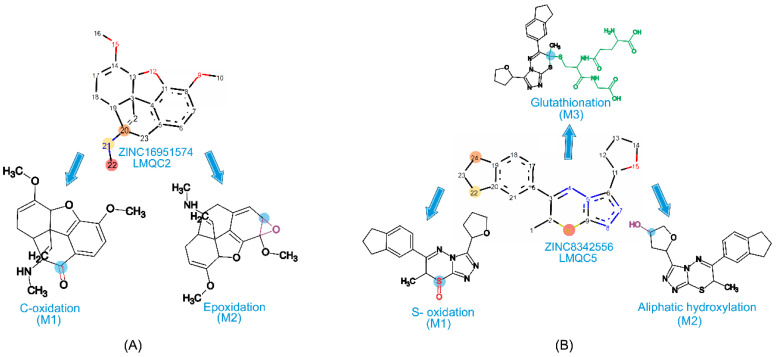
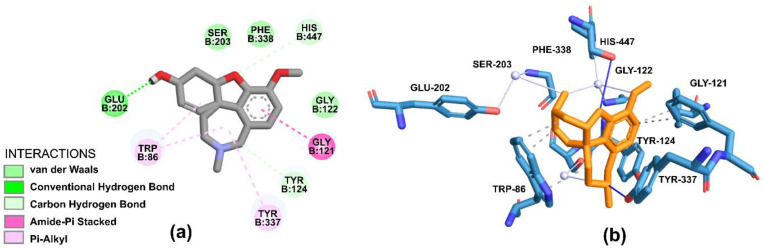
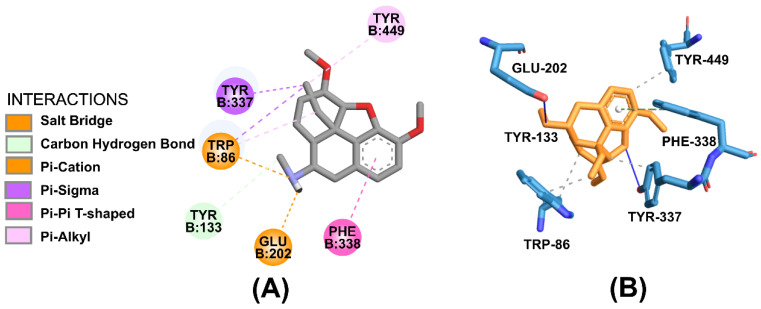
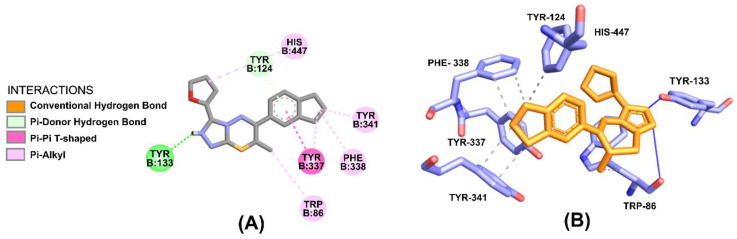
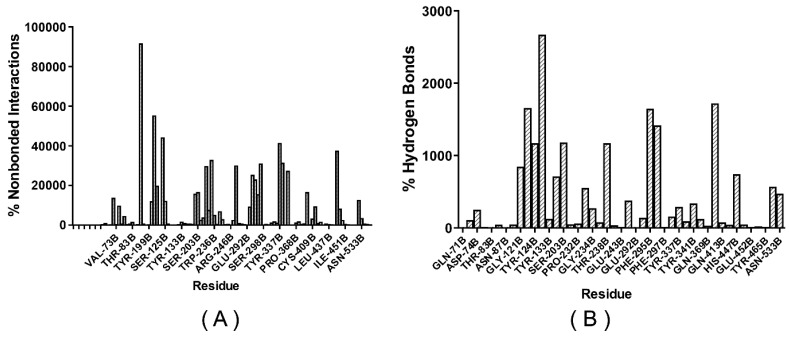
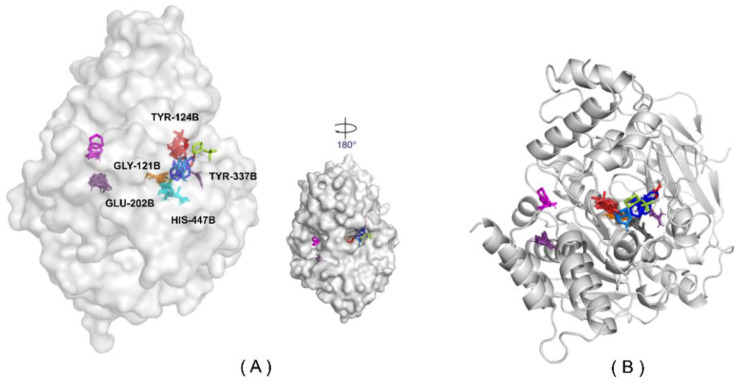
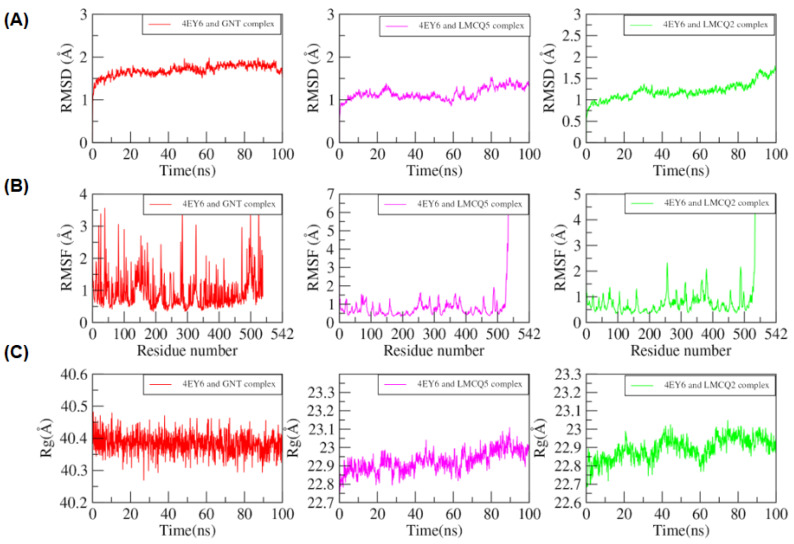
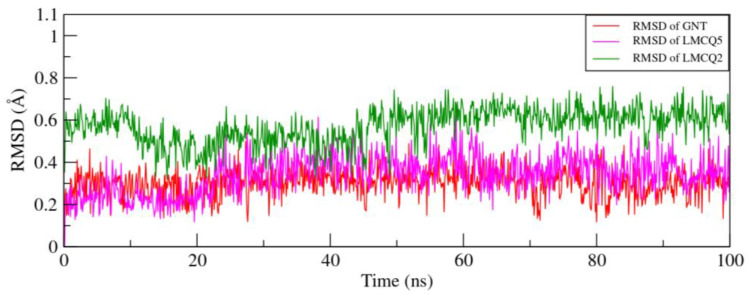
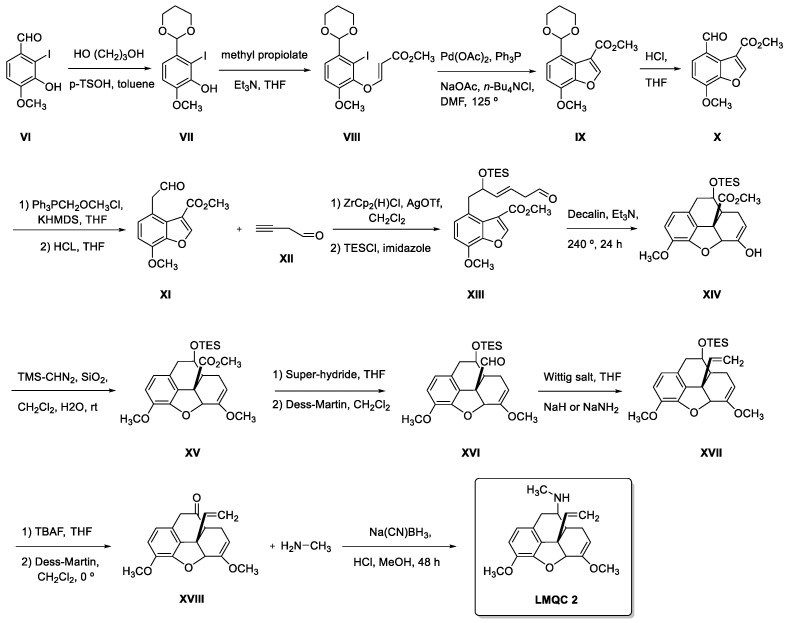
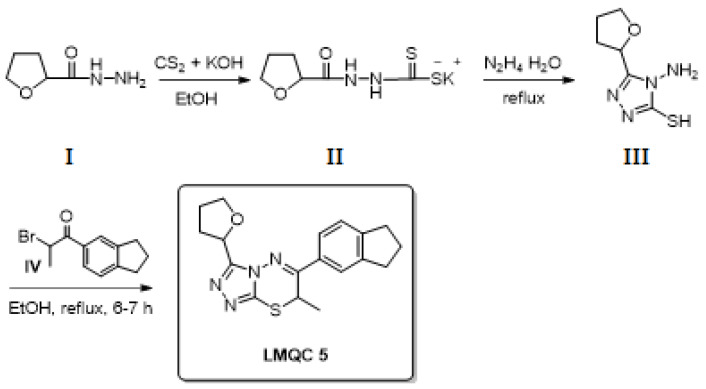
Acetylcholinesterase (AChE) enzymes play an essential role in the development of Alzheimer's disease (AD). Its excessive activity causes several neuronal problems, particularly psychopathies and neuronal cell death. A bioactive pose on the AChE B site of the human acetylcholinesterase (AChE) enzyme employed in this investigation, which was obtained from the Protein Data Bank (PDB ID 4EY6), allowed for the prediction of the binding affinity and free binding energy between the protein and the ligand. Virtual screening was performed to obtain structures similar to Galantamine (GNT) with potential AChE activity. The top 200 hit compounds were prioritized through the use of filters in ZincPharmer, with special features related to the pharmacophore. Critical analyses were carried out, such as hierarchical clustering analysis (HCA), ADME/Tox predictions, molecular docking, molecular simulation studies, synthetic accessibility (SA), lipophilicity, water solubility, and hot spots to confirm the stable binding of the two promising molecules (ZINC16951574-LMQC2, and ZINC08342556-LMQC5). The metabolism prediction, with metabolites M3-2, which is formed by Glutathionation reaction (Phase II), M1-2, and M2-2 formed from the reaction of S-oxidation and Aliphatic hydroxylation (Phase I), were both reactive but with no side effects. Theoretical synthetic routes and prediction of synthetic accessibility for the most promising compounds are also proposed. In conclusion, this study shows that in silico modeling can be used to create new drug candidate inhibitors for AChE. The compounds ZINC16951574-LMQC2, and ZINC08342556-LMQC5 are particularly promising for oral administration because they have a favorable drug-likeness profile, excellent lipid solubility, high bioavailability, and adequate pharmacokinetics.
乙酰胆碱酯酶(AChE)酶在阿尔茨海默病(AD)的发展中起着至关重要的作用。其过度的活性会导致许多神经元问题,特别是精神病理学和神经元细胞死亡。本研究中使用的人乙酰胆碱酯酶(AChE)酶的 AChE B 位的生物活性构象,来自蛋白质数据库(PDB ID 4EY6),允许预测蛋白质和配体之间的结合亲和力和自由结合能。虚拟筛选是为了获得具有潜在 AChE 活性的与 Galantamine(GNT)相似的结构。使用 ZincPharmer 中的过滤器对前 200 个命中化合物进行优先级排序,这些化合物具有与药效团相关的特殊特征。进行了关键分析,如层次聚类分析(HCA)、ADME/Tox 预测、分子对接、分子模拟研究、合成可及性(SA)、亲脂性、水溶性和热点,以确认这两种有前途的分子(ZINC16951574-LMQC2 和 ZINC08342556-LMQC5)的稳定结合。代谢预测显示,形成谷胱甘肽化反应(第二相)的代谢物 M3-2、由 S-氧化和脂肪族羟化反应(第一相)形成的代谢物 M1-2 和 M2-2 都是反应性的,但没有副作用。还提出了最有前途的化合物的理论合成路线和合成可及性预测。总之,本研究表明,计算机建模可用于为 AChE 创建新的候选药物抑制剂。化合物 ZINC16951574-LMQC2 和 ZINC08342556-LMQC5 特别适合口服给药,因为它们具有良好的药物样特性、优异的脂溶性、高生物利用度和足够的药代动力学。