School of Information and Communication Technologies, Swinburne University of Technology, Sarawak Campus, Kuching 93350, Malaysia.
Department of Artificial Intelligence and Data Science, Coimbatore Institute of Technology, Coimbatore 641014, India.
Sensors (Basel). 2023 Jan 20;23(3):1225. doi: 10.3390/s23031225.
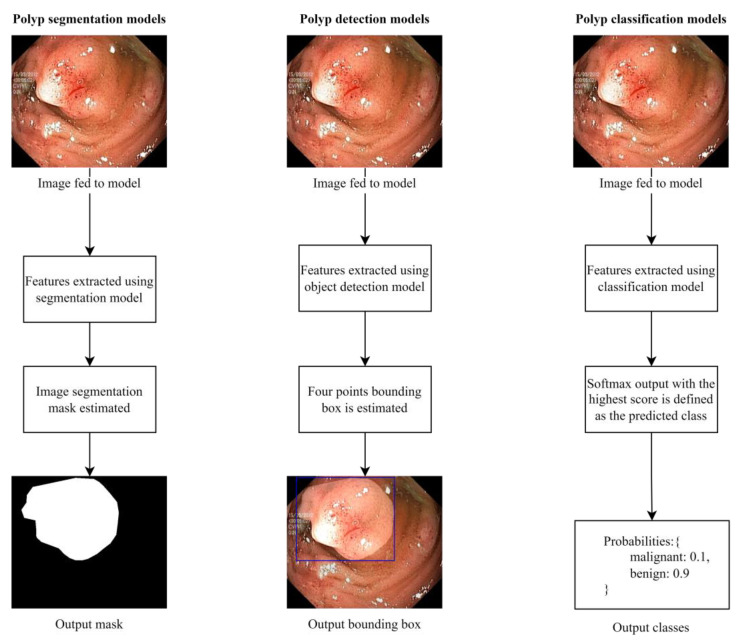
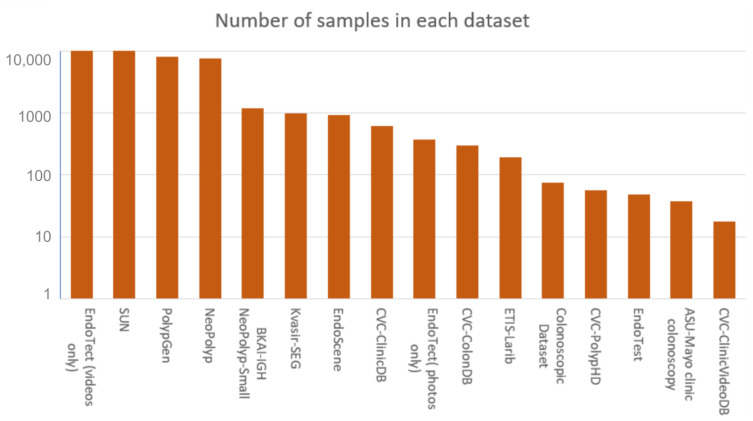
Given the increased interest in utilizing artificial intelligence as an assistive tool in the medical sector, colorectal polyp detection and classification using deep learning techniques has been an active area of research in recent years. The motivation for researching this topic is that physicians miss polyps from time to time due to fatigue and lack of experience carrying out the procedure. Unidentified polyps can cause further complications and ultimately lead to colorectal cancer (CRC), one of the leading causes of cancer mortality. Although various techniques have been presented recently, several key issues, such as the lack of enough training data, white light reflection, and blur affect the performance of such methods. This paper presents a survey on recently proposed methods for detecting polyps from colonoscopy. The survey covers benchmark dataset analysis, evaluation metrics, common challenges, standard methods of building polyp detectors and a review of the latest work in the literature. We conclude this paper by providing a precise analysis of the gaps and trends discovered in the reviewed literature for future work.
鉴于人们对将人工智能作为医疗辅助工具的兴趣日益浓厚,近年来,使用深度学习技术对结肠直肠息肉进行检测和分类一直是研究的热点领域。研究这个课题的动机是,由于疲劳和缺乏经验,医生有时会错过息肉。未被识别的息肉会导致进一步的并发症,最终导致结直肠癌(CRC),这是癌症死亡的主要原因之一。尽管最近已经提出了各种技术,但一些关键问题,如缺乏足够的训练数据、白光反射和模糊,影响了这些方法的性能。本文对最近提出的从结肠镜检查中检测息肉的方法进行了调查。该调查涵盖了基准数据集分析、评估指标、常见挑战、构建息肉检测器的标准方法以及对文献中最新工作的回顾。最后,我们通过对所审查文献中发现的差距和趋势进行精确分析,为未来的工作提供了参考。