Tang Yuhui, Xu Aiqi, Xu Zhongbiao, Xie Jindong, Huang Wei, Zhang Liulu, Chen Yitian, Yang Lu, Du Shasha, Wang Kun
State Key Laboratory of Oncology in South China, Guangdong Provincial Clinical Research Center for Cancer, Sun Yat-Sen University Cancer Center, Guangzhou, 510060, People's Republic of China.
Department of Breast Cancer, Cancer Center, Guangdong Provincial People's Hospital (Guangdong Academy of Medical Sciences), Southern Medical University, Guangzhou, 510080, People's Republic of China.
Exp Hematol Oncol. 2025 Jun 16;14(1):85. doi: 10.1186/s40164-025-00672-1.
Triple-negative breast cancer (TNBC) is commonly characterized by high-grade and aggressive features, resulting in an augmented likelihood of distant metastasis and inferior prognosis for patients. Tumor immune microenvironment (TME) has been recently considered to be tightly correlated with tumor progression and immunotherapy response. However, the actual heterogenous TME within TNBC remains more explorations.
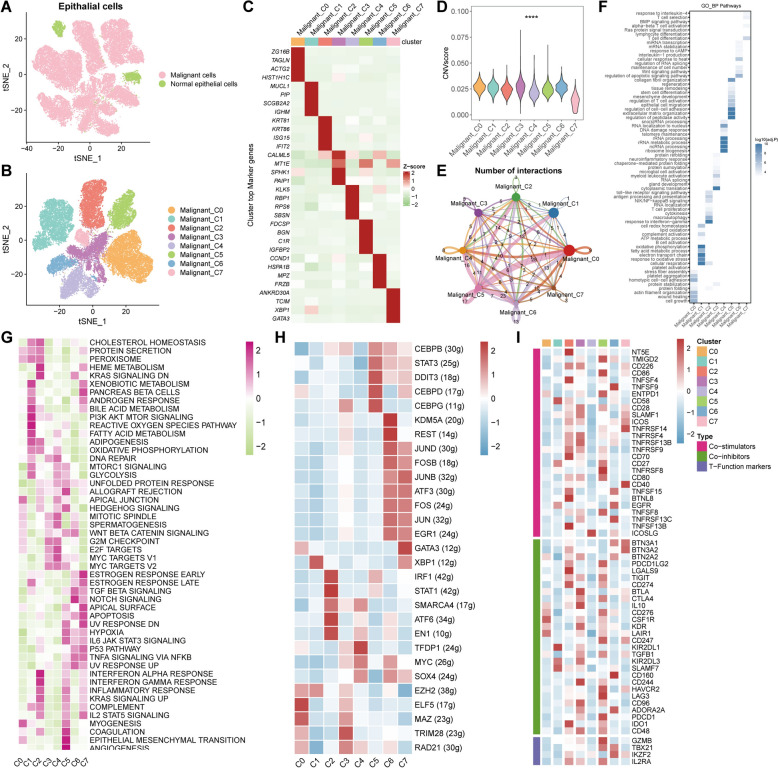
The thorough analyses of different cell types within TME were conducted on the self-tested single-cell RNA sequencing dataset which contained nine TNBC treatment-naïve patients, including subclusters classification, CellChat algorithm, transcription factors (TFs) expression, pseudotime analysis and functional enrichment assay. The malignant epithelial cluster was confirmed by copy number variations analysis, and subsequently LASSO-Cox regression was carried out to establish a Malignant Cell Index (MCI) model on the basis of five crucial genes (BGN, SDC1, IMPDH2, SPINT1, and UQCRFS1), which was validated in several TNBC cohorts through Kaplan-Meier survival and immunotherapy response analyses. The public spatial transcriptome, proteome data and qRT-PCR, western blotting experiments were exploited to corroborate UQCRFS1 expression in RNA and protein levels. Additionally, functional experiments were implemented to unravel the impacts of UQCRFS1 on TNBC cells.
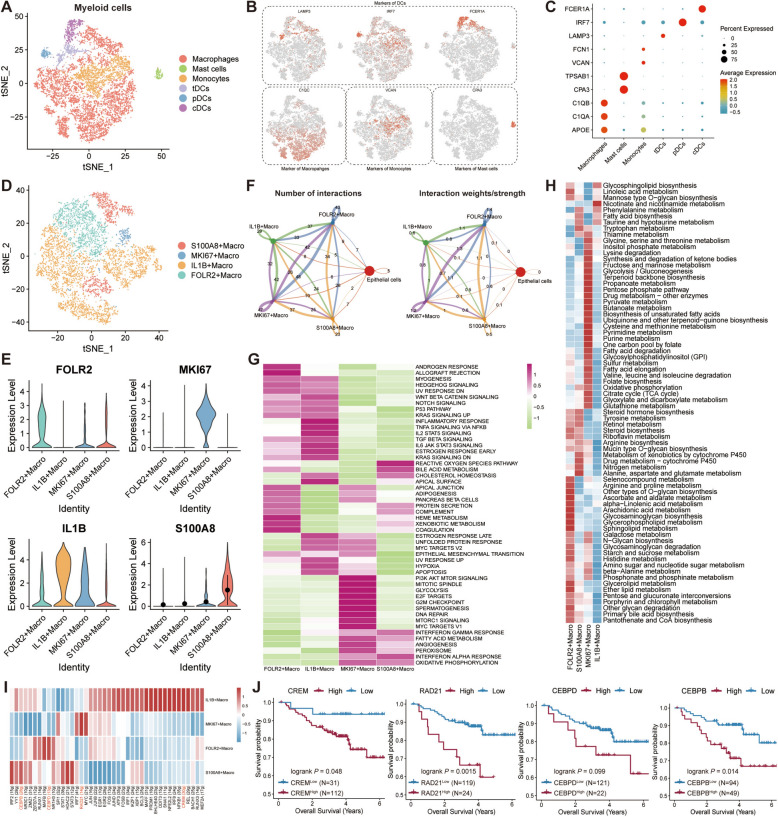
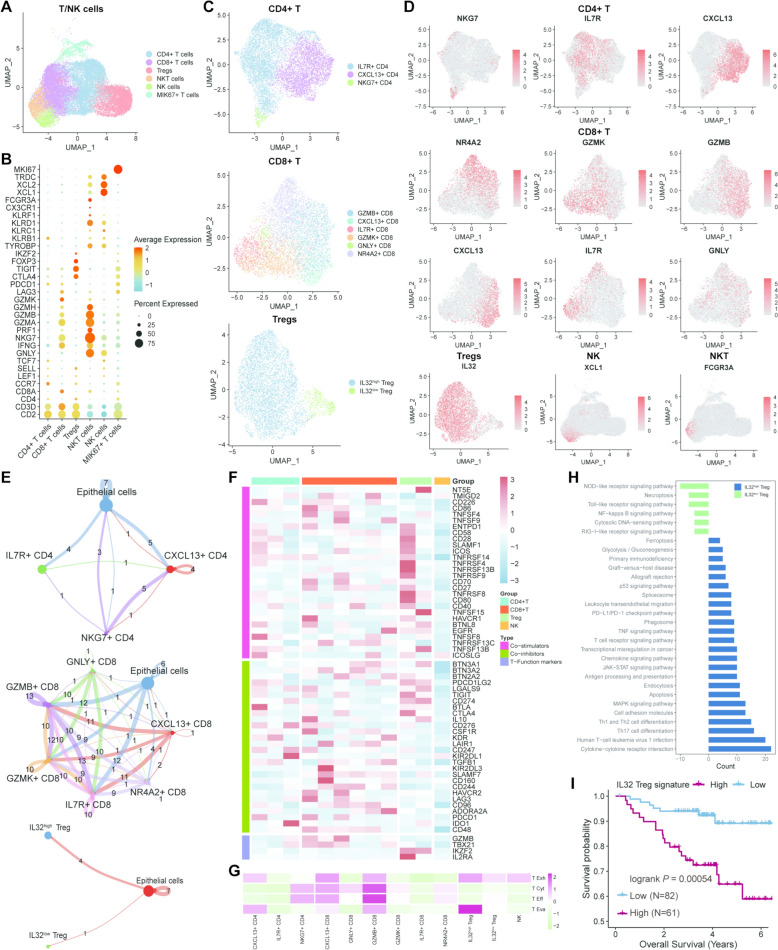
The diverse subclusters of TME cells within TNBC were clarified to display distinct characteristics in cell-cell interactions, TFs expression, differentiation trajectory and functional pathways. Particularly, IL32 Treg imparted an essential effect on tumor evasion and predicted a worsened prognosis of TNBC patients. Furthermore, MCI model enabled to notify the inferior prognosis and immunotherapy resistance in TNBC. Ultimately, UQCRFS1 knockdown dampened the proliferative and migratory competence in vitro as well as tumor growth in vivo of TNBC cells.
Our study offers innovative perspectives on comprehending the heterogeneity within TME of TNBC, thereby facilitating the elucidation of TNBC biology and providing clinical recommendations for TNBC patients' prognosis, such as IL32 Treg infiltration, MCI evaluation, and UQCRFS1 expression.
三阴性乳腺癌(TNBC)通常具有高级别和侵袭性特征,导致远处转移的可能性增加,患者预后较差。肿瘤免疫微环境(TME)最近被认为与肿瘤进展和免疫治疗反应密切相关。然而,TNBC内实际的异质性TME仍有待进一步探索。
对包含9例未经治疗的TNBC患者的自测单细胞RNA测序数据集进行TME内不同细胞类型的深入分析,包括亚群分类、CellChat算法、转录因子(TFs)表达、伪时间分析和功能富集分析。通过拷贝数变异分析确认恶性上皮亚群,随后基于五个关键基因(BGN、SDC1、IMPDH2、SPINT1和UQCRFS1)进行LASSO-Cox回归,建立恶性细胞指数(MCI)模型,并通过Kaplan-Meier生存分析和免疫治疗反应分析在多个TNBC队列中进行验证。利用公共空间转录组、蛋白质组数据以及qRT-PCR和蛋白质印迹实验,在RNA和蛋白质水平上证实UQCRFS1的表达。此外,进行功能实验以阐明UQCRFS1对TNBC细胞的影响。
明确了TNBC内TME细胞的不同亚群在细胞间相互作用、TFs表达、分化轨迹和功能途径方面表现出不同特征。特别是,IL32 Treg对肿瘤逃逸起重要作用,并预测TNBC患者预后较差。此外,MCI模型能够提示TNBC患者预后不良和免疫治疗耐药。最终,敲低UQCRFS1可抑制TNBC细胞的体外增殖和迁移能力以及体内肿瘤生长。
我们的研究为理解TNBC的TME异质性提供了新的视角,从而有助于阐明TNBC生物学特性,并为TNBC患者的预后提供临床建议,如IL32 Treg浸润、MCI评估和UQCRFS1表达。