Matteo Serenelli, Anna Cantone, Federico Sanguettoli, Daniele Maio, Gioele Fabbri, Beatrice Dal Passo, Rita Pavasini, Elisabetta Tonet, Giulia Passarini, Claudio Rapezzi, Gianluca Campo
Cardiovascular Institute, Azienda Ospedaliero-Universitaria di Ferrara, Ferrara, Italy.
Front Cardiovasc Med. 2023 Jan 27;10:1085824. doi: 10.3389/fcvm.2023.1085824. eCollection 2023.
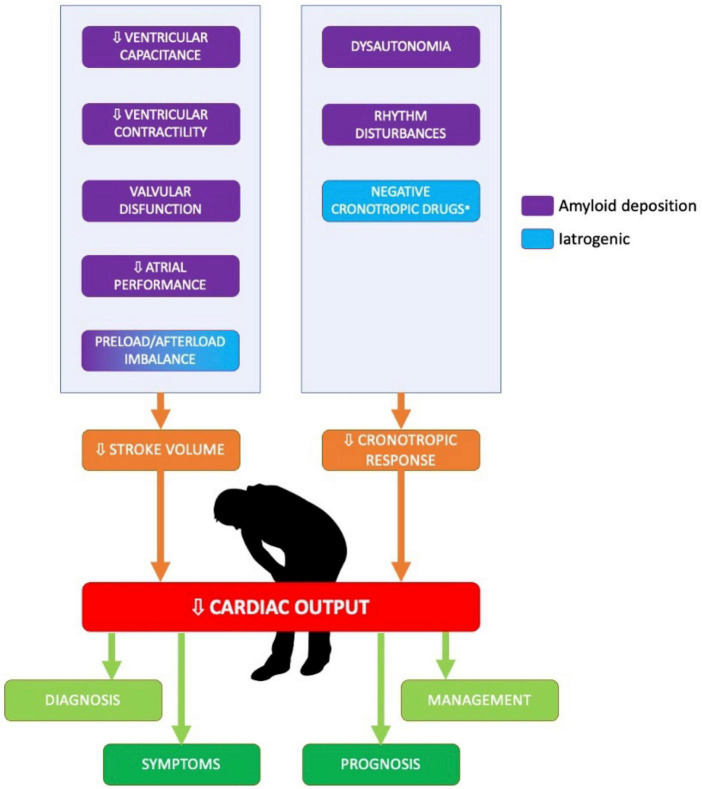
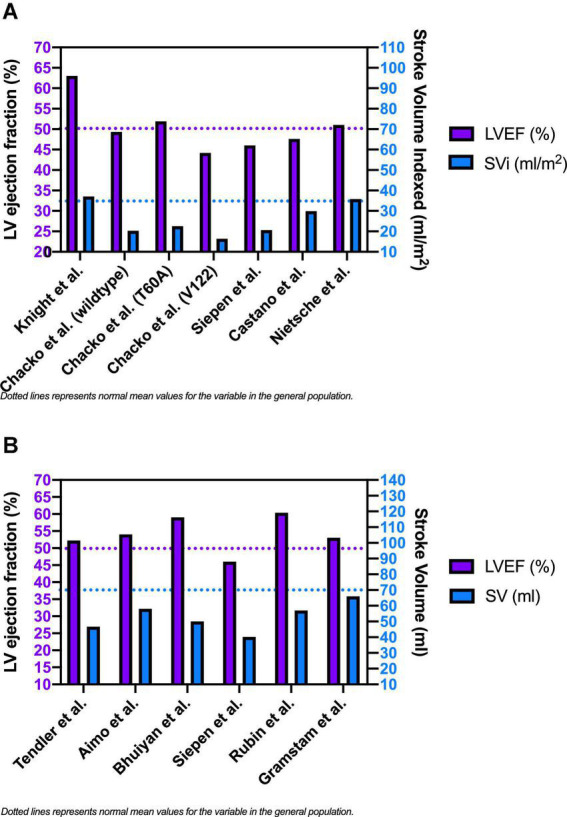
Cardiac amyloidosis (CA) is primarily a restrictive cardiomyopathy in which the impairment of diastolic function is dominant. Despite this, the left ventricular ejection fraction (LVEF) may be depressed in the late stage of the disease, but it poorly predicts prognosis in the earlier phases and does not represent well the pathophysiology of CA. Many echocardiographic parameters resulted important diagnostic and prognostic tools in patients with CA. Stroke volume (SV) and myocardial contraction fraction (MCF) may be obtained both with echocardiography and cardiac magnetic resonance (MRI). They reflect many factors intrinsically related to the pathophysiology of CA and are therefore potentially associated with symptoms and prognosis in CA.
To collect and summarize the current evidence on SV and MCF and their clinical and prognostic role in transthyretin (TTR-CA).
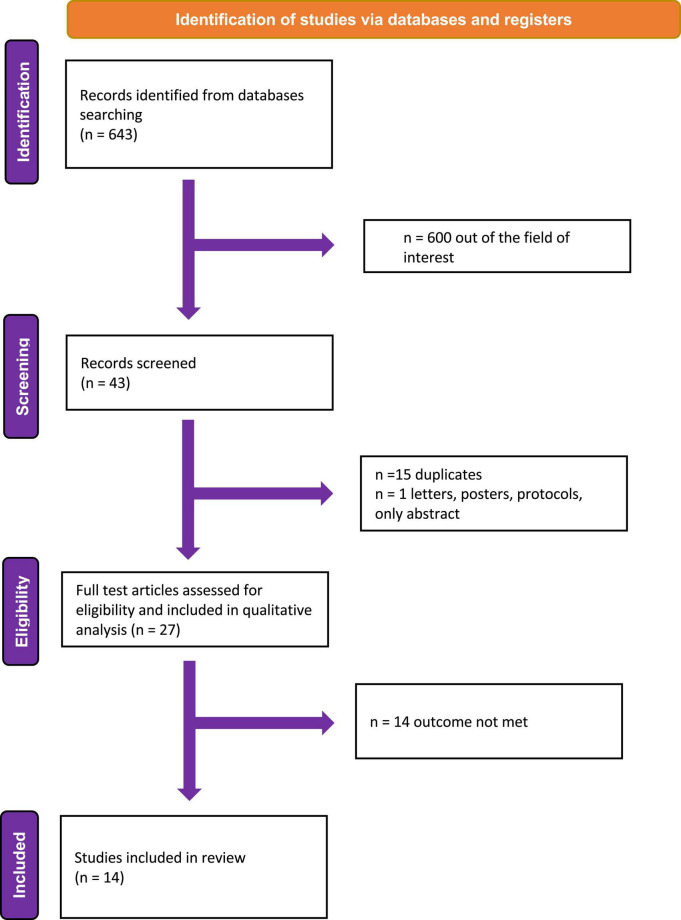
We performed a systematic review following the Preferred Reporting Items for Systematic reviews and Meta-Analyses (PRISMA) guidelines. We searched the literature database for studies focusing on SV and MCF in patients with TTR-CA. We analysed the following databases: PUBMED, Cochrane Library, EMBASE, and Web of Science database. Fourteen studies were included in the review. Both SV and MCF have important prognostic implications and are related to mortality. Furthermore, SV is more related to symptoms than LVEF and predicts tolerability of beta-blocker therapy in TTR-CA. Finally, SV showed to be an excellent measure to suggest the presence of TTR-CA in patients with severe aortic stenosis.
Stroke volume and MCF are very informative parameters that should be routinely assessed during the standard echocardiographic examination of all patients with TTR-CA. They carry a prognostic role while being associated with patients' symptoms.
心脏淀粉样变性(CA)主要是一种限制性心肌病,其中舒张功能障碍占主导地位。尽管如此,左心室射血分数(LVEF)在疾病晚期可能会降低,但它在疾病早期对预后的预测能力较差,且不能很好地反映CA的病理生理学。许多超声心动图参数已成为CA患者重要的诊断和预后工具。每搏输出量(SV)和心肌收缩分数(MCF)可通过超声心动图和心脏磁共振成像(MRI)获得。它们反映了许多与CA病理生理学内在相关的因素,因此可能与CA的症状和预后相关。
收集并总结关于SV和MCF及其在转甲状腺素蛋白(TTR-CA)中的临床和预后作用的现有证据。
我们按照系统评价和Meta分析的首选报告项目(PRISMA)指南进行了系统评价。我们在文献数据库中搜索了关注TTR-CA患者SV和MCF的研究。我们分析了以下数据库:PubMed、Cochrane图书馆、EMBASE和科学网数据库。该评价纳入了14项研究。SV和MCF均具有重要的预后意义,且与死亡率相关。此外,与LVEF相比,SV与症状的相关性更强,并可预测TTR-CA患者β受体阻滞剂治疗的耐受性。最后,SV被证明是提示严重主动脉瓣狭窄患者存在TTR-CA的一项出色指标。
每搏输出量和MCF是非常有价值的参数,在所有TTR-CA患者的标准超声心动图检查中应常规评估。它们在具有预后作用的同时还与患者症状相关。