Green P J, Kay S A, Chua N H
Laboratory of Plant Molecular Biology, Rockefeller University, New York, NY 10021-6399.
EMBO J. 1987 Sep;6(9):2543-9. doi: 10.1002/j.1460-2075.1987.tb02542.x.
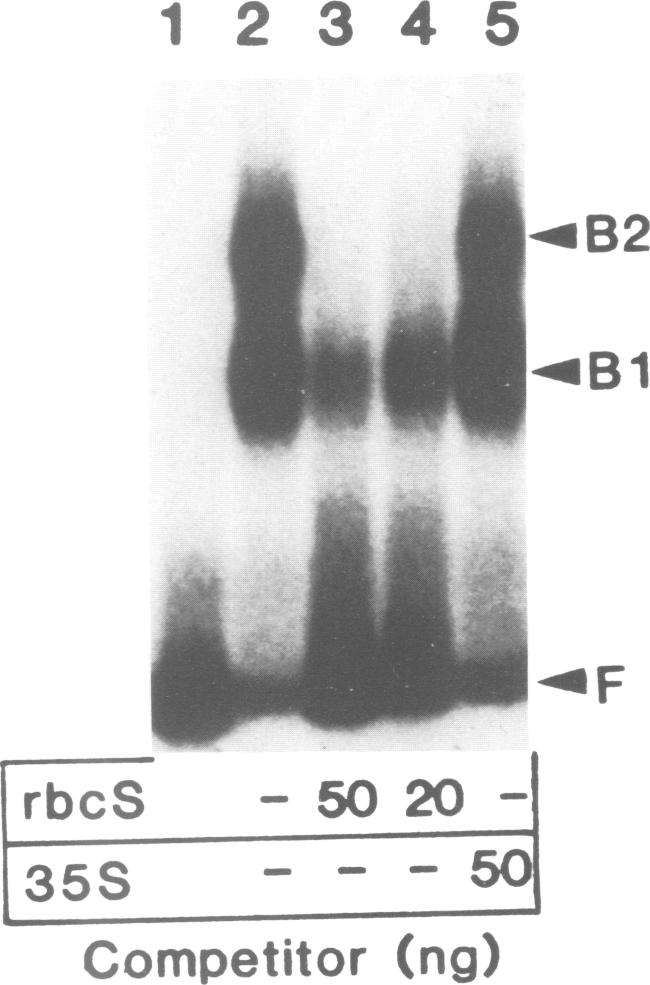
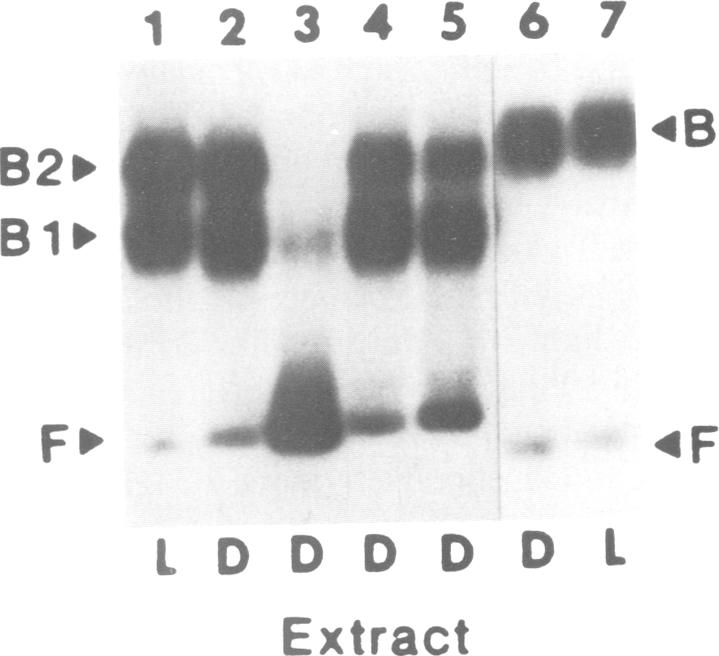
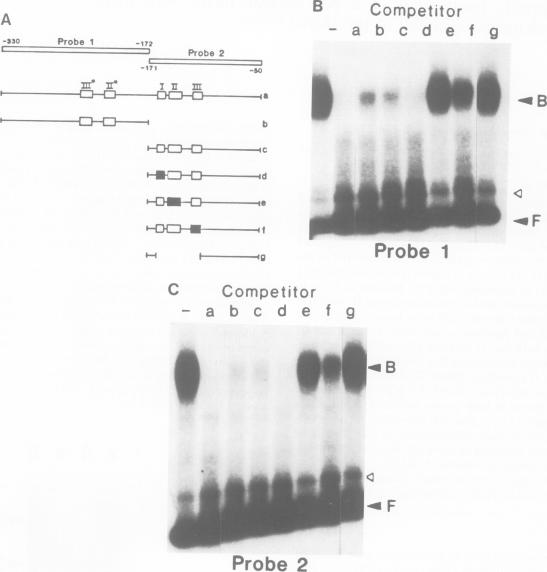
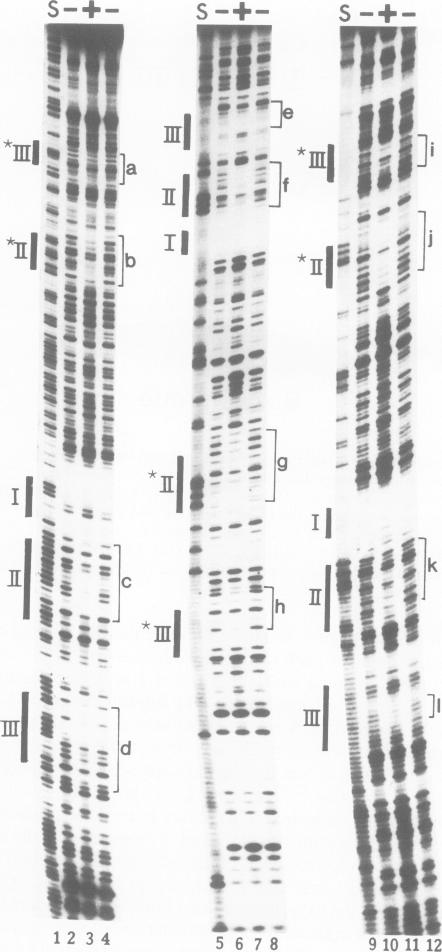
Pea nuclear extracts were used in gel retardation assays and DNase I footprinting experiments to identify a protein factor that specifically interacts with regulatory DNA sequences upstream of the pea rbcS-3A-gene. This factor, designated GT-1, binds to two short sequences (boxes II and III) in the -150 region that are known to function as light-responsive elements (LREs) in transgenic tobacco. Binding of GT-1 to homologous sequences further upstream (boxes II and III in the -220 region) indicates that these boxes comprise the redundant LRE that functions in vivo when boxes II and III are deleted. In both box II and box II, methylation interference experiments demonstrate that two adjacent G residues are critical for GT-binding. Single Gs present in boxes III and III are also important. Since GT-1 is present in nuclear extracts from leaves of light-grown and dark-adapted pea plants, its regulatory role does not depend on de novo synthesis. Thus if GT-1 binds differentially in vivo it must be postranslationally modified or sterically blocked from binding by another factor in response to light.
豌豆核提取物用于凝胶阻滞分析和DNase I足迹实验,以鉴定一种与豌豆rbcS - 3A基因上游调控DNA序列特异性相互作用的蛋白质因子。这种因子被命名为GT - 1,它与 - 150区域的两个短序列(框II和框III)结合,这两个序列在转基因烟草中已知作为光响应元件(LREs)发挥作用。GT - 1与更上游的同源序列( - 220区域的框II和框III)结合,表明当框II和框III缺失时,这些框构成了在体内发挥作用的冗余LRE。在框II和框III中,甲基化干扰实验表明两个相邻的G残基对GT - 1结合至关重要。框III和框III中单个的G也很重要。由于GT - 1存在于光照生长和暗适应豌豆植物叶片的核提取物中,其调节作用不依赖于从头合成。因此,如果GT - 1在体内存在差异结合,那么它一定是在翻译后被修饰,或者在光照响应中被另一个因子在空间上阻止结合。