.
Acta Biomed. 2023 Feb 13;94(1):e2023034. doi: 10.23750/abm.v94i1.13738.
Upper airway diseases are frequent and recognize different etiopathogenetic mechanisms, including infection, inflammation, and allergy. Therefore, topical treatments are preferable in comparison with systemic medications. Several delivery devices are available on the market, including nasal drops, syringes, sprays, nebulizers, and douches. However, it is clinically relevant to know the better way to use it.
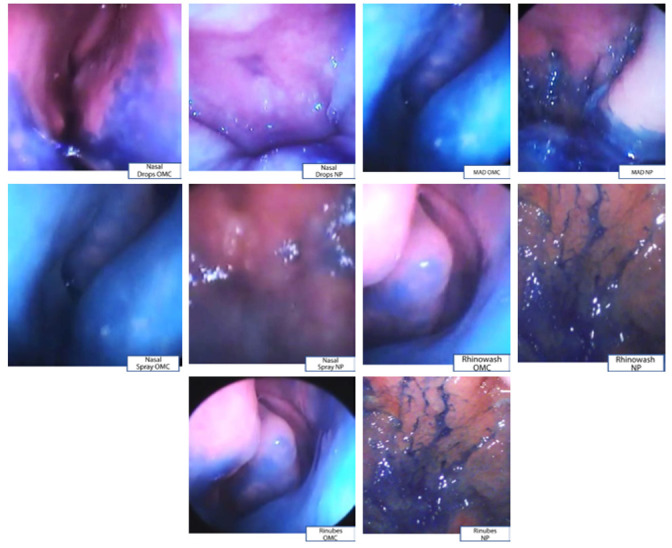
The present experience compared five different devices that were tested: i) a nasal dropper, ii) a standard nasal spray device, iii) a mucosal atomization device with a nozzle tip, iv) a nebulizer device, and v) a nasal douche. Saline solution with methylene blue was the marker to evaluate the intranasal distribution.
The findings showed an apparent difference in area distribution among these delivery devices. Conclusion The present experience showed that doctors should choose the most appropriate device for the current disease in clinical practice.
上呼吸道疾病较为常见,并可识别出不同的病因发病机制,包括感染、炎症和过敏。因此,与全身药物治疗相比,局部治疗更为可取。目前市场上有多种给药装置,包括滴鼻剂、注射器、喷雾剂、雾化器和鼻腔冲洗器。然而,了解如何更好地使用这些装置具有重要的临床意义。
本经验比较了五种不同的装置:i)滴鼻器,ii)标准鼻腔喷雾剂装置,iii)带喷嘴尖端的黏膜雾化装置,iv)雾化器装置,v)鼻腔冲洗器。含有亚甲蓝的生理盐水是评估鼻内分布的标志物。
研究结果表明,这些给药装置在区域分布上存在明显差异。
本经验表明,在临床实践中,医生应根据当前疾病选择最合适的装置。