Institute of Bioengineering and Global Health Institute, School of Life Sciences, Ecole Polytechnique Fédérale de Lausanne, Lausanne, Switzerland.
mBio. 2023 Apr 25;14(2):e0351822. doi: 10.1128/mbio.03518-22. Epub 2023 Feb 14.
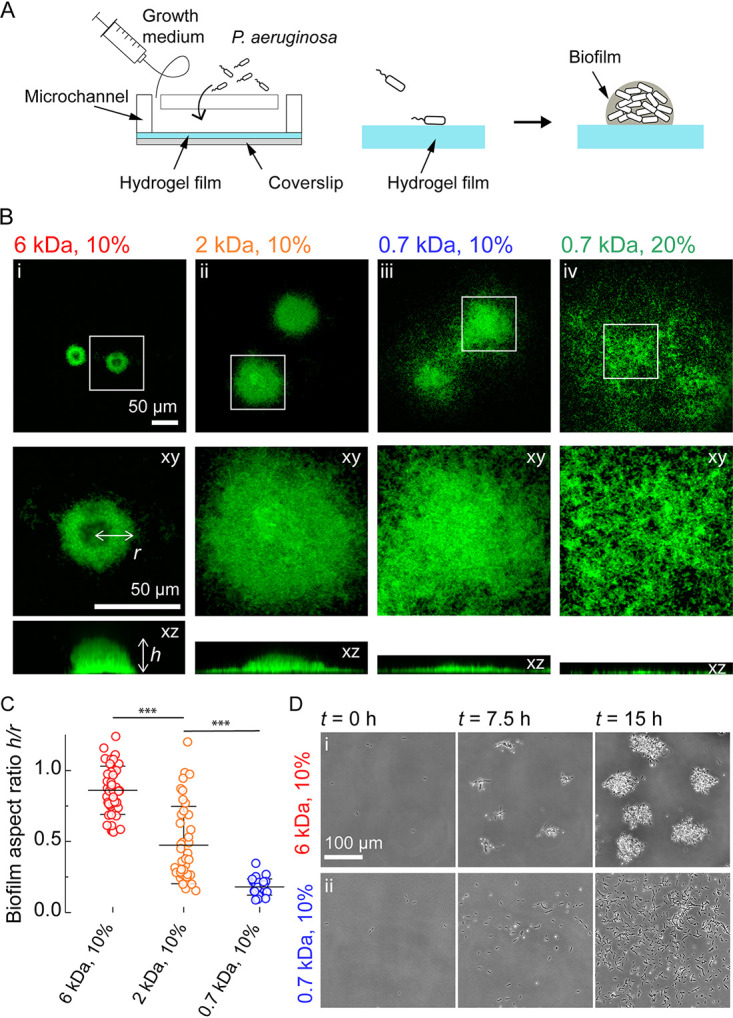
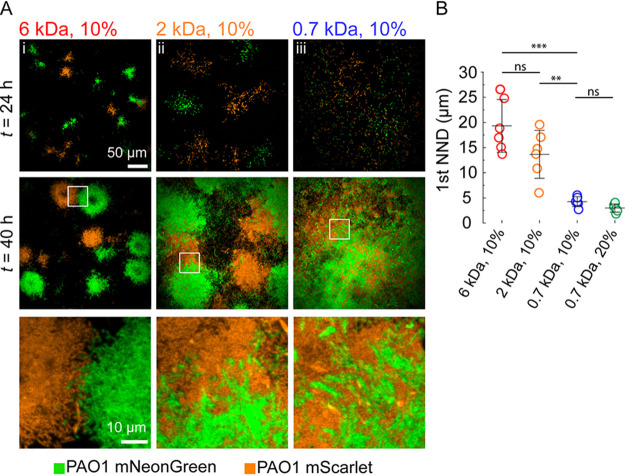
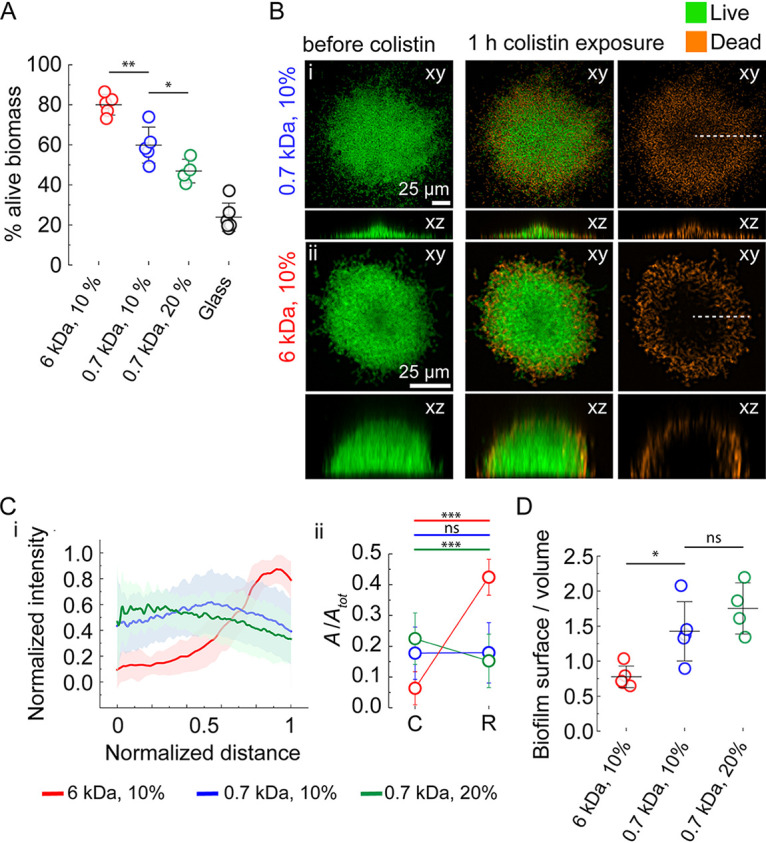
In the wild, bacteria are most frequently found in the form of multicellular structures called biofilms. Biofilms grow at the surface of abiotic and living materials with wide-ranging mechanical properties. The opportunistic pathogen Pseudomonas aeruginosa forms biofilms on indwelling medical devices and on soft tissues, including burn wounds and the airway mucosa. Despite the critical role of substrates in the foundation of biofilms, we still lack a clear understanding of how material mechanics regulate their architecture and the physiology of resident bacteria. Here, we demonstrate that physical properties of hydrogel material substrates define P. aeruginosa biofilm architecture. We show that hydrogel mesh size regulates twitching motility, a surface exploration mechanism priming biofilms, ultimately controlling the organization of single cells in the multicellular community. The resulting architectural transitions increase P. aeruginosa's tolerance to colistin, a last-resort antibiotic. In addition, mechanical regulation of twitching motility affects P. aeruginosa clonal lineages, so that biofilms are more mixed on relatively denser materials. Our results thereby establish material properties as a factor that dramatically affects biofilm architecture, antibiotic efficacy, and evolution of the resident population. The biofilm lifestyle is the most widespread survival strategy in the bacterial world. Pseudomonas aeruginosa biofilms cause chronic infections and are highly recalcitrant to antimicrobials. The genetic requirements allowing P. aeruginosa to grow into biofilms are known, but not the physical stimuli that regulate their formation. Despite colonizing biological tissues, investigations of biofilms on soft materials are limited. In this work, we show that biofilms take unexpected forms when growing on soft substrates. The physical properties of the material shape P. aeruginosa biofilms by regulating surface-specific twitching motility. Physical control of biofilm morphogenesis ultimately influences the resilience of biofilms to antimicrobials, linking physical environment with tolerance to treatment. Altogether, our work established that the physical properties of a surface are a critical environmental regulator of biofilm biogenesis and evolution.
在自然界中,细菌最常以称为生物膜的多细胞结构形式存在。生物膜在具有广泛机械性能的无生命和有生命材料的表面生长。机会性病原体铜绿假单胞菌在留置医疗器械和软组织上形成生物膜,包括烧伤创面和气道黏膜。尽管基质在生物膜的形成中起着关键作用,但我们仍然缺乏对材料力学如何调节其结构和驻留细菌生理学的清晰认识。在这里,我们证明水凝胶材料基质的物理性质决定了铜绿假单胞菌生物膜的结构。我们表明,水凝胶网格大小调节了菌毛运动,这是一种表面探索机制,为生物膜做好准备,最终控制多细胞群落中单细胞的组织。由此产生的结构转变增加了铜绿假单胞菌对粘菌素的耐受性,粘菌素是一种最后的抗生素。此外,菌毛运动的机械调节会影响铜绿假单胞菌的克隆谱系,因此在相对密集的材料上生物膜更加混合。我们的结果因此确立了材料特性作为显著影响生物膜结构、抗生素疗效和驻留种群进化的因素。生物膜生活方式是细菌世界中最广泛的生存策略。铜绿假单胞菌生物膜引起慢性感染,并且对抗生素高度耐药。允许铜绿假单胞菌生长为生物膜的遗传要求是已知的,但调节其形成的物理刺激尚不清楚。尽管在生物组织上定植,但对软材料上生物膜的研究有限。在这项工作中,我们表明,当在软基质上生长时,生物膜会呈现出意想不到的形式。材料的物理性质通过调节表面特异性菌毛运动来塑造铜绿假单胞菌生物膜。生物膜形态发生的物理控制最终会影响生物膜对抗生素的弹性,将物理环境与对治疗的耐受性联系起来。总之,我们的工作表明,表面的物理特性是生物膜发生和进化的关键环境调节剂。