Université Grenoble Alpes, CNRS, Grenoble, France.
Laboratoire de Physique, Université Lyon, ENS de Lyon, Université Claude Bernard, CNRS, Lyon, France.
Elife. 2023 May 9;12:e81112. doi: 10.7554/eLife.81112.
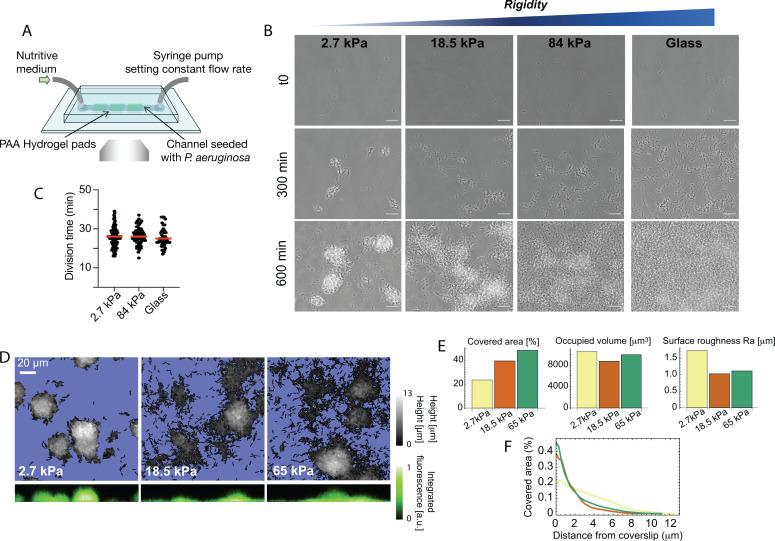
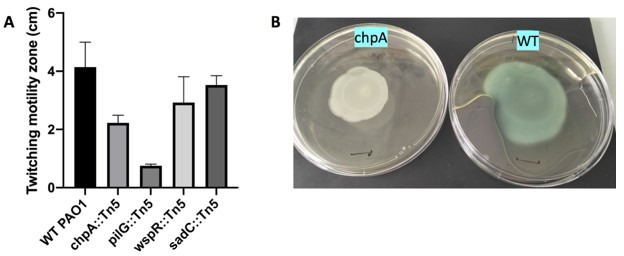
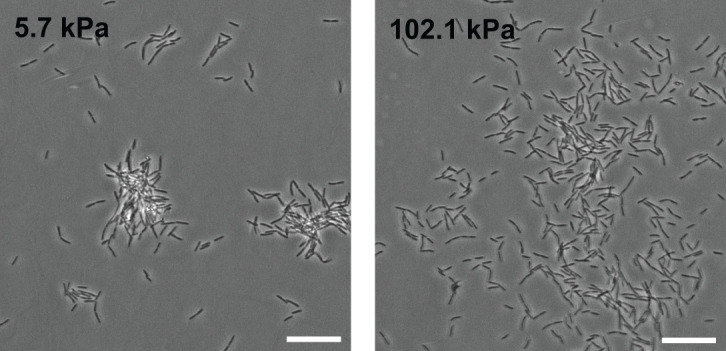
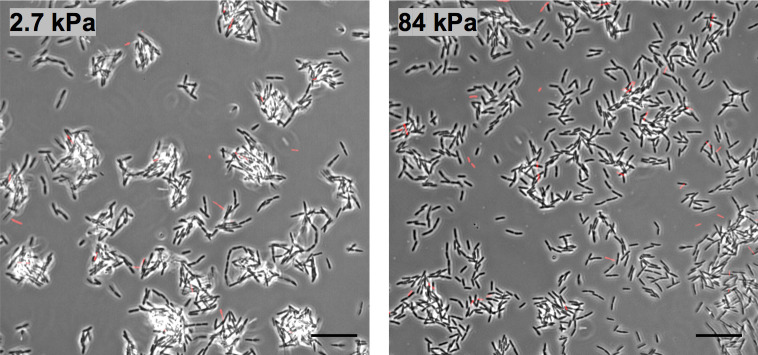
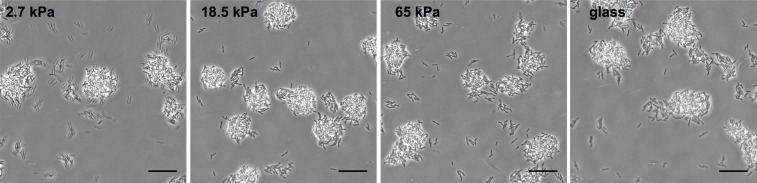
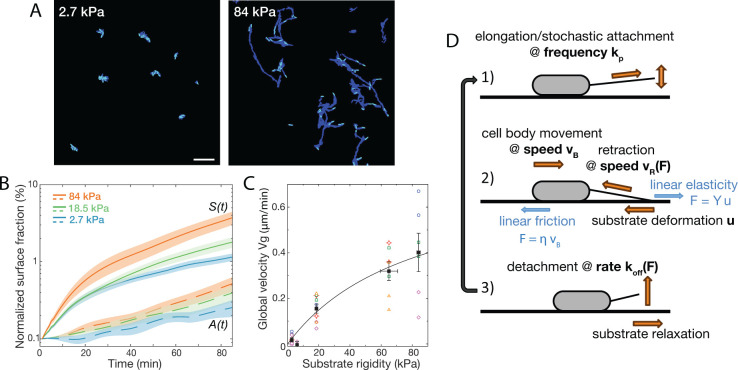
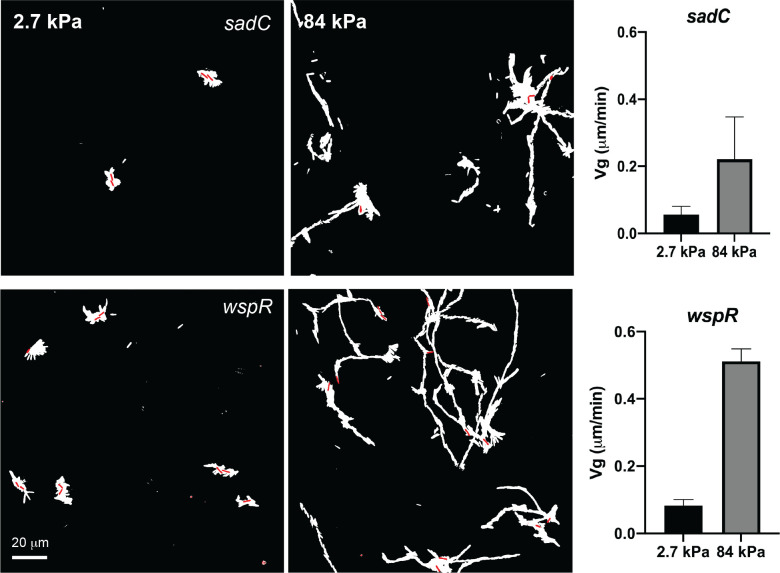
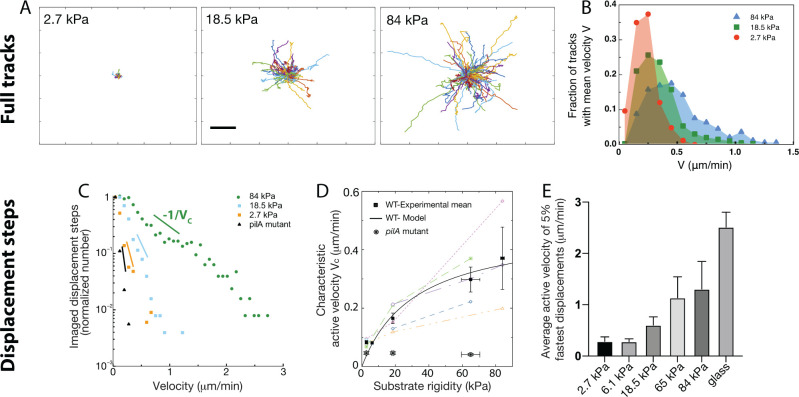
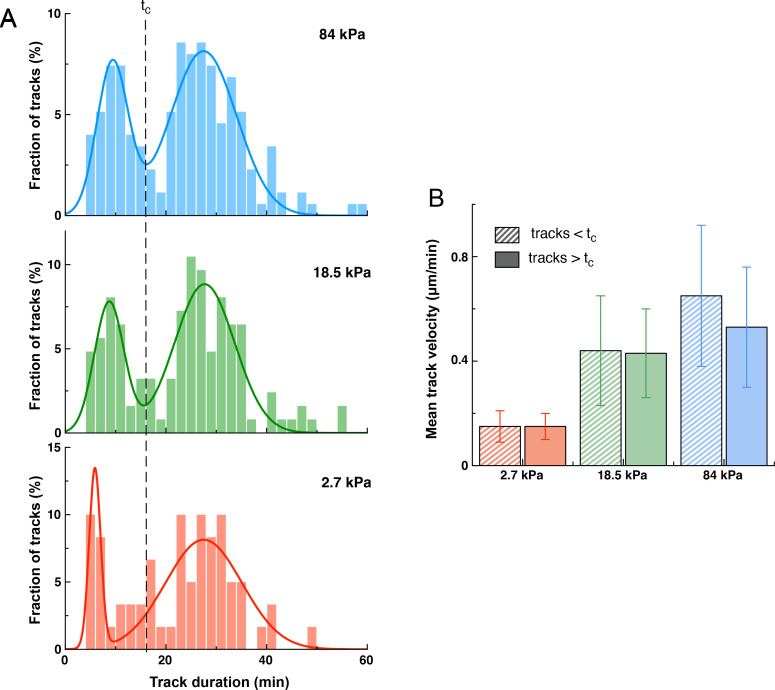
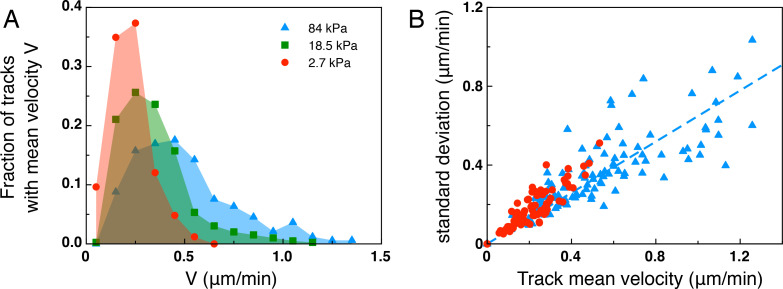
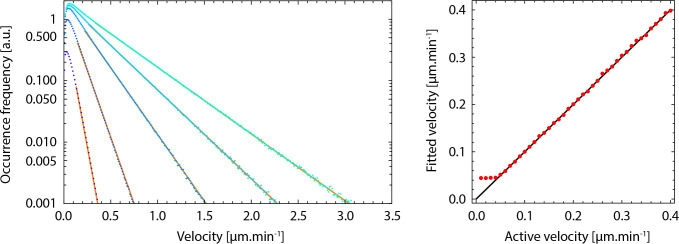
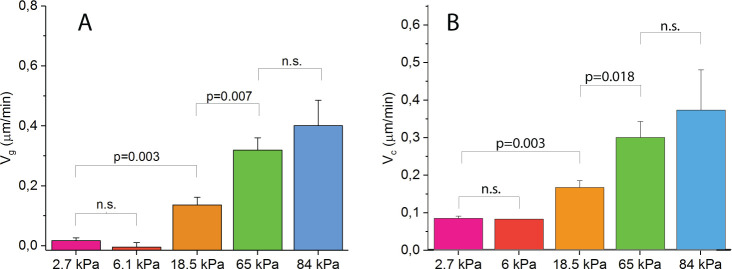
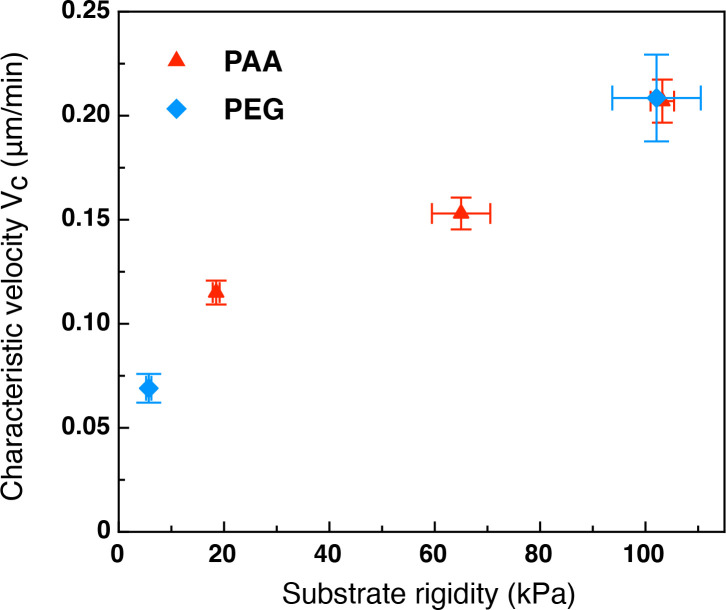
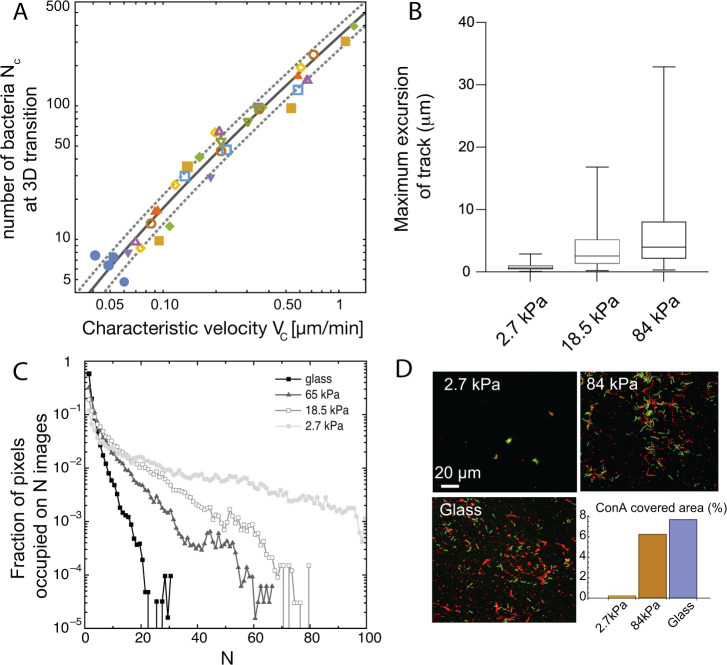
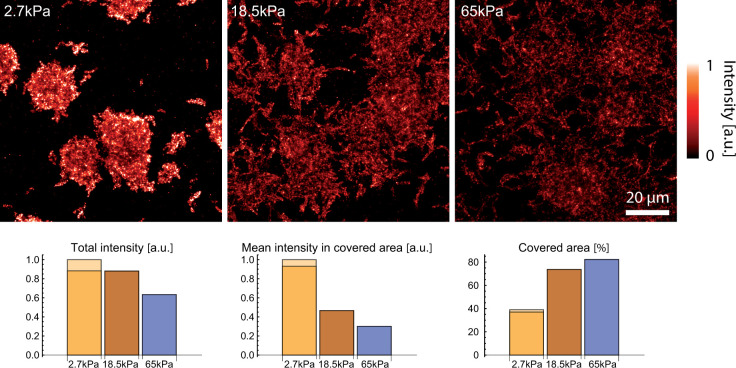
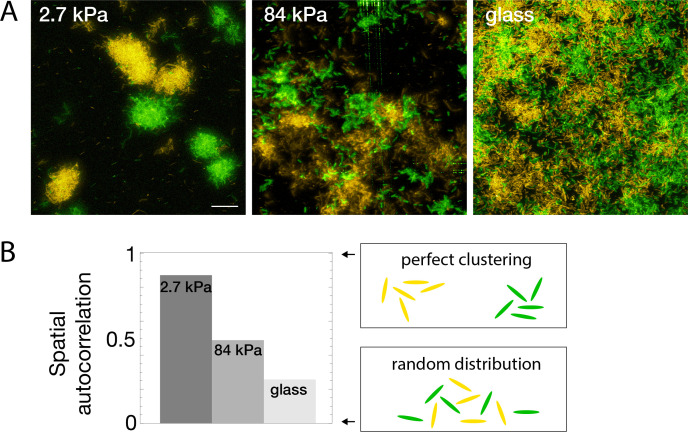
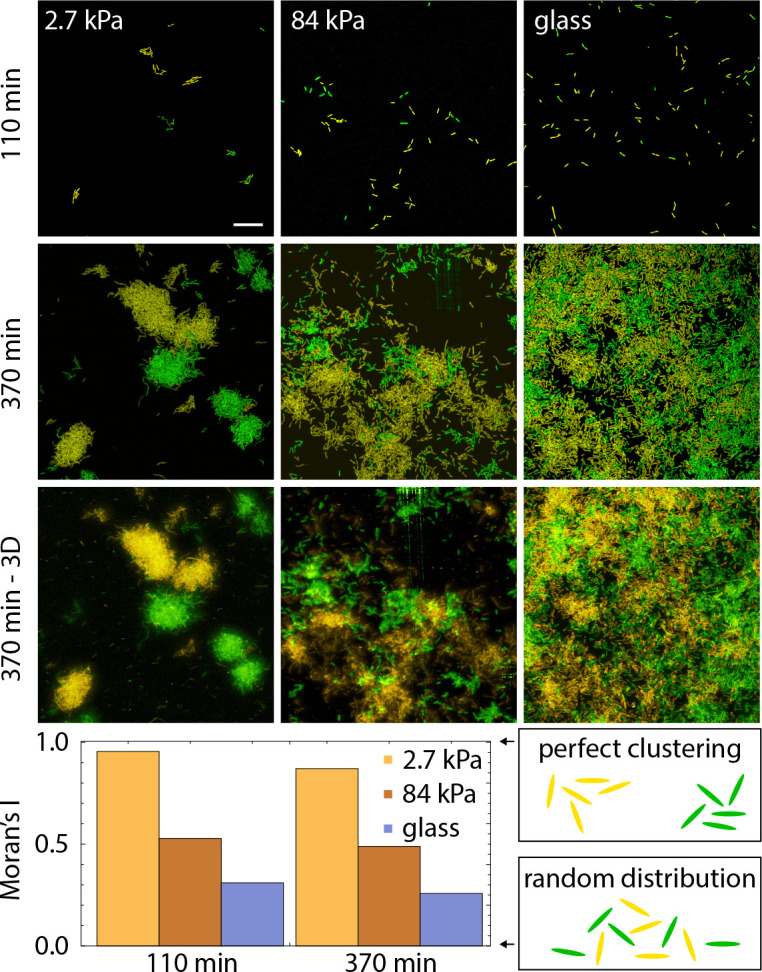
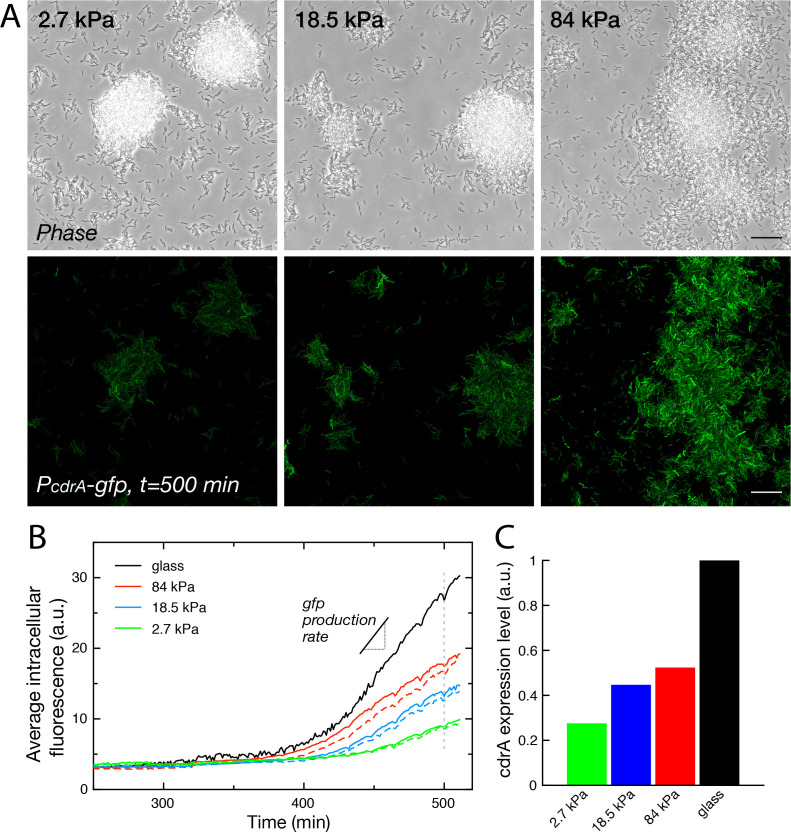
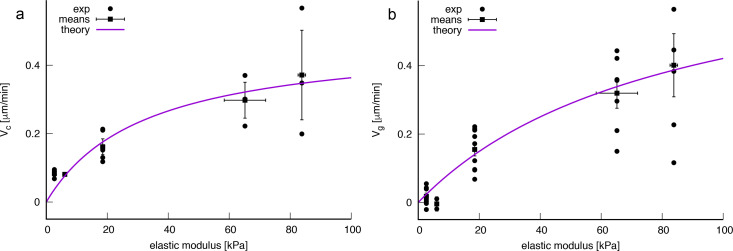
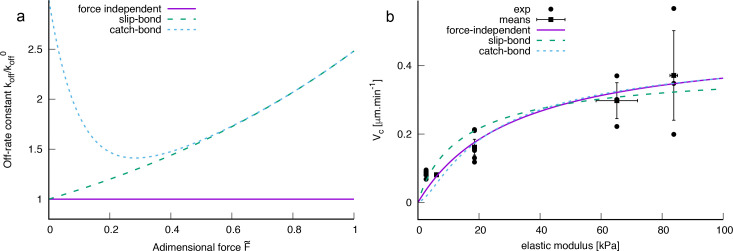
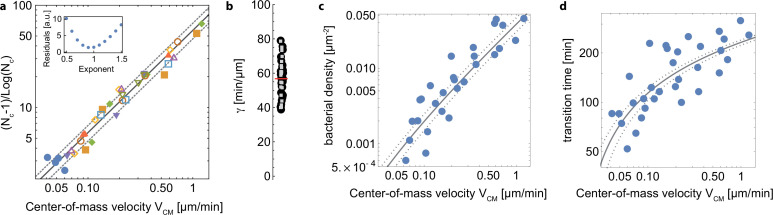
Surface-associated lifestyles dominate in the bacterial world. Large multicellular assemblies, called biofilms, are essential to the survival of bacteria in harsh environments and are closely linked to antibiotic resistance in pathogenic strains. Biofilms stem from the surface colonization of a wide variety of substrates encountered by bacteria, from living tissues to inert materials. Here, we demonstrate experimentally that the promiscuous opportunistic pathogen explores substrates differently based on their rigidity, leading to striking variations in biofilm structure, exopolysaccharides (EPS) distribution, strain mixing during co-colonization and phenotypic expression. Using simple kinetic models, we show that these phenotypes arise through a mechanical interaction between the elasticity of the substrate and the type IV pilus (T4P) machinery, that mediates the surface-based motility called twitching. Together, our findings reveal a new role for substrate softness in the spatial organization of bacteria in complex microenvironments, with far-reaching consequences on efficient biofilm formation.
表面相关的生活方式在细菌世界中占据主导地位。大型多细胞集合体,称为生物膜,对于细菌在恶劣环境中的生存至关重要,并且与病原菌的抗生素耐药性密切相关。生物膜源于细菌对各种遇到的基质的表面定植,从活组织到惰性材料。在这里,我们通过实验证明,机会性病原体 会根据其刚性不同地探索基质,从而导致生物膜结构、胞外多糖 (EPS) 分布、共定植期间的菌株混合和表型表达的显著变化。使用简单的动力学模型,我们表明这些表型是通过基质弹性和介导表面运动的 IV 型菌毛 (T4P) 机制之间的机械相互作用产生的,这种运动称为“翻腾”。总之,我们的研究结果揭示了基质柔软度在复杂微环境中细菌空间组织中的新作用,对高效生物膜形成具有深远的影响。