Bai Na, Xie Meihua, Liu Qianqian, Wang Wenjie, Liu Yankun, Yang Jinkui
State Key Laboratory for Conservation and Utilization of Bio-Resources and Key Laboratory for Microbial Resources of the Ministry of Education, School of Life Sciences, Yunnan University, Kunming, People's Republic of China.
School of Life Sciences, Yunnan University, Kunming, People's Republic of China.
Microbiol Spectr. 2023 Feb 14;11(2):e0395722. doi: 10.1128/spectrum.03957-22.
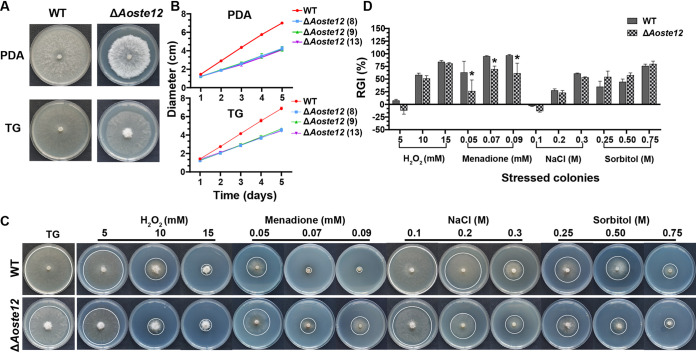
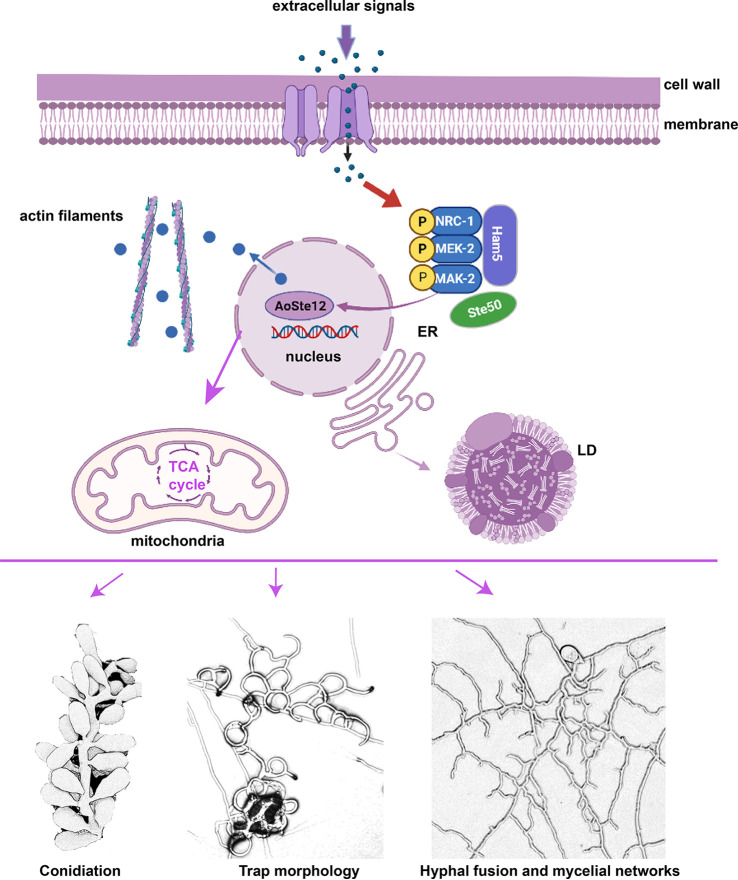
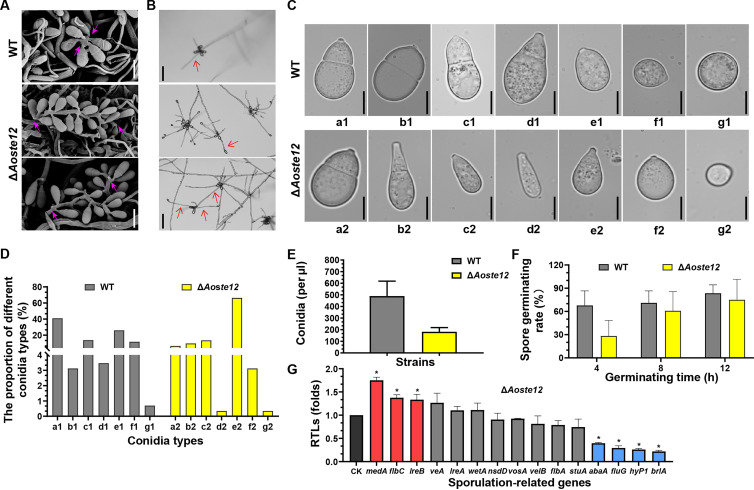
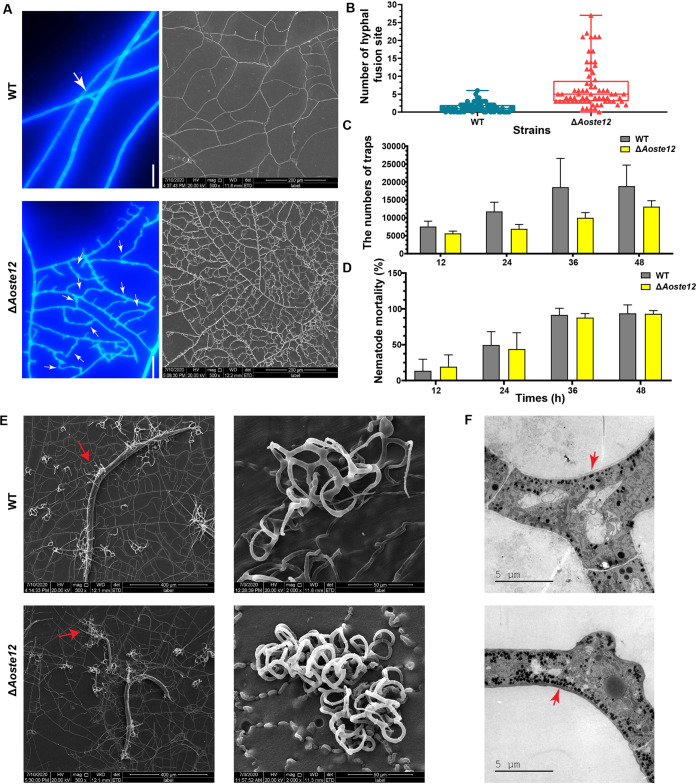
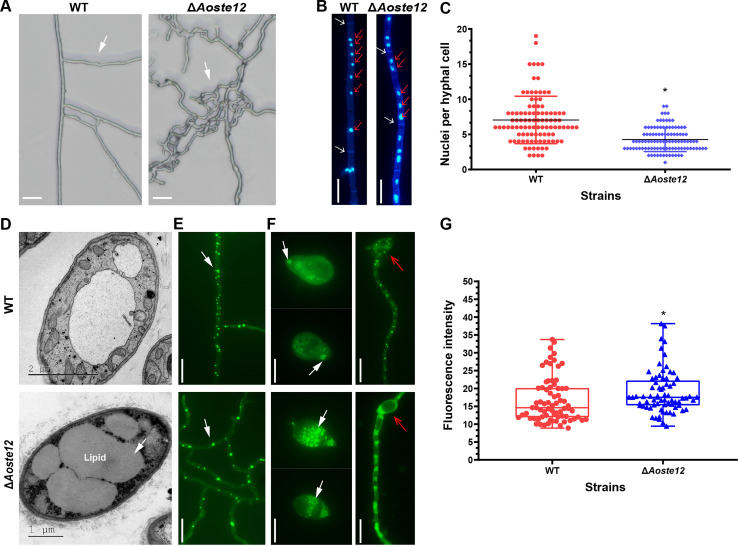
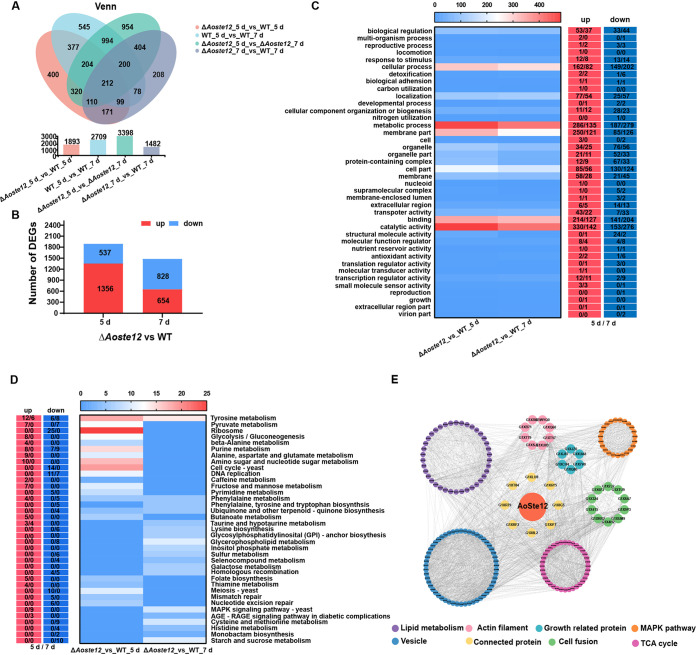
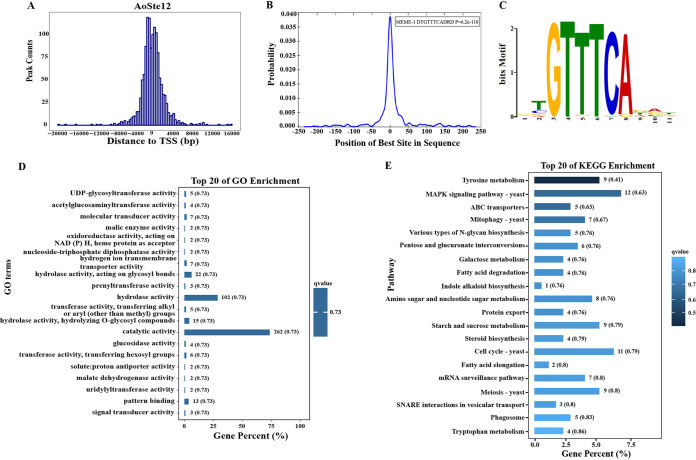
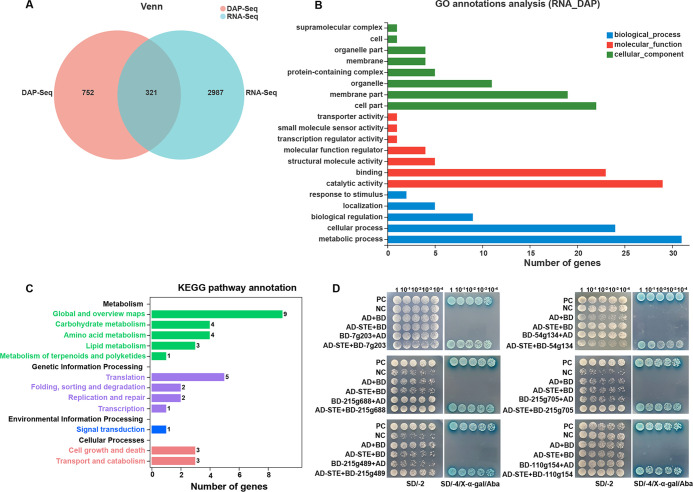
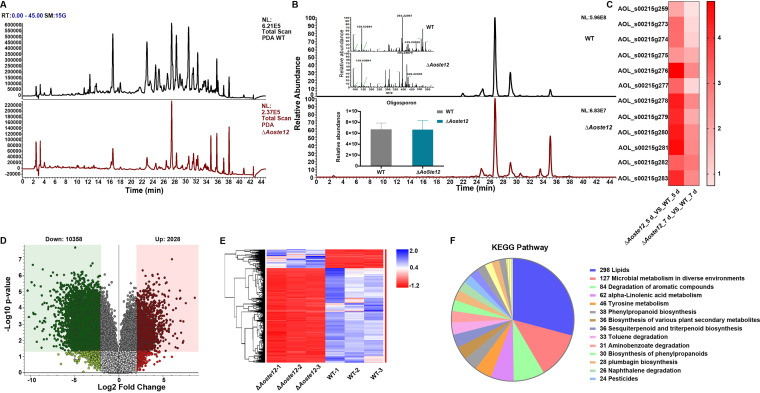
Nematode-trapping (NT) fungi are a unique group of carnivorous microorganisms that can capture and digest nematodes by producing ingenious trapping devices (traps). , a representative NT fungus, can develop adhesive three-dimensional networks for nematode predation. Hyphal fusion is indispensable for the trap formation of . Here, we characterized an orthologous Ste12 protein (AoSte12) in via gene disruption, DNA affinity purification sequencing (DAP-Seq), and multi-omics approaches. The disruption of the gene caused an increase in hyphal fusion and resulted in defects in mycelial growth, conidiation, trap morphology, and stress resistance, as well as reducing the number of nuclei and lipid droplet accumulation. Moreover, transcriptome and DAP-Seq analysis revealed that AoSte12 was involved in cellular processes associated with growth, cell fusion, the tricarboxylic acid cycle, vesicles, actin filaments, and lipid metabolism. In addition, combining metabolome with transcriptome and DAP-Seq analysis indicated that AoSte12 was involved in the mitogen-activated protein kinase signaling pathway, lipid metabolism, and secondary metabolites. A yeast two-hybrid assay revealed that AoSte12 can interact with diverse proteins, such as the MAK-2 orthologue protein Fus3, the vacuolar sorting protein Pep3, and UDP-glycosyltransferase. Our results suggest that AoSte12 plays an indispensable role in hyphal fusion and thus regulates sporulation and trap morphogenesis. These results provide deep insights into the connection between hyphal fusion and trap formation in NT fungi. Nematode-trapping (NT) fungi are an important natural enemy of nematodes and can capture their prey by producing traps. Hyphal anastomosis and fusion are important for mycelial growth and the colony morphological development of filamentous fungi and are also crucial for the trap morphogenesis of NT fungi. can form complex three-dimensional networks (traps) when sensing the presence of nematodes. This study revealed that AoSte12 is indispensable for hyphal fusion and that it regulates mycelial growth, conidiation, trap morphogenesis, stress resistance, the number of nuclei, and lipid droplet accumulation in . In addition, DNA affinity purification sequencing, transcriptome, and metabolome analyses further revealed that AoSte12 is involved in the mitogen-activated protein kinase pathway, lipid metabolism, and secondary metabolism. Overall, these findings expand the important role of AoSte12 in NT fungus and provide a broad foundation for elucidating the regulatory mechanism of trap development and the lifestyle transitions of pathogenic fungi.
捕食线虫真菌是一类独特的肉食性微生物,能够通过产生精巧的捕捉装置(捕器)来捕获并消化线虫。[具体真菌名称]作为一种典型的捕食线虫真菌,能够形成粘性三维网络用于捕食线虫。菌丝融合对于[具体真菌名称]的捕器形成不可或缺。在此,我们通过基因敲除、DNA亲和纯化测序(DAP-Seq)以及多组学方法,对[具体真菌名称]中的直系同源Ste12蛋白(AoSte12)进行了表征。[具体真菌名称]基因的敲除导致菌丝融合增加,并在菌丝生长、分生孢子形成、捕器形态以及抗逆性方面出现缺陷,同时还减少了细胞核数量和脂滴积累。此外,转录组和DAP-Seq分析表明,AoSte12参与了与生长、细胞融合、三羧酸循环、囊泡、肌动蛋白丝和脂质代谢相关的细胞过程。另外,将代谢组与转录组和DAP-Seq分析相结合表明,AoSte12参与了丝裂原活化蛋白激酶信号通路、脂质代谢和次级代谢产物的合成。酵母双杂交实验表明,AoSte12能够与多种蛋白质相互作用,如MAK-2直系同源蛋白Fus3、液泡分选蛋白Pep3和UDP-糖基转移酶。我们的结果表明,AoSte12在菌丝融合中发挥着不可或缺的作用,从而调节孢子形成和捕器形态发生。这些结果为深入了解捕食线虫真菌中菌丝融合与捕器形成之间的联系提供了深刻见解。捕食线虫真菌是线虫的重要天敌,能够通过产生捕器捕获猎物。菌丝吻合与融合对于丝状真菌的菌丝生长和菌落形态发育很重要,对于捕食线虫真菌的捕器形态发生也至关重要。[具体真菌名称]在感知线虫存在时能够形成复杂的三维网络(捕器)。本研究表明,AoSte12对于菌丝融合不可或缺,并且它调节[具体真菌名称]的菌丝生长、分生孢子形成、捕器形态发生、抗逆性、细胞核数量和脂滴积累。此外,DNA亲和纯化测序、转录组和代谢组分析进一步表明,AoSte12参与了丝裂原活化蛋白激酶途径、脂质代谢和次级代谢。总体而言,这些发现扩展了AoSte12在捕食线虫真菌[具体真菌名称]中的重要作用,并为阐明捕器发育的调控机制和致病真菌的生活方式转变提供了广泛基础。