Zeng Ziyang, Liu Zhen, Li Jie, Sun Juan, Ma Mingwei, Ye Xin, Yu Jianchun, Kang Weiming
Department of General Surgery, Peking Union Medical College Hospital, Chinese Academy of Medical Sciences and Peking Union Medical College, Beijing, China.
Front Oncol. 2023 Jan 30;12:1065716. doi: 10.3389/fonc.2022.1065716. eCollection 2022.
The spleen is the largest peripheral lymphoid organ in the body. Studies have implicated the spleen in the development of cancer. However, it is unknown whether splenic volume (SV) is associated with the clinical outcome of gastric cancer.
Data of gastric cancer patients treated with surgical resection were retrospectively analyzed. Patients were divided into three groups: underweight, normal-weight and overweight. Overall survival was compared in patients with high and low splenic volume. The correlation between splenic volume and peripheral immune cells were analyzed.
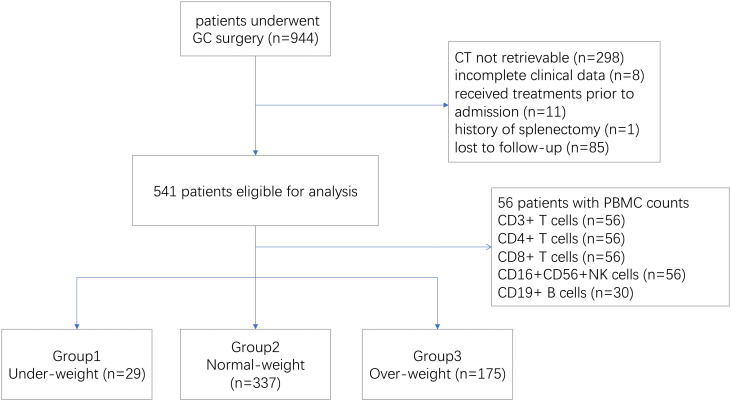
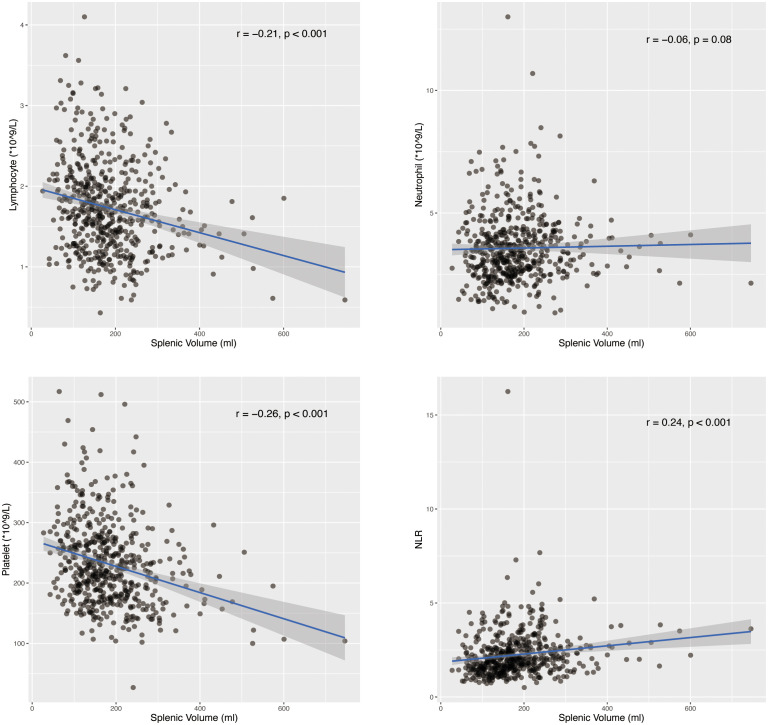
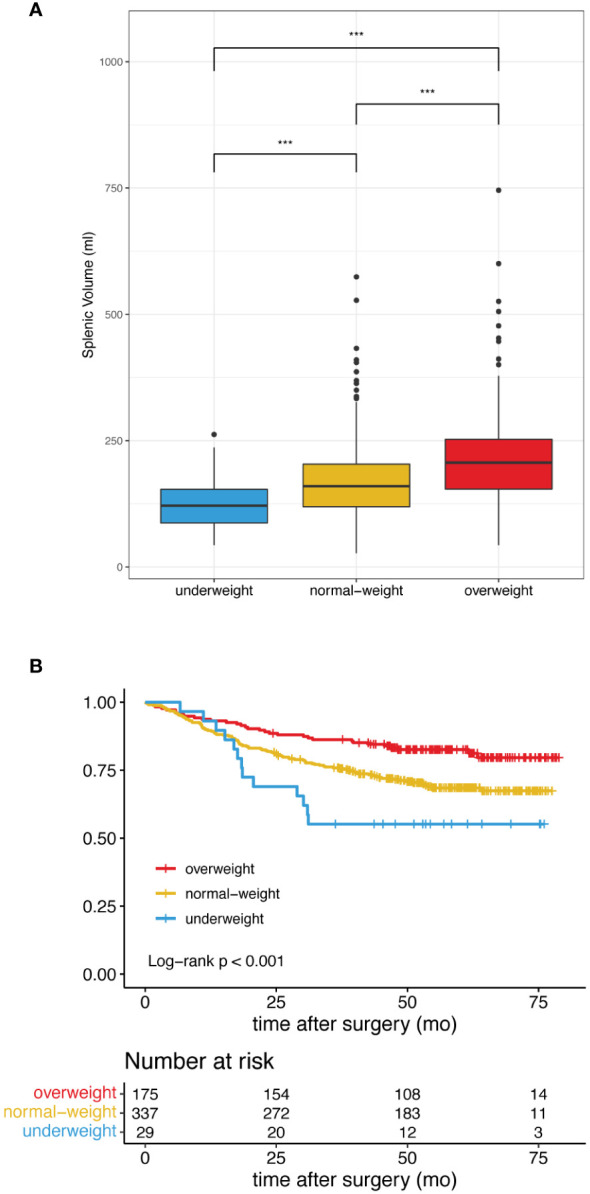
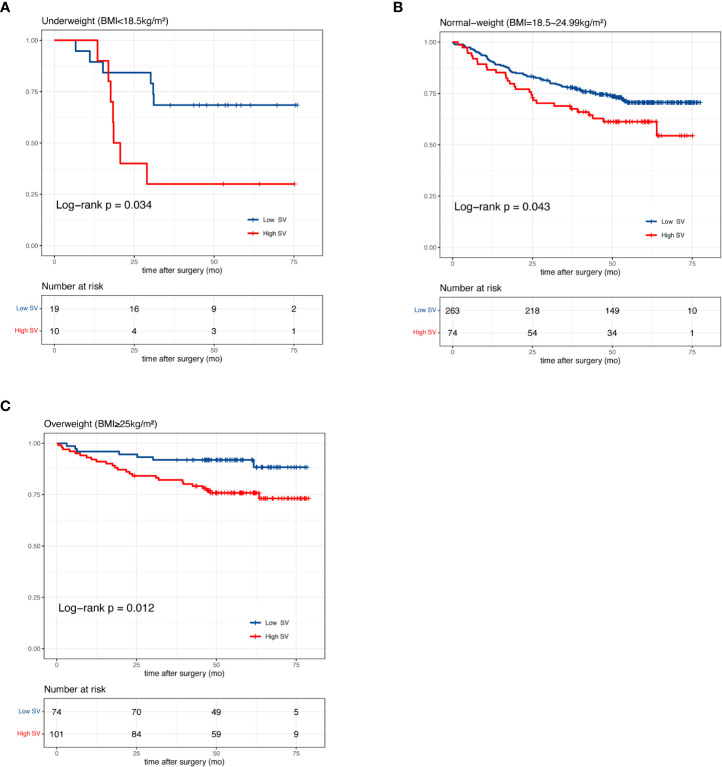
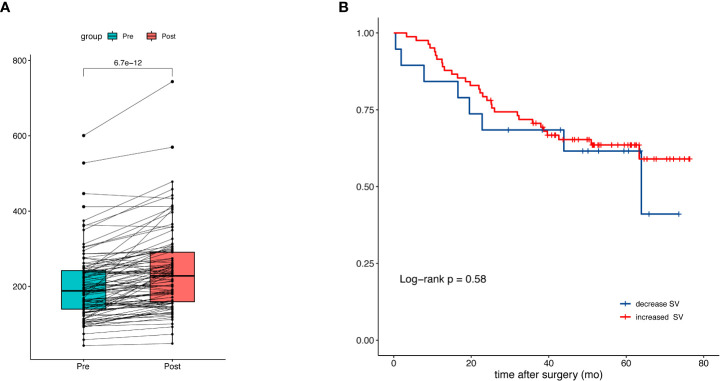
Of 541 patients, 71.2% were male and the median age was 60. Underweight, normal-weight and overweight patients accounted for 5.4%, 62.3% and 32.3%, respectively. High splenic volume was associated with unfavorable prognosis across the three groups. In addition, the increase of splenic volume during neoadjuvant chemotherapy was not associated with prognosis. The baseline splenic volume was negatively correlated with lymphocytes (r=-0.21, p<0.001) and positively correlated with NLR (neutrophil-to-lymphocyte ratio) (r=0.24, p<0.001). In a group of patients (n=56), splenic volume was found to have negative correlation with CD4+T cells (r=-0.27, p=0.041) and NK cells (r=-0.30, p=0.025).
The presence of high splenic volume is a biomarker of unfavorable prognosis and reduced circulating lymphocytes in gastric cancer.
脾脏是人体最大的外周淋巴器官。研究表明脾脏与癌症的发生发展有关。然而,脾体积(SV)是否与胃癌的临床结局相关尚不清楚。
回顾性分析接受手术切除治疗的胃癌患者的数据。患者分为三组:体重过轻、体重正常和超重。比较脾体积高和低的患者的总生存期。分析脾体积与外周免疫细胞之间的相关性。
541例患者中,71.2%为男性,中位年龄为60岁。体重过轻、体重正常和超重的患者分别占5.4%、62.3%和32.3%。三组中脾体积高均与不良预后相关。此外,新辅助化疗期间脾体积的增加与预后无关。基线脾体积与淋巴细胞呈负相关(r=-0.21,p<0.001),与中性粒细胞与淋巴细胞比值(NLR)呈正相关(r=0.24,p<0.001)。在一组患者(n=56)中,发现脾体积与CD4+T细胞(r=-0.27,p=0.041)和NK细胞(r=-0.30,p=0.025)呈负相关。
脾体积高是胃癌预后不良和循环淋巴细胞减少的生物标志物。