Alkhathami Khalid, Alshehre Yousef, Brizzolara Kelli, Weber Mark, Wang-Price Sharon
Health Rehabilitation Shaqra University.
Physical Therapy Department University of Tabuk.
Int J Sports Phys Ther. 2023 Feb 1;18(1):169-172. doi: 10.26603/001c.68024. eCollection 2023.
Low back pain (LBP) is a musculoskeletal disorder that affects more than 80% of people in the United States at least once in their lifetime. LBP is one of the most common complaints prompting individuals to seek medical care. The purpose of this study was to determine the effects of spinal stabilization exercises (SSEs) on movement performance, pain intensity, and disability level in adults with chronic low back pain (CLBP).
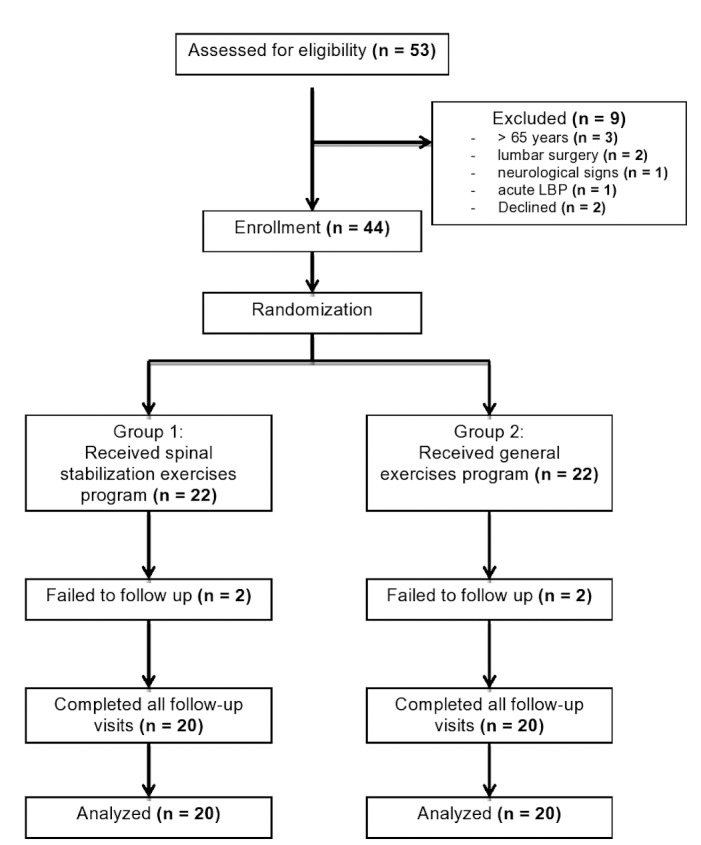
Forty participants, 20 in each group, with CLBP were recruited and randomly allocated into one of two interventions: SSEs and general exercises (GEs). All participants received their assigned intervention under supervision one to two times per week for the first four weeks and then were asked to continue their program at home for another four weeks. Outcome measures were collected at baseline, two weeks, four weeks, and eight weeks, including the Functional Movement Screen (FMS), Numeric Pain Rating Scale (NPRS), and Modified Oswestry Low Back Pain Disability Questionnaire (OSW) scores.
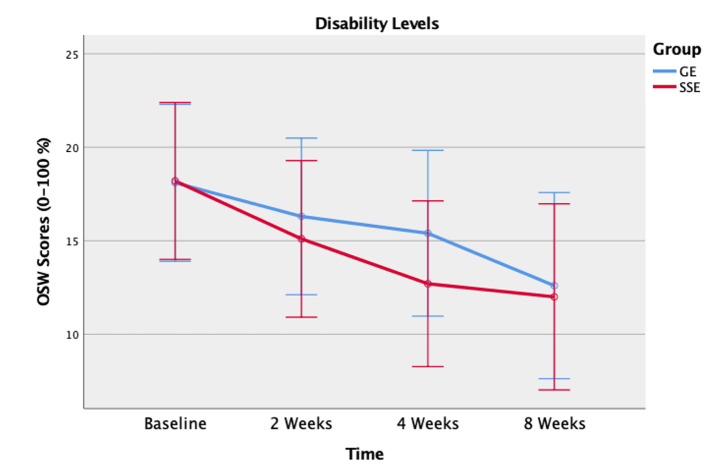
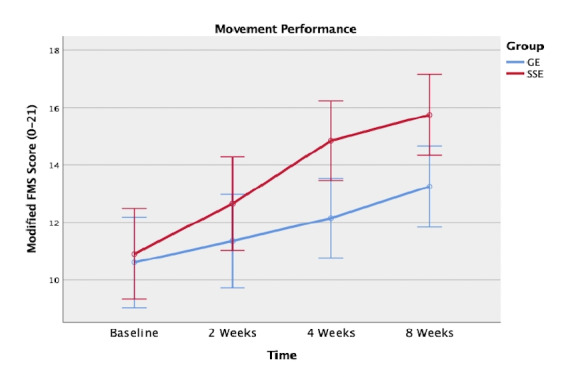
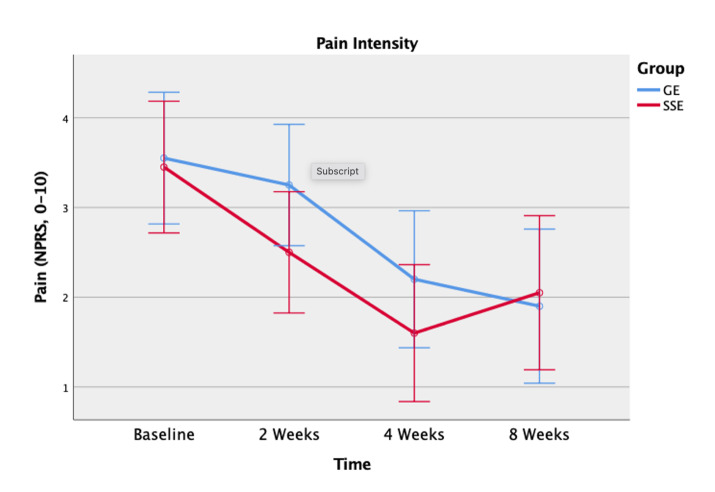
There was a significant interaction for the FMSTM scores ( = 0.016), but not for the NPRS and OSW scores. Post hoc analysis showed significant between-group differences between baseline and four weeks ( = 0.005) and between baseline and eight weeks ( = 0.026) favor SSEs over GEs. Further, the results demonstrated that all participants, regardless of group, had significant improvements in movement performance, pain intensity, and disability level over time.
The results of the study favor SSEs over GEs in improving movement performance for individuals with CLBP, specifically after four weeks of the supervised SSE program.
腰痛(LBP)是一种肌肉骨骼疾病,在美国,超过80%的人一生中至少会经历一次。腰痛是促使人们寻求医疗护理的最常见主诉之一。本研究的目的是确定脊柱稳定运动(SSEs)对慢性腰痛(CLBP)成年人的运动表现、疼痛强度和残疾水平的影响。
招募了40名CLBP参与者,每组20人,随机分为两种干预措施之一:SSEs和一般运动(GEs)。所有参与者在监督下接受指定的干预,前四周每周一至两次,然后要求他们在家继续该计划另外四周。在基线、两周、四周和八周时收集结果指标,包括功能运动筛查(FMS)、数字疼痛评分量表(NPRS)和改良Oswestry腰痛残疾问卷(OSW)评分。
FMS评分存在显著交互作用(P = 0.016),但NPRS和OSW评分不存在。事后分析显示,基线与四周之间(P = 0.005)以及基线与八周之间(P = 0.026)组间存在显著差异,SSEs优于GEs。此外,结果表明,随着时间的推移,所有参与者,无论组别如何,在运动表现、疼痛强度和残疾水平方面都有显著改善。
该研究结果表明,对于CLBP患者,SSEs在改善运动表现方面优于GEs,特别是在接受四周监督的SSE计划后。