Wang Ye, Bergström Joakim, Ingelsson Martin, Westermark Gunilla T
Departments of Medical Cell Biology, Uppsala University, Uppsala, Sweden.
Departments ofPublic Health and Caring Sciences, Uppsala University, Uppsala, Sweden.
Front Mol Biosci. 2023 Jan 30;10:1080112. doi: 10.3389/fmolb.2023.1080112. eCollection 2023.
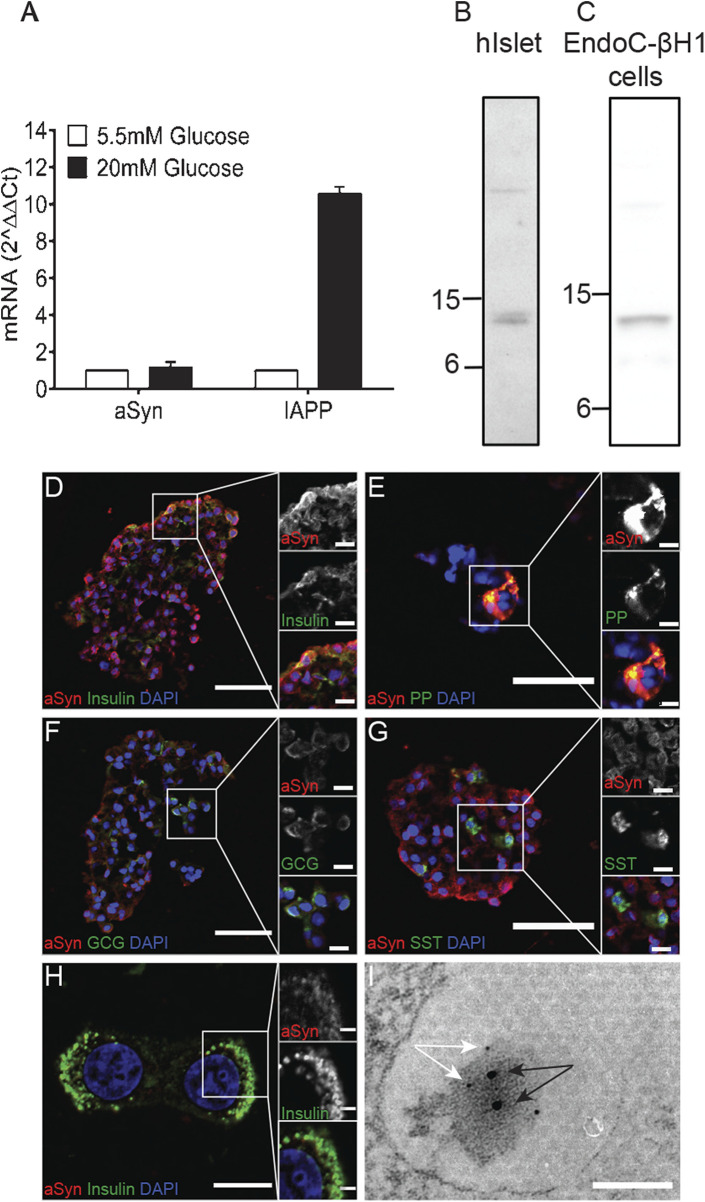
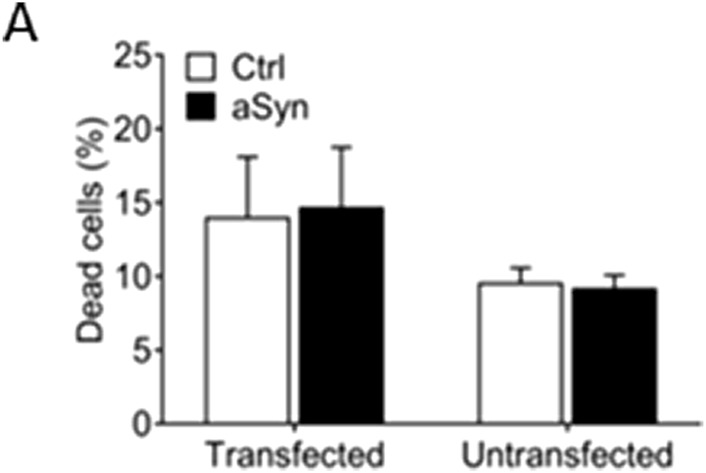
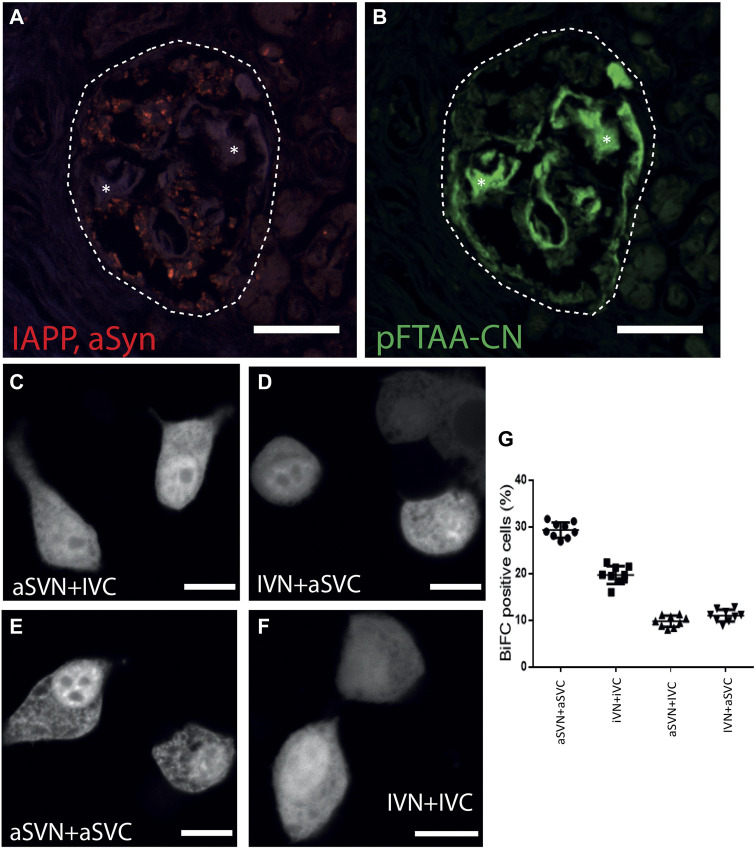
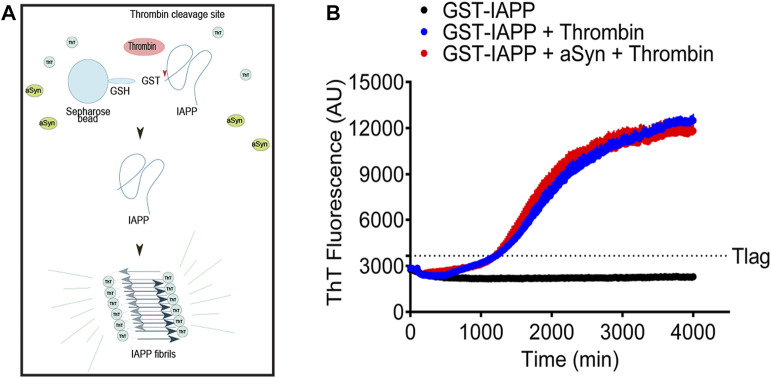
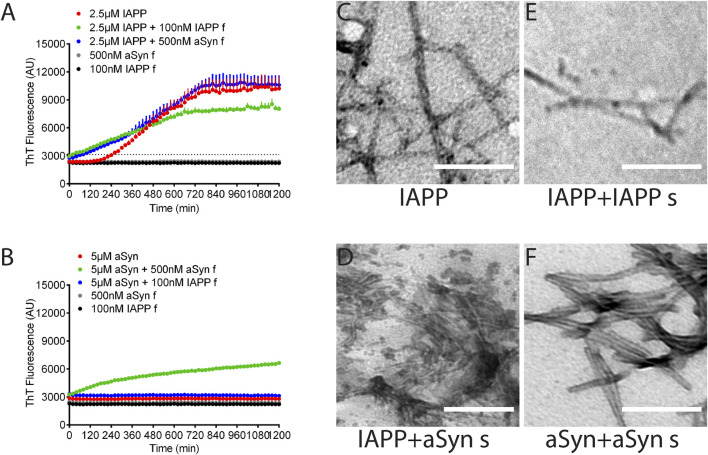
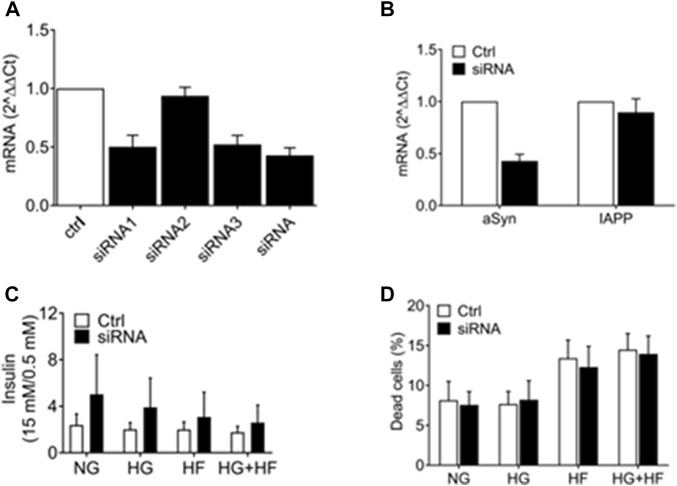
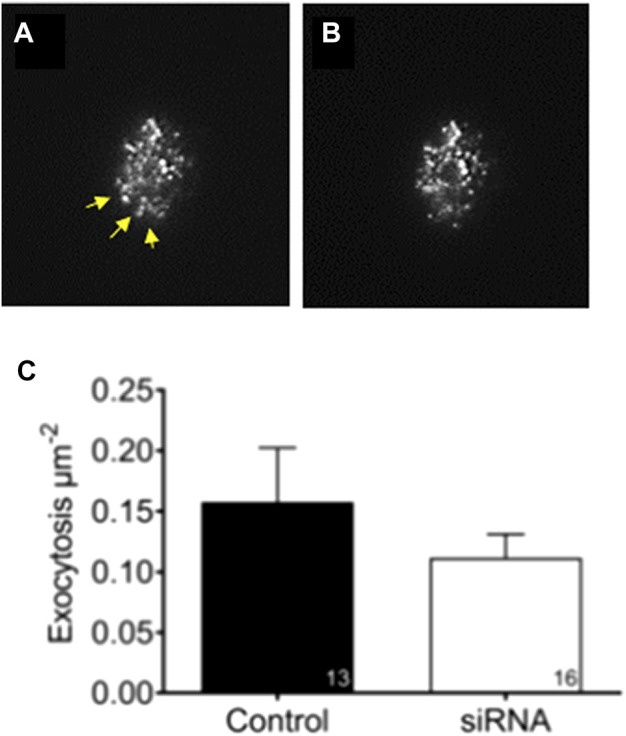
Parkinson's disease and type 2 diabetes have both elements of local amyloid depositions in their pathogenesis. In Parkinson's disease, alpha-synuclein (aSyn) forms insoluble Lewy bodies and Lewy neurites in brain neurons, and in type 2 diabetes, islet amyloid polypeptide (IAPP) comprises the amyloid in the islets of Langerhans. In this study, we assessed the interaction between aSyn and IAPP in human pancreatic tissues, both and . The antibody-based detection techniques, proximity ligation assay (PLA), and immuno-TEM were used for co-localization studies. Bifluorescence complementation (BiFC) was used for interaction studies between IAPP and aSyn in HEK 293 cells. The Thioflavin T assay was used for studies of cross-seeding between IAPP and aSyn. ASyn was downregulated with siRNA, and insulin secretion was monitored using TIRF microscopy. We demonstrate intracellular co-localization of aSyn with IAPP, while aSyn is absent in the extracellular amyloid deposits. ASyn reactivity is present in the secretory granules of β-cells and some α-cells in human islets. The BiFC-expression of aSyn/aSyn and IAPP/IAPP in HEK293 cells resulted in 29.3% and 19.7% fluorescent cells, respectively, while aSyn/IAPP co-expression resulted in ∼10% fluorescent cells. Preformed aSyn fibrils seeded IAPP fibril formation , but adding preformed IAPP seeds to aSyn did not change aSyn fibrillation. In addition, mixing monomeric aSyn with monomeric IAPP did not affect IAPP fibril formation. Finally, the knockdown of endogenous aSyn did not affect β cell function or viability, nor did overexpression of aSyn affect β cell viability. Despite the proximity of aSyn and IAPP in β-cells and the detected capacity of preformed aSyn fibrils to seed IAPP , it is still an open question if an interaction between the two molecules is of pathogenic significance for type 2 diabetes.
帕金森病和2型糖尿病在发病机制中都有局部淀粉样蛋白沉积的成分。在帕金森病中,α-突触核蛋白(aSyn)在脑神经元中形成不溶性路易小体和路易神经突,而在2型糖尿病中,胰岛淀粉样多肽(IAPP)构成了胰岛中的淀粉样蛋白。在本研究中,我们评估了人胰腺组织中aSyn和IAPP之间的相互作用,包括[此处原文缺失部分内容]。基于抗体的检测技术、邻近连接分析(PLA)和免疫透射电镜用于共定位研究。双荧光互补(BiFC)用于研究IAPP和aSyn在HEK 293细胞中的相互作用。硫黄素T分析用于研究IAPP和aSyn之间的交叉成核。用小干扰RNA(siRNA)下调aSyn,并使用全内反射荧光显微镜监测胰岛素分泌。我们证明了aSyn与IAPP在细胞内共定位,而细胞外淀粉样沉积物中不存在aSyn。人胰岛β细胞和一些α细胞的分泌颗粒中存在aSyn反应性。aSyn/aSyn和IAPP/IAPP在HEK293细胞中的BiFC表达分别导致29.3%和19.7%的荧光细胞,而aSyn/IAPP共表达导致约10%的荧光细胞。预先形成的aSyn原纤维引发了IAPP原纤维的形成,但将预先形成的IAPP种子添加到aSyn中并没有改变aSyn的纤维化。此外,将单体aSyn与单体IAPP混合并不影响IAPP原纤维的形成。最后,内源性aSyn的敲低不影响β细胞功能或活力,aSyn的过表达也不影响β细胞活力。尽管aSyn和IAPP在β细胞中距离相近,且预先形成的aSyn原纤维具有引发IAPP的能力,但这两种分子之间的相互作用对2型糖尿病是否具有致病意义仍是一个悬而未决的问题。