Department of Radiation Oncology, Shaanxi Provincial People's Hospital, Xi'an, Shaanxi 710068, China.
Department of Thyroid and Breast Surgery, Xi'an Daxing Hospital, Xi'an, Shaanxi 710068, China.
Genet Res (Camb). 2023 Jan 31;2023:6585109. doi: 10.1155/2023/6585109. eCollection 2023.
Lung adenocarcinoma (LUAD) is the most common histological subtype of non-small cell lung cancer (NSCLC) with a low 5-year survival rate, which may be associated with the presence of metastatic tumors at the time of diagnosis, especially lymph node metastasis (LNM). This study aimed to construct a LNM-related gene signature for predicting the prognosis of patients with LUAD.
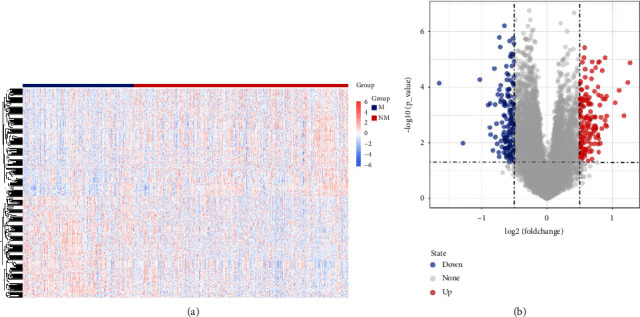
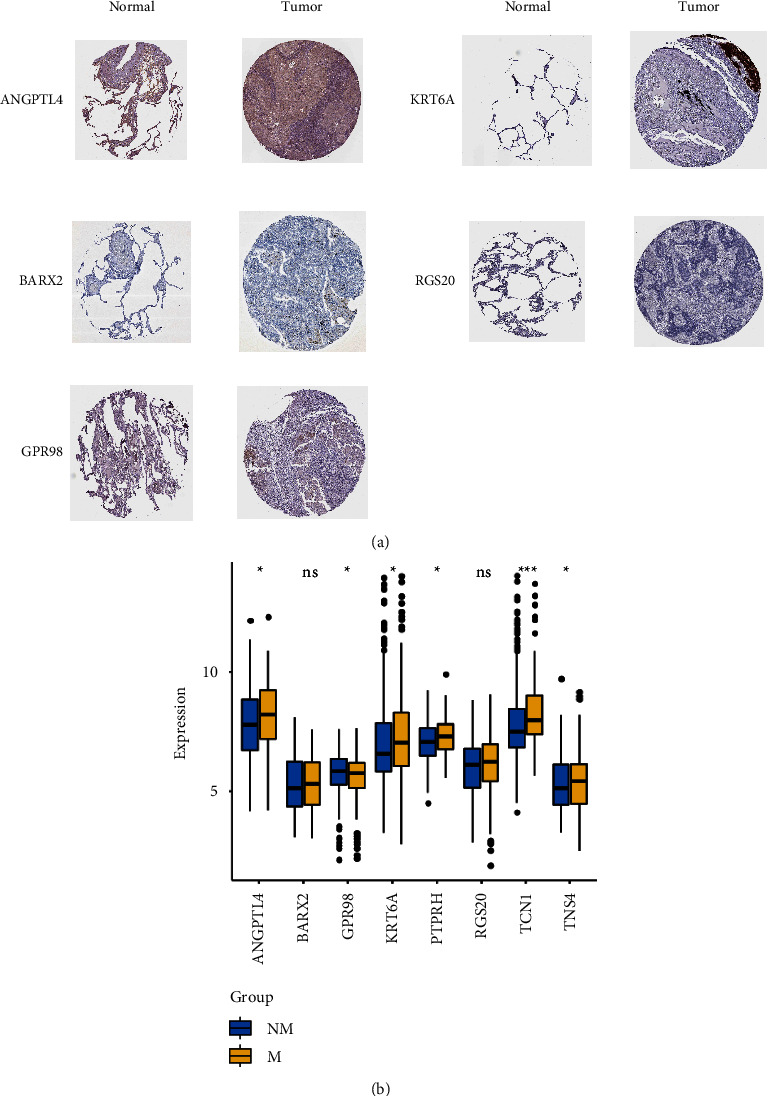
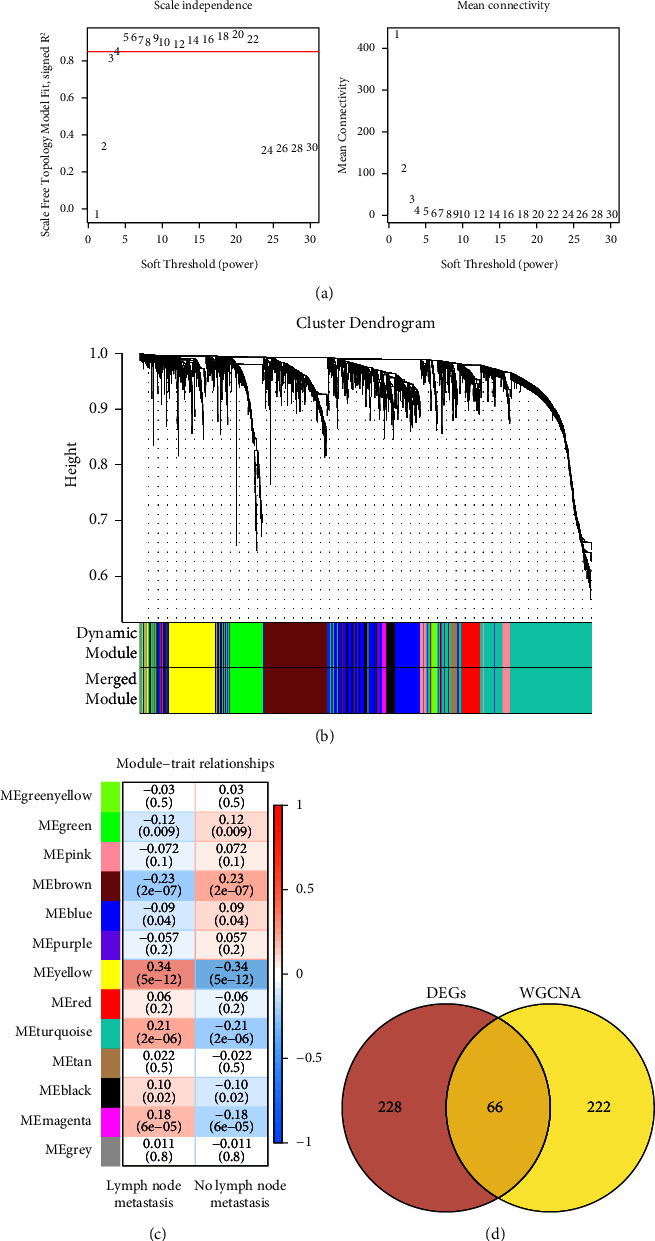
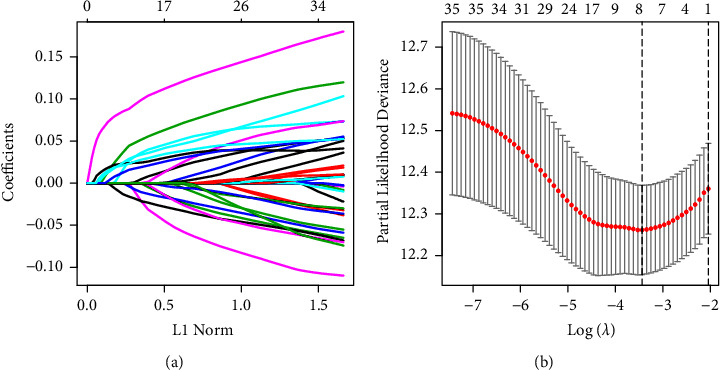
RNA sequencing data and clinical information of LUAD patients were extracted from The Cancer Genome Atlas (TCGA) and Gene Expression Omnibus (GEO) databases. Samples were divided into metastasis (M) and nonmetastasis (NM) groups based on LNM status. Differentially expressed genes (DEGs) between M and NM groups were screened, and then WGCNA was applied to identify key genes. Furthermore, univariate Cox and LASSO regression analyses were conducted to construct a risk score model, and the predictive performance of model was validated by GSE68465, GSE42127, and GSE50081. The protein and mRNA expression level of LNM-associated genes were detected by human protein atlas (HPA) and GSE68465.
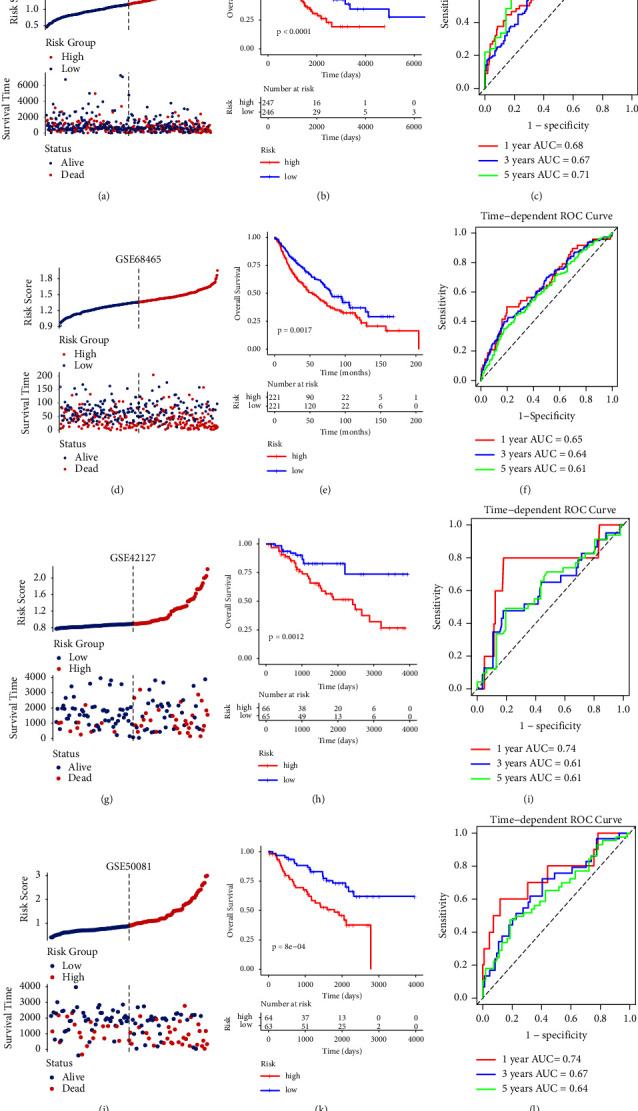
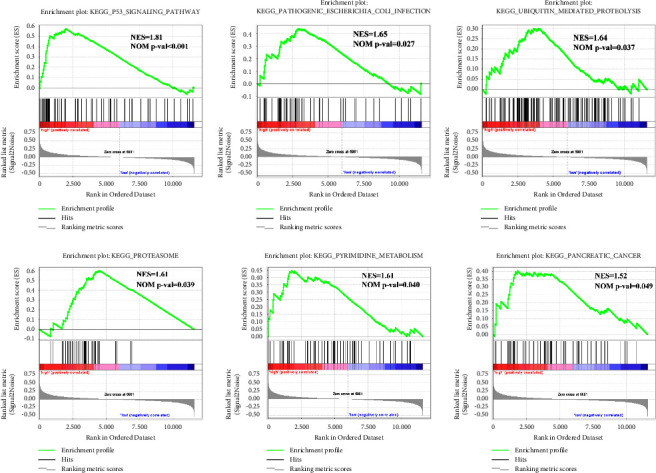
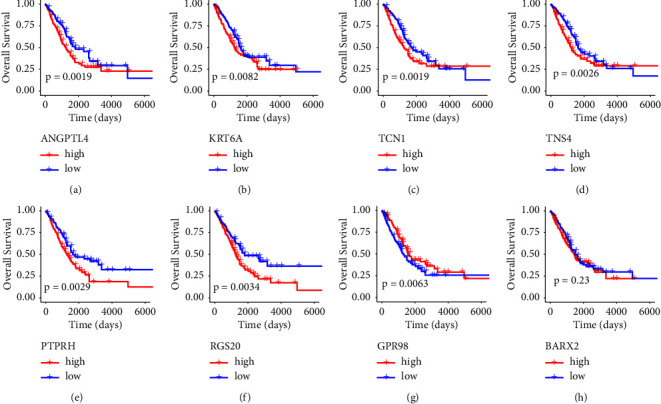
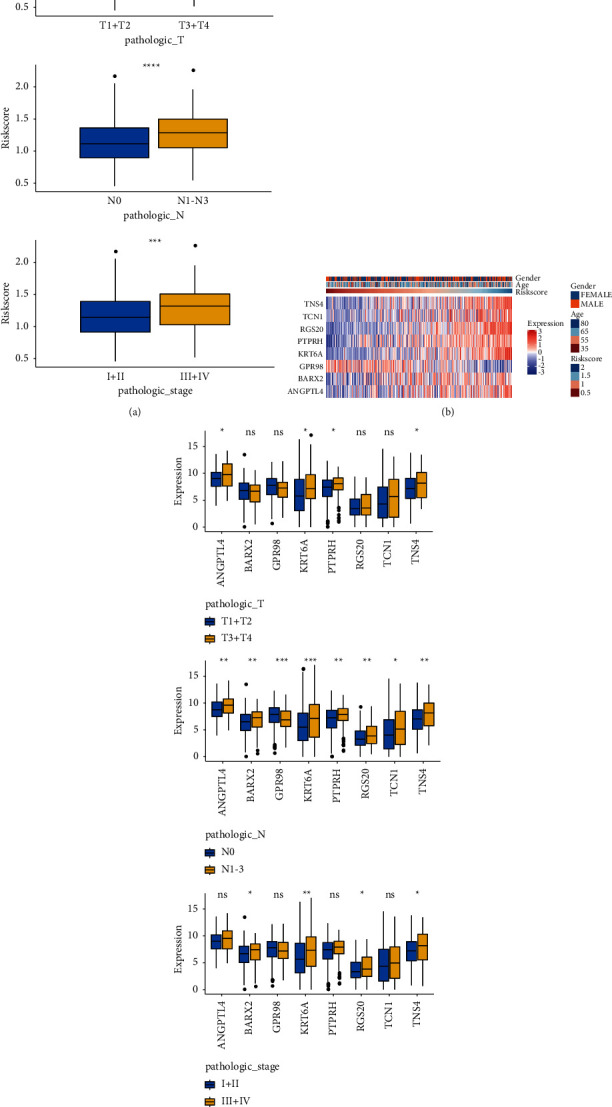
A prognostic model based on eight LNM-related genes (ANGPTL4, BARX2, GPR98, KRT6A, PTPRH, RGS20, TCN1, and TNS4) was developed. Patients in the high-risk group had poorer overall survival than those in the low-risk group, and validation analysis showed that this model had potential predictive value for patients with LUAD. HPA analysis supported the upregulation of ANGPTL4, KRT6A, BARX2, RGS20 and the downregulation of GPR98 in LUAD compared with normal tissues.
Our results indicated that the eight LNM-related genes signature had potential value in the prognosis of patients with LUAD, which may have important practical implications.
肺腺癌(LUAD)是非小细胞肺癌(NSCLC)中最常见的组织学亚型,其 5 年生存率较低,这可能与诊断时存在转移性肿瘤有关,特别是淋巴结转移(LNM)。本研究旨在构建与 LUAD 患者预后相关的 LNM 相关基因特征。
从癌症基因组图谱(TCGA)和基因表达综合(GEO)数据库中提取 LUAD 患者的 RNA 测序数据和临床信息。根据 LNM 状态将样本分为转移(M)和非转移(NM)组。筛选 M 和 NM 组之间的差异表达基因(DEGs),然后应用 WGCNA 识别关键基因。进一步进行单因素 Cox 和 LASSO 回归分析构建风险评分模型,并通过 GSE68465、GSE42127 和 GSE50081 进行验证。通过人类蛋白质图谱(HPA)和 GSE68465 检测 LNM 相关基因的蛋白和 mRNA 表达水平。
构建了一个基于 8 个 LNM 相关基因(ANGPTL4、BARX2、GPR98、KRT6A、PTPRH、RGS20、TCN1 和 TNS4)的预后模型。高风险组患者的总生存率低于低风险组患者,验证分析表明该模型对 LUAD 患者具有潜在的预测价值。HPA 分析支持与正常组织相比,LUAD 中 ANGPTL4、KRT6A、BARX2、RGS20 的上调和 GPR98 的下调。
我们的结果表明,八个 LNM 相关基因特征在 LUAD 患者的预后中有潜在的价值,可能具有重要的实际意义。