Department of Biotechnology, Manipal School of Life Sciences, Manipal Academy of Higher Education, Manipal, India.
Department of Cell and Molecular Biology, Manipal School of Life Sciences, Manipal Academy of Higher Education, Manipal, India.
Virulence. 2023 Dec;14(1):2180934. doi: 10.1080/21505594.2023.2180934.
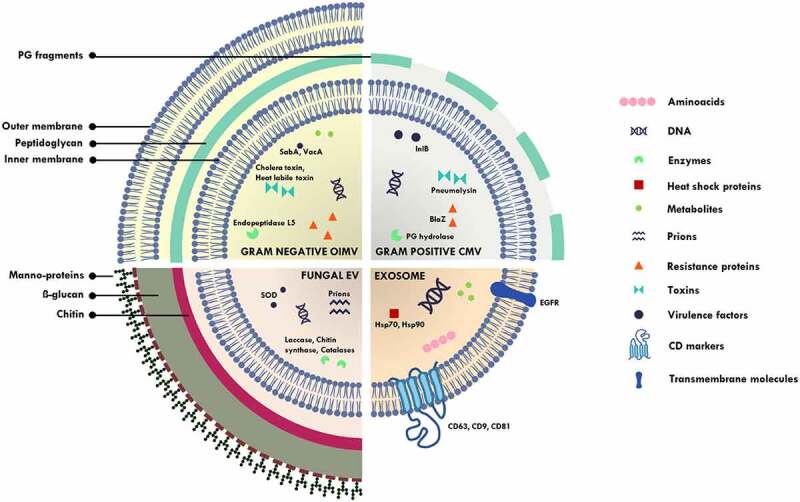
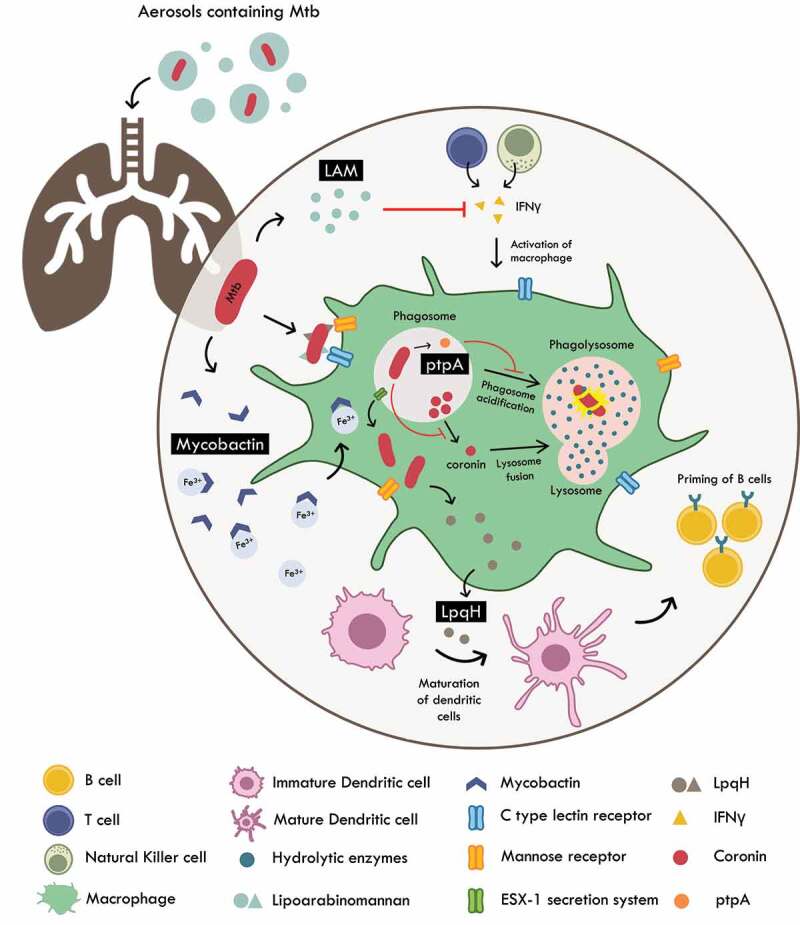
Intercellular communication among microbes plays an important role in disease exacerbation. Recent advances have described small vesicles, termed as "extracellular vesicles" (EVs), previously disregarded as "cellular dust" to be vital in the intracellular and intercellular communication in host-microbe interactions. These signals have been known to initiate host damage and transfer of a variety of cargo including proteins, lipid particles, DNA, mRNA, and miRNAs. Microbial EVs, referred to generally as "membrane vesicles" (MVs), play a key role in disease exacerbation suggesting their importance in pathogenicity. Host EVs help coordinate antimicrobial responses and prime the immune cells for pathogen attack. Hence EVs with their central role in microbe-host communication, may serve as important diagnostic biomarkers of microbial pathogenesis. In this review, we summarize current research regarding the roles of EVs as markers of microbial pathogenesis with specific focus on their interaction with host immune defence and their potential as diagnostic biomarkers in disease conditions.
微生物之间的细胞间通讯在疾病恶化中起着重要作用。最近的研究描述了小泡,称为“细胞外囊泡”(EVs),以前被忽视为“细胞尘埃”,在宿主-微生物相互作用中的细胞内和细胞间通讯中至关重要。这些信号已被证实会引发宿主损伤,并传递各种物质,包括蛋白质、脂质颗粒、DNA、mRNA 和 miRNAs。微生物 EVs 通常被称为“膜囊泡”(MVs),在疾病恶化中起关键作用,表明其在致病性中的重要性。宿主 EVs 有助于协调抗菌反应,并为免疫细胞对病原体的攻击做好准备。因此,EVs 在微生物-宿主通讯中起着核心作用,可作为微生物发病机制的重要诊断生物标志物。在这篇综述中,我们总结了目前关于 EVs 作为微生物发病机制标志物的研究,特别关注它们与宿主免疫防御的相互作用及其在疾病状态下作为诊断生物标志物的潜力。