BioBank, The First Affiliated Hospital of Xi'an Jiaotong University, Xi'an, Shaanxi, China.
Department of Pharmacy, The First Affiliated Hospital of Xi'an Jiaotong University, Xi'an, Shaanxi, China.
Cell Prolif. 2023 Aug;56(8):e13427. doi: 10.1111/cpr.13427. Epub 2023 Feb 16.
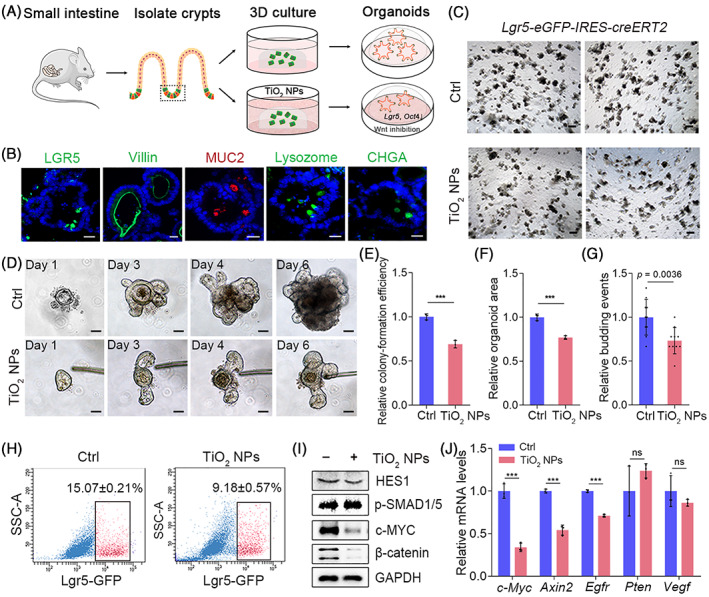
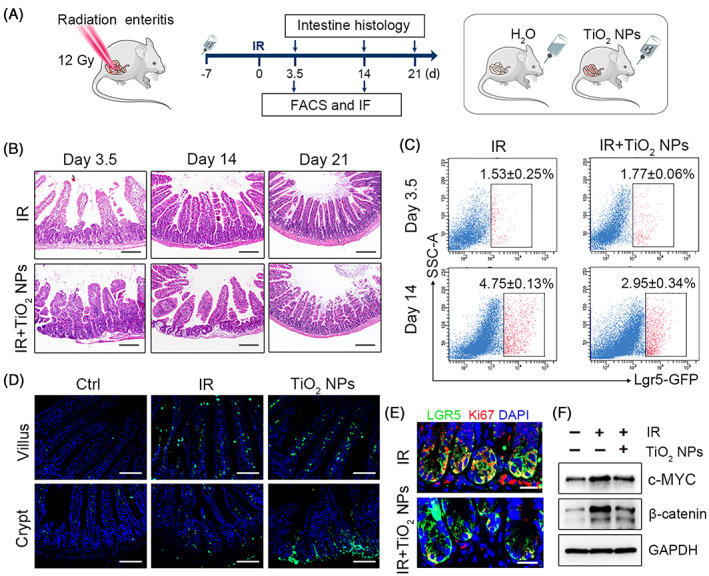
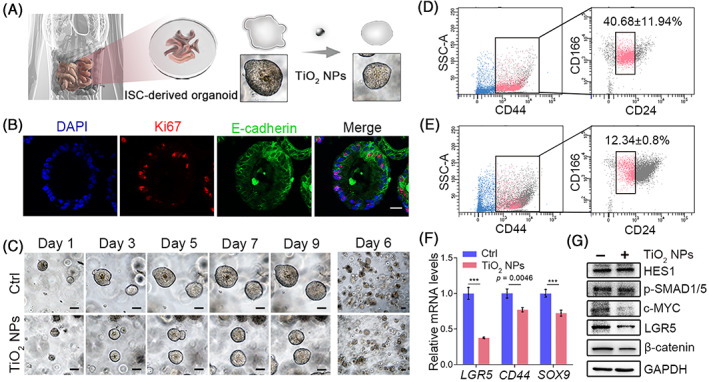
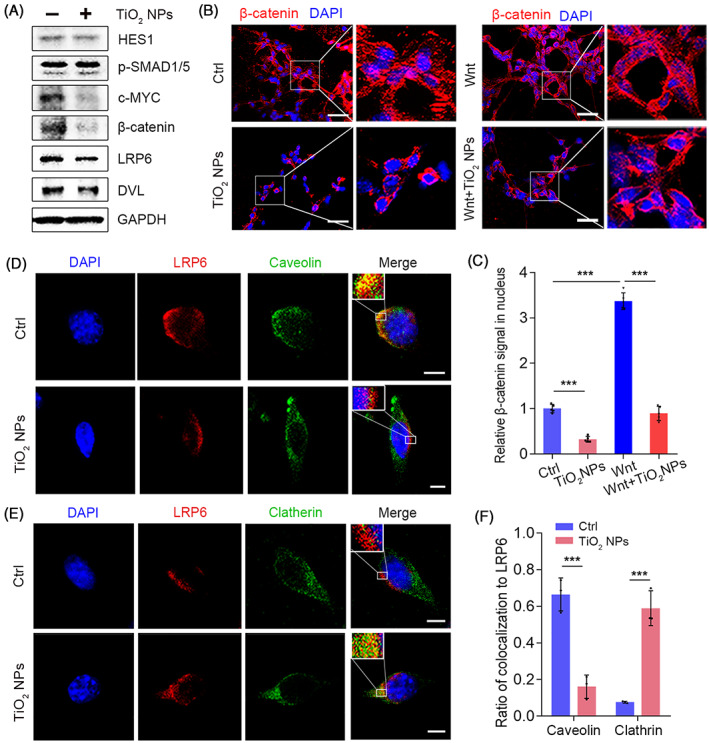
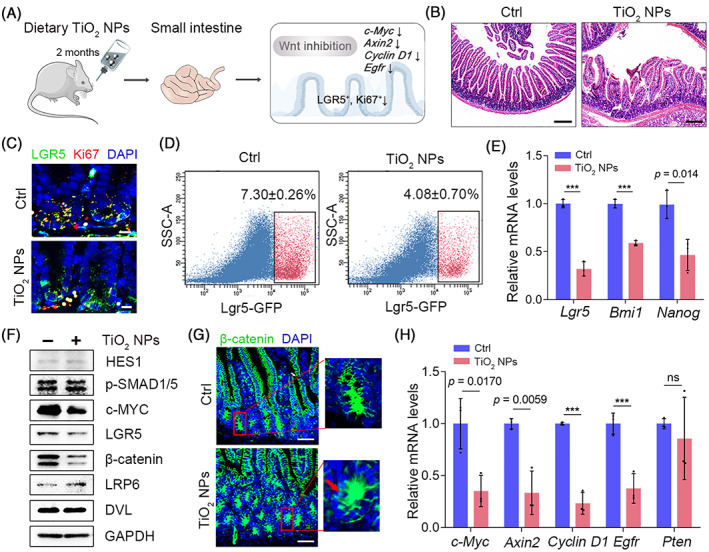
Small intestinal health and enteritis incidence are tightly coupled to the homeostasis of intestinal stem cells (ISCs), which are sensitive to dietary alterations. However, little is known about the impact of food additives on ISC pool. Here, we demonstrate that chronic exposure to low-dose TiO NPs, a commonly used food additive, significantly hampers primary human and mouse ISC-derived organoid formation and growth by specifically attenuating Wnt signal transduction. Mechanistically, TiO NPs alter the endocytic trafficking of the Wnt receptor LRP6 and prevent the nuclear entry of β-catenin. Notably, dietary TiO NPs elicit modest chronic stress in healthy intestines and considerably impede the recovery of radiation enteritis by perturbing the homeostasis of ISCs in vivo. Our results identify a health concern of TiO NP exposure on ISC homeostasis and radiation enteritis recovery. These findings suggest extra precaution during the treatment of radiation enteritis and provide new insights into food additive-ISC interaction.
小肠健康和肠炎发病率与肠道干细胞(ISCs)的体内平衡密切相关,而 ISCs 对饮食改变很敏感。然而,关于食品添加剂对 ISC 池的影响知之甚少。在这里,我们证明了慢性暴露于低剂量 TiO NPs(一种常用的食品添加剂)通过特异性减弱 Wnt 信号转导,显著阻碍了原发性人和小鼠 ISC 衍生类器官的形成和生长。在机制上,TiO NPs 改变了 Wnt 受体 LRP6 的内吞运输,并阻止了 β-catenin 的核内进入。值得注意的是,膳食 TiO NPs 在健康肠道中引起适度的慢性应激,并通过体内扰乱 ISC 的体内平衡,严重阻碍辐射肠炎的恢复。我们的研究结果确定了 TiO NP 暴露对 ISC 体内平衡和辐射肠炎恢复的健康关注。这些发现提示在治疗辐射肠炎时需要格外小心,并为食品添加剂-ISC 相互作用提供了新的见解。