Patnayak G, Rastogi R, Khajuria L, Mohan A, Jain N, Varshney R, Singh V K, Pratap V, Pathak S, Jain A, Duggad K
Department of Radiodiagnosis, Teerthanker Mahaveer Medical College & Research Center, Moradabad, Uttar Pradesh, India.
Department of Emergency Medicine, Teerthanker Mahaveer Medical College & Research Center, Moradabad, Uttar Pradesh, India.
Afr J Thorac Crit Care Med. 2022 Dec 19;28(4). doi: 10.7196/AJTCCM.2022.v28i4.248. eCollection 2022.
COVID-19 disease, a pandemic for more than two years, has major morbidity and mortality related to pulmonary involvement. Chest radiography is the main imaging tool for critically ill patients. As the availability of arterial blood gas analysis is limited in the Level I and II healthcare centres, which are major partners in providing healthcare in resource-limited times, we planned the present study.
To assess the role of chest radiography in predicting the need for oxygen/ventilator support in critically ill COVID-19 patients.
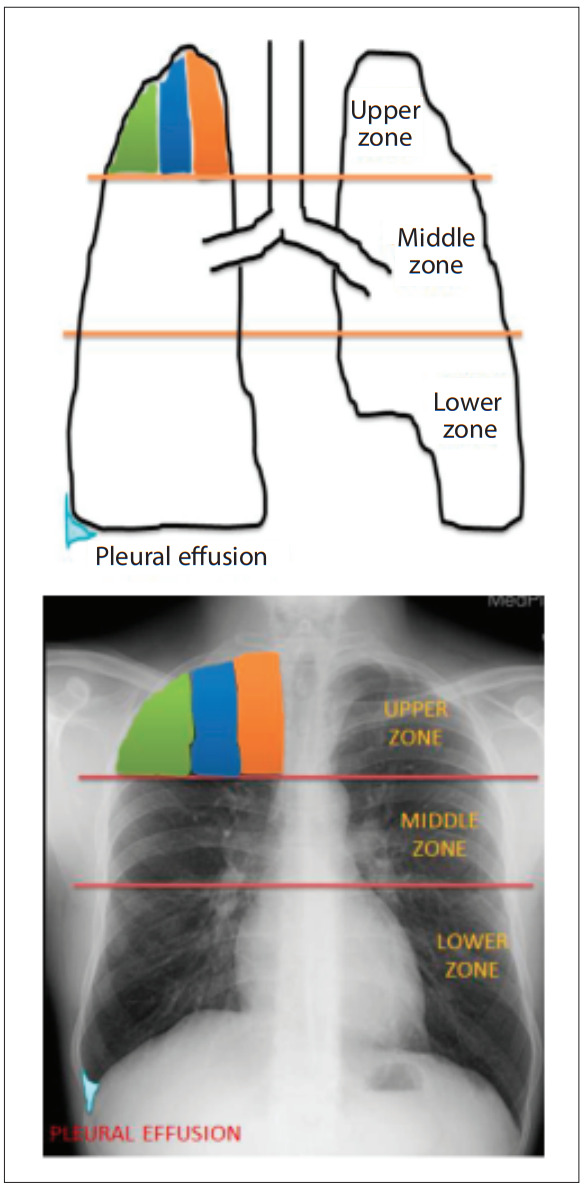
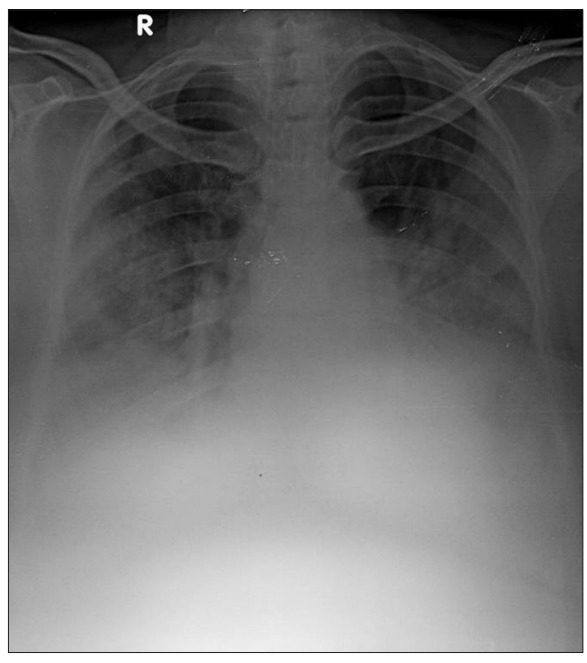
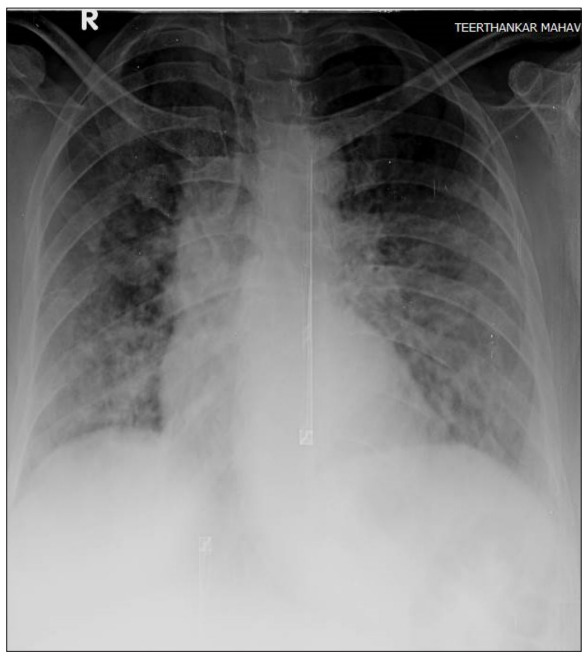
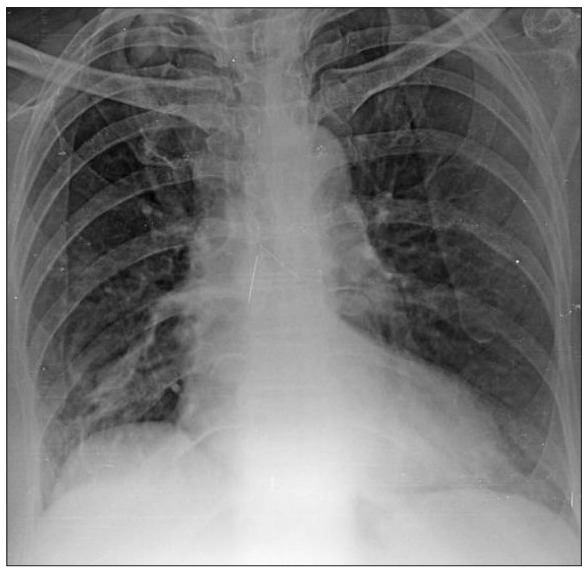
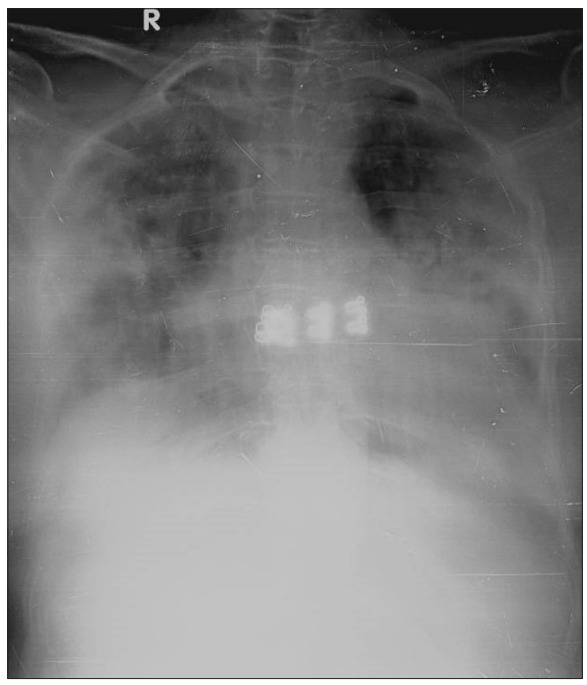
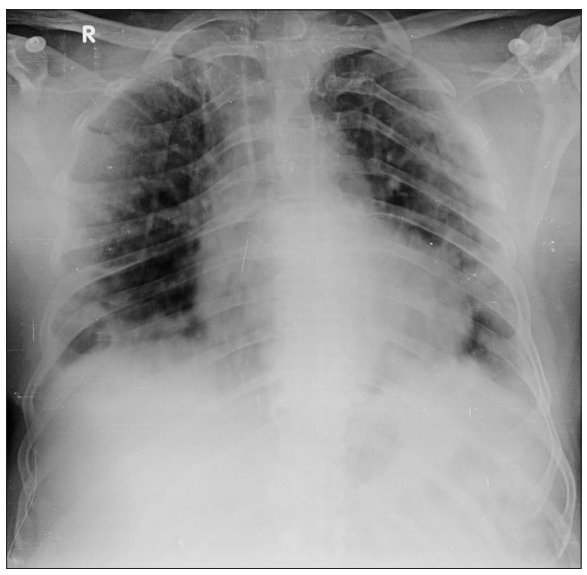
This hospital-based, retrospective study included 135 patients who needed oxygen/ventilator support and had optimal-quality chest radiographs at admission. All the chest X-rays were evaluated and a severity score was calculated on a predesigned pro forma. Statistical evaluation of the data obtained was done using appropriate tools and methods.
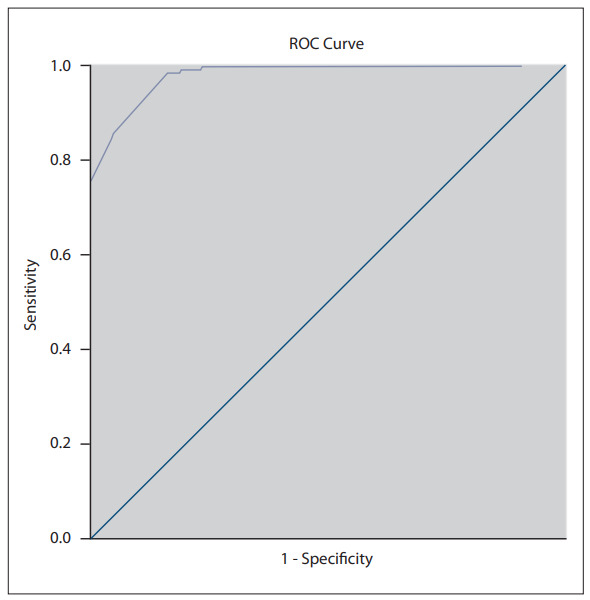
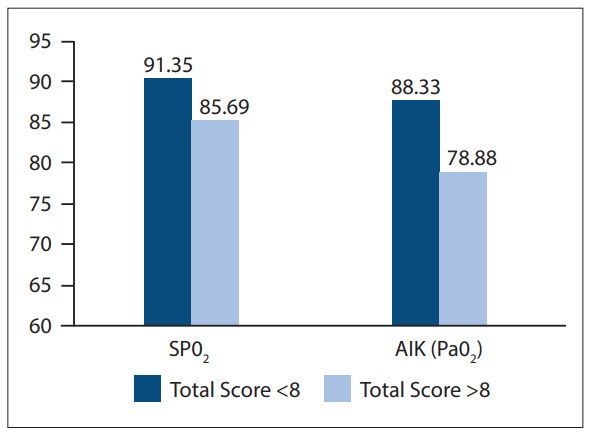
Males outnumbered females, with a mean age of 54.35 ± 14.49 years. More than 72% of patients included in our study needed ventilator support while the rest needed oxygen support. There was a significant statistical correlation between the chest radiograph severity score and SPO /PaO levels in our study. Using a cut-off value >8 for the chest radiograph severity score in predicting the need for ventilator support in a Covid-19 patient, the sensitivity, specificity and accuracy was 85.7%, 92.5% and 89.5%, respectively.
Chest radiography remains the mainstay of imaging in critically ill COVID-19 patients when they are on multiple life-support systems. Though arterial blood gas analysis is the gold standard tool for assessing the need for oxygen/ventilator support in these patients, the severity score obtained from the initial chest radiograph at the time of admission may also be used as a screening tool. Chest radiography may predict the need for oxygen/ventilator support, allowing time for patients to be moved to an appropriate-level healthcare centre, thus limiting morbidity and mortality.
新冠疫情已持续两年多,其引发的疾病具有与肺部受累相关的重大发病率和死亡率。胸部X线摄影是重症患者的主要影像学检查手段。由于一级和二级医疗保健中心(在资源有限时期提供医疗服务的主要合作伙伴)进行动脉血气分析的条件有限,我们开展了本研究。
评估胸部X线摄影在预测重症新冠患者对氧气/呼吸机支持需求方面的作用。
本项基于医院的回顾性研究纳入了135例需要氧气/呼吸机支持且入院时胸部X线摄影质量最佳的患者。对所有胸部X线片进行评估,并根据预先设计的表格计算严重程度评分。使用适当的工具和方法对所得数据进行统计学评估。
男性患者多于女性患者,平均年龄为54.35±14.49岁。我们研究中的患者超过72%需要呼吸机支持,其余患者需要氧气支持。在我们的研究中,胸部X线片严重程度评分与SPO₂/PaO₂水平之间存在显著的统计学相关性。在预测新冠患者对呼吸机支持的需求时,使用胸部X线片严重程度评分>8的临界值,其敏感性、特异性和准确性分别为85.7%、92.5%和89.5%。
当重症新冠患者使用多种生命支持系统时,胸部X线摄影仍然是主要的影像学检查方法。尽管动脉血气分析是评估这些患者对氧气/呼吸机支持需求的金标准工具,但入院时初始胸部X线片获得的严重程度评分也可作为筛查工具。胸部X线摄影可以预测对氧气/呼吸机支持的需求,为将患者转移到合适级别的医疗保健中心争取时间,从而降低发病率和死亡率。