Department of Speech-Language Pathology and Audiology, 56410University of Pretoria, Pretoria, South Africa.
Virtual Hearing Lab, 12225University of Colorado School of Medicine, Aurora, CO, USA.
Trends Hear. 2023 Jan-Dec;27:23312165231157255. doi: 10.1177/23312165231157255.
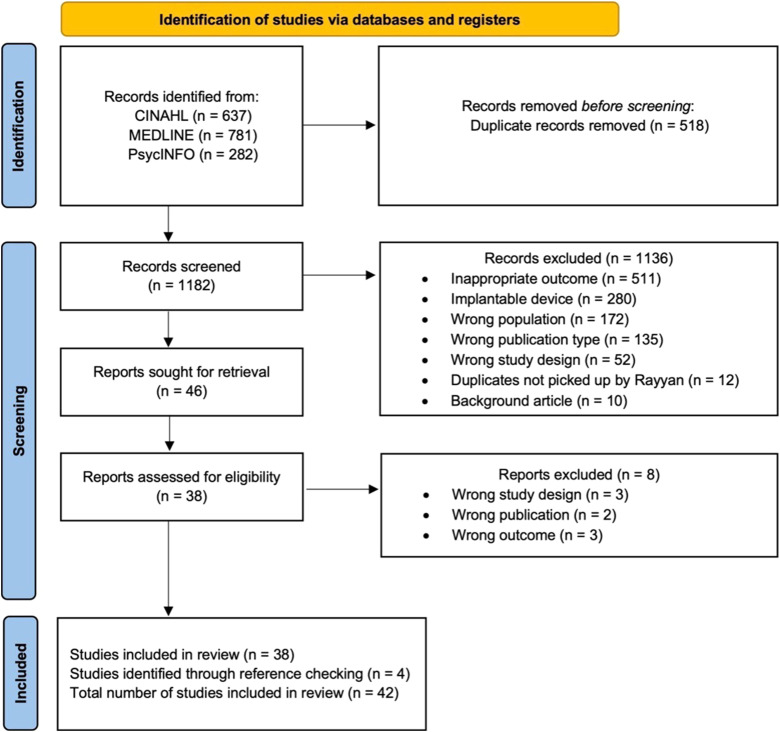
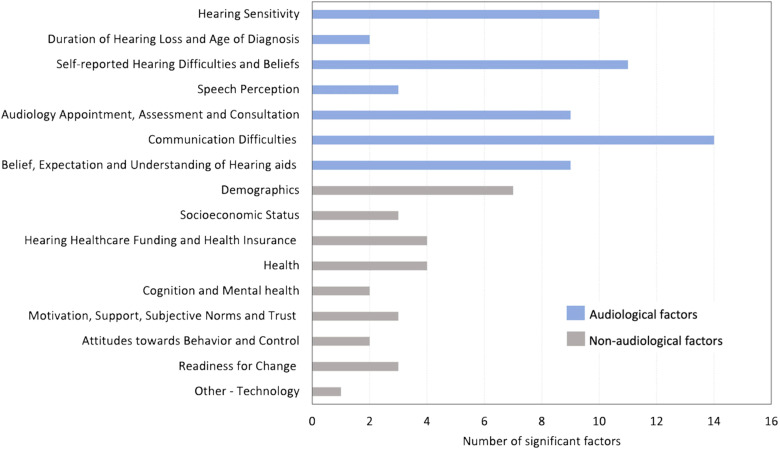
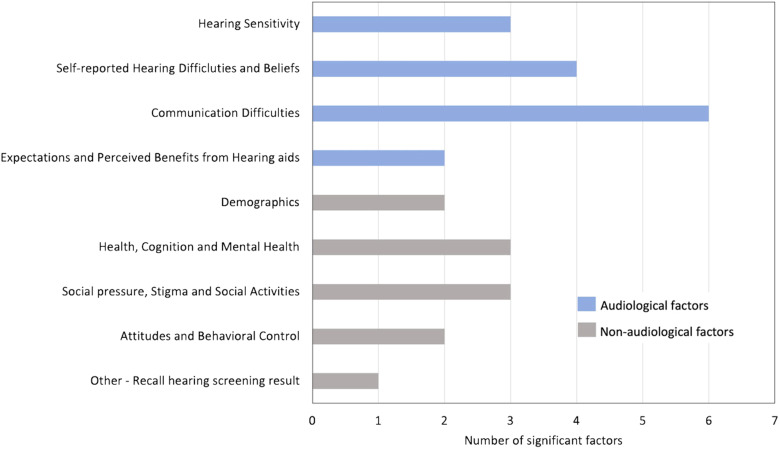
This systematic review examined the audiological and nonaudiological factors that influence hearing help-seeking and hearing aid uptake in adults with hearing loss based on the literature published during the last decade. Peer-reviewed articles published between January 2011 and February 2022 were identified through systematic searches in electronic databases CINAHL, PsycINFO, and MEDLINE. The review was conducted and reported according to the PRISMA protocol. Forty-two articles met the inclusion criteria. Seventy (42 audiological and 28 nonaudiological) hearing help-seeking factors and 159 (93 audiological and 66 nonaudiological) hearing aid uptake factors were investigated with many factors reported only once (10/70 and 62/159, respectively). Hearing aid uptake had some strong predictors (e.g., hearing sensitivity) with others showing conflicting results (e.g., self-reported health). Hearing help-seeking had clear nonpredictive factors (e.g., education) and conflicting factors (e.g., self-reported health). New factors included cognitive anxiety associated with increased help-seeking and hearing aid uptake and urban residency and access to financial support with hearing aid uptake. Most studies were rated as having a low level of evidence (67%) and fair quality (86%). Effective promotion of hearing help-seeking requires more research evidence. Investigating factors with conflicting results and limited evidence is important to clarify what factors support help-seeking and hearing aid uptake in adults with hearing loss. These findings can inform future research and hearing health promotion and rehabilitation practices.
本系统评价回顾了过去十年间发表的文献,探讨了影响听力损失成年人寻求听力帮助和使用助听器的听力学和非听力学因素。通过在 CINAHL、PsycINFO 和 MEDLINE 电子数据库中进行系统检索,确定了同行评议文章。该评价按照 PRISMA 协议进行和报告。符合纳入标准的文章有 42 篇。研究了 70 个(42 个听力学因素和 28 个非听力学因素)寻求听力帮助的因素和 159 个(93 个听力学因素和 66 个非听力学因素)使用助听器的因素,其中许多因素仅报道过一次(10/70 和 62/159)。助听器使用率有一些较强的预测因素(如听力敏感度),而其他因素则显示出相互矛盾的结果(如自我报告的健康状况)。寻求听力帮助有明确的非预测因素(如教育)和相互矛盾的因素(如自我报告的健康状况)。新的因素包括与寻求帮助和使用助听器增加相关的认知焦虑,以及与助听器使用率相关的城市居住和获得经济支持。大多数研究的证据水平为低(67%)和质量一般(86%)。有效的听力帮助寻求促进需要更多的研究证据。调查结果相互矛盾和证据有限的因素对于澄清哪些因素支持听力损失成年人寻求帮助和使用助听器非常重要。这些发现可以为未来的研究以及听力健康促进和康复实践提供信息。