Institute for Biology and Genetics, Freie Universität Berlin, Takustraße 6, 14195 Berlin, Germany.
Molecular and Theoretical Neuroscience Leibniz-Forschungs Institut für Molekulare Pharmakologie (FMP) im CharitéCrossOver (CCO) Charité-University Medicine Berlin Charité Campus Mitte, Charité Platz, 110117 Berlin, Germany.
Sci Adv. 2023 Feb 17;9(7):eade7804. doi: 10.1126/sciadv.ade7804.
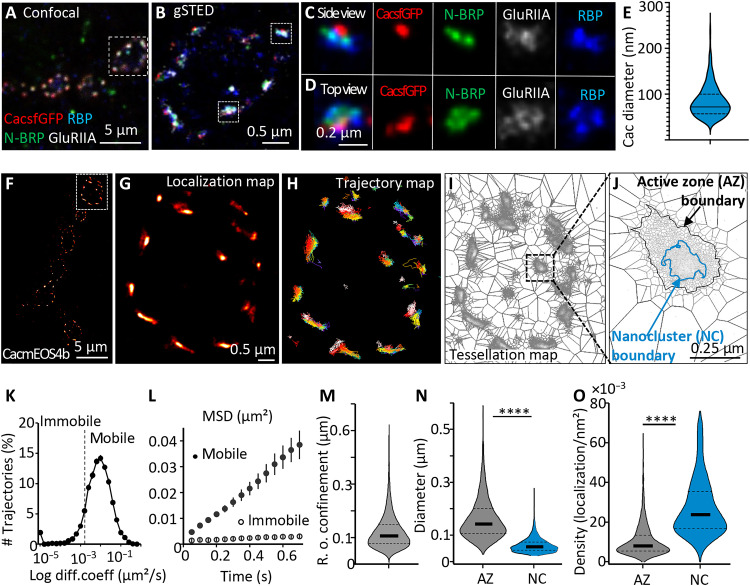
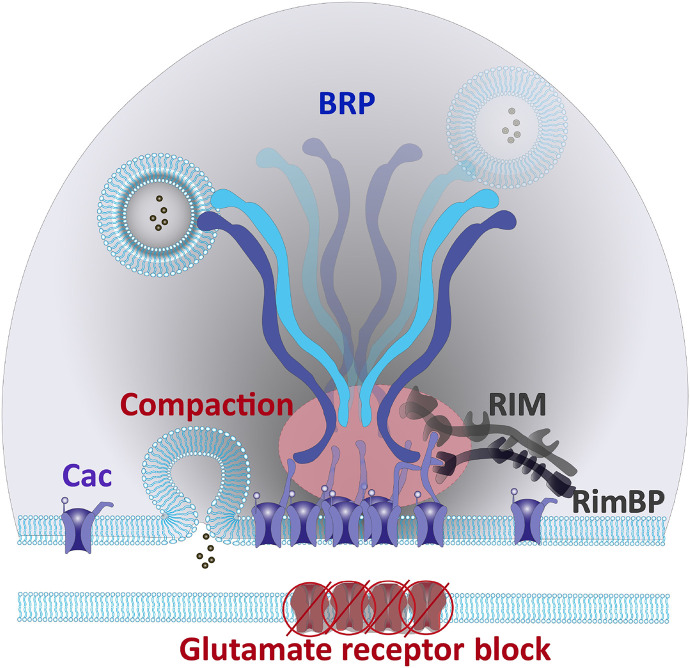
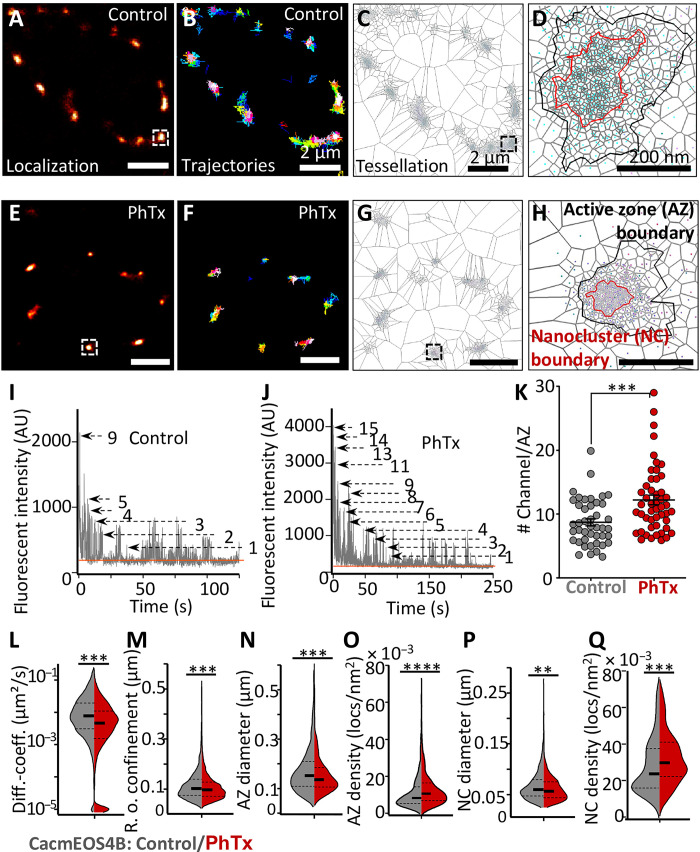
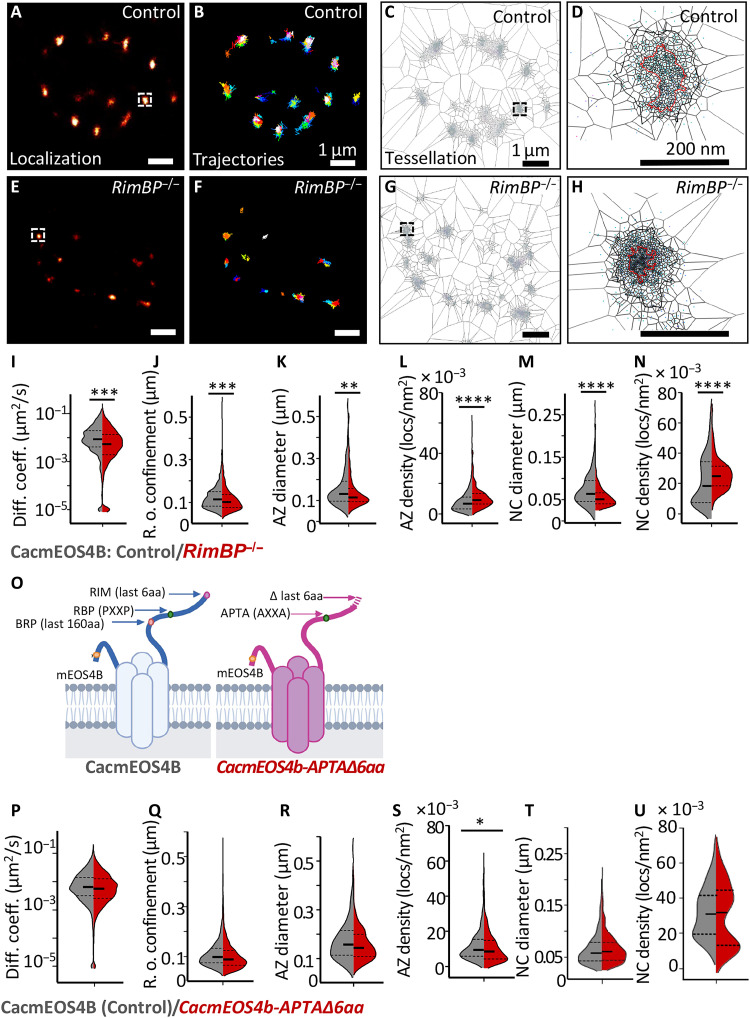
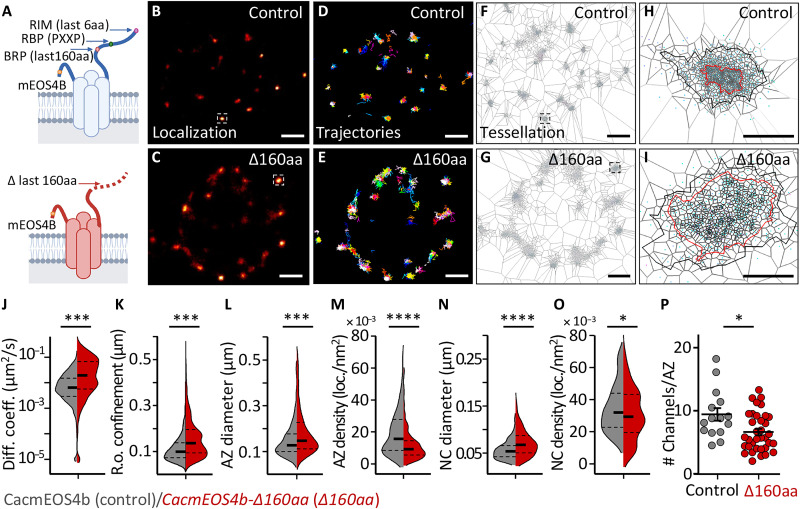
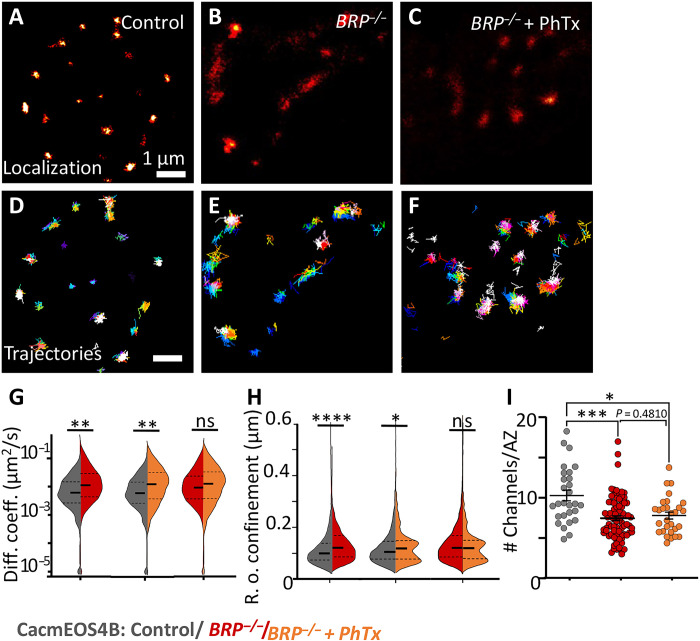
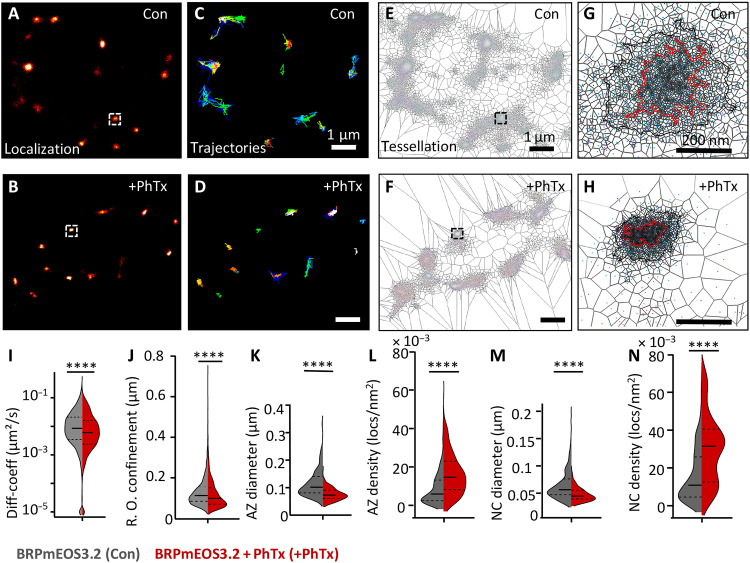
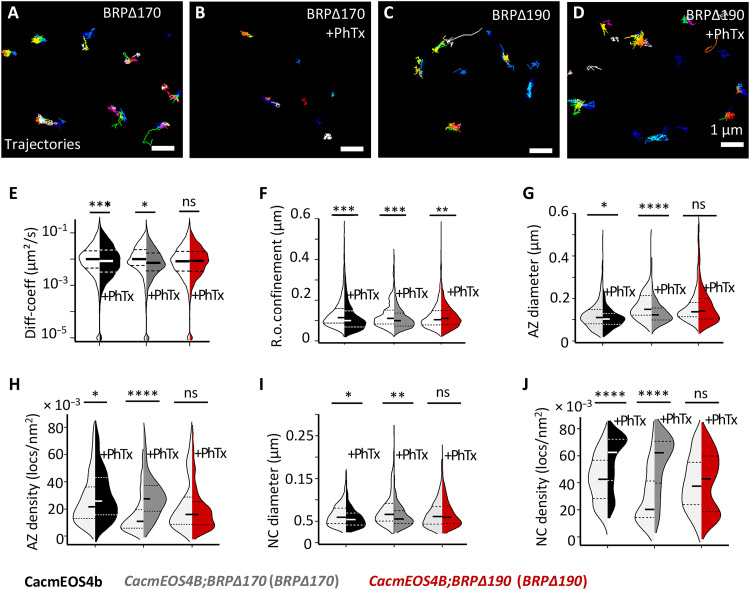
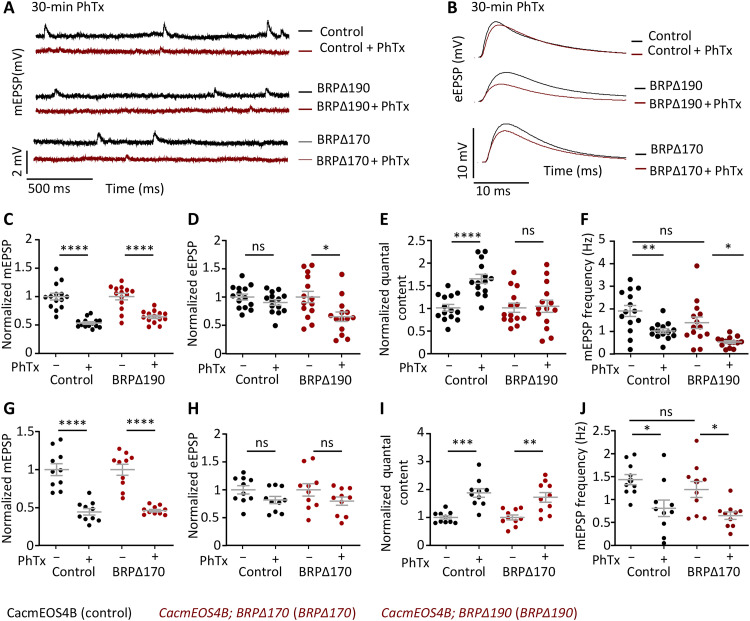
At presynaptic active zones (AZs), conserved scaffold protein architectures control synaptic vesicle (SV) release by defining the nanoscale distribution and density of voltage-gated Ca channels (VGCCs). While AZs can potentiate SV release in the minutes range, we lack an understanding of how AZ scaffold components and VGCCs engage into potentiation. We here establish dynamic, intravital single-molecule imaging of endogenously tagged proteins at AZs undergoing presynaptic homeostatic potentiation. During potentiation, the numbers of α1 VGCC subunit Cacophony (Cac) increased per AZ, while their mobility decreased and nanoscale distribution compacted. These dynamic Cac changes depended on the interaction between Cac channel's intracellular carboxyl terminus and the membrane-close amino-terminal region of the ELKS-family protein Bruchpilot, whose distribution compacted drastically. The Cac-ELKS/Bruchpilot interaction was also needed for sustained AZ potentiation. Our single-molecule analysis illustrates how the AZ scaffold couples to VGCC nanoscale distribution and dynamics to establish a state of sustained potentiation.
在突触前活性区(AZ),保守的支架蛋白结构通过定义电压门控钙通道(VGCC)的纳米级分布和密度来控制突触囊泡(SV)的释放。虽然 AZ 可以在数分钟内增强 SV 的释放,但我们还不了解 AZ 支架成分和 VGCC 如何参与增强。我们在这里建立了在经历突触前稳态增强的 AZ 上进行的内源性标记蛋白的动态、活体单分子成像。在增强过程中,每个 AZ 中的 α1 VGCC 亚基 Cacophony(Cac)的数量增加,而其流动性降低且纳米级分布变紧凑。这些动态的 Cac 变化取决于 Cac 通道细胞内羧基末端与 ELKS 家族蛋白 Bruchpilot 的膜接近的氨基末端区域之间的相互作用,后者的分布急剧变紧凑。Cac-ELKS/Bruchpilot 相互作用对于持续的 AZ 增强也是必需的。我们的单分子分析说明了 AZ 支架如何与 VGCC 的纳米级分布和动力学偶联,以建立持续增强的状态。