Department of Internal Medicine, National Taiwan University Hospital, Taipei, Taiwan.
Hepatitis Research Center, National Taiwan University Hospital, Taipei, Taiwan.
Clin Mol Hepatol. 2023 Jul;29(3):623-642. doi: 10.3350/cmh.2022.0349. Epub 2023 Feb 20.
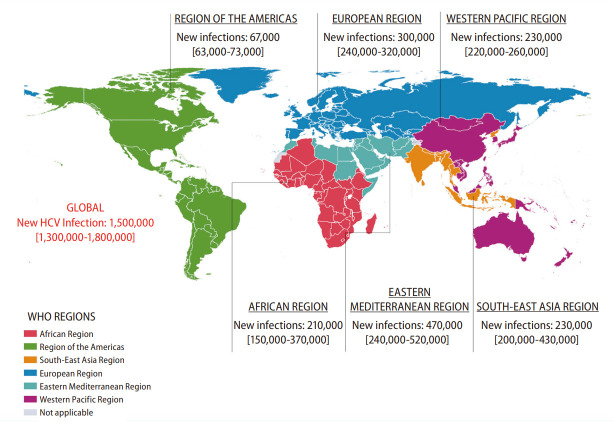
Acute hepatitis C virus (HCV) infection is a global health concern with substantial geographical variation in the incidence rate. People who have received unsafe medical procedures, used injection drugs, and lived with human immunodeficiency virus are reported to be most susceptible to acute HCV infection. The diagnosis of acute HCV infection is particularly challenging in immunocompromised, reinfected, and superinfected patients due to difficulty in detecting anti-HCV antibody seroconversion and HCV ribonucleic acid from a previously negative antibody response. With an excellent treatment effect on chronic HCV infection, recently, clinical trials investigating the benefit of direct-acting antivirals (DAAs) treatment for acute HCV infection have been conducted. Based on the results of cost-effectiveness analysis, DAAs should be initiated early in acute HCV infection prior to spontaneous viral clearance. Compared to the standard 8-12 week-course of DAAs for chronic HCV infection, DAAs treatment duration may be shortened to 6-8 weeks in acute HCV infection without compromising the efficacy. Standard DAA regimens provide comparable efficacy in treating HCV-reinfected patients and DAA-naïve ones. For cases contracting acute HCV infection from HCV-viremic liver transplant, a 12-week course of pangenotypic DAAs is suggested. While for cases contracting acute HCV infection from HCV-viremic non-liver solid organ transplants, a short course of prophylactic or pre-emptive DAAs is suggested. Currently, prophylactic HCV vaccines are unavailable. In addition to treatment scale-up for acute HCV infection, practice of universal precaution, harm reduction, safe sex, and vigilant surveillance after viral clearance remain critical in reducing HCV transmission.
急性丙型肝炎病毒(HCV)感染是一个全球性的健康问题,其发病率在地理上有很大差异。据报道,接受不安全医疗程序、使用注射毒品和与人类免疫缺陷病毒(HIV)共同生活的人最容易感染急性 HCV 感染。由于难以检测到先前抗体阴性反应中的抗 HCV 抗体血清转化和 HCV 核糖核酸,免疫功能低下、再次感染和重叠感染的患者急性 HCV 感染的诊断尤其具有挑战性。最近,由于直接作用抗病毒药物(DAAs)治疗慢性 HCV 感染的疗效极佳,因此开展了临床试验以研究 DAAs 治疗急性 HCV 感染的益处。基于成本效益分析的结果,应在急性 HCV 感染自发性病毒清除之前尽早开始 DAA 治疗。与慢性 HCV 感染的标准 8-12 周 DAA 疗程相比,急性 HCV 感染的 DAA 治疗时间可能缩短至 6-8 周,而不会影响疗效。标准 DAA 方案在治疗 HCV 再次感染患者和 DAA 初治患者方面具有相当的疗效。对于从 HCV 病毒血症肝移植中感染急性 HCV 的患者,建议使用泛基因型 DAA 进行 12 周疗程。而对于从 HCV 病毒血症非肝实体器官移植中感染急性 HCV 的患者,建议使用短疗程预防性或先发制人的 DAA。目前,预防性 HCV 疫苗不可用。除了扩大急性 HCV 感染的治疗规模外,普遍预防、减少伤害、安全性行为以及病毒清除后的密切监测对于减少 HCV 传播仍然至关重要。