Department of Molecular Medicine, Faculty of Medicine, Laval University, Quebec, Canada.
Department of Mycobacteriology and Pulmonary Research, Pasteur Institute of Iran, Tehran, Iran.
Respir Res. 2023 Feb 17;24(1):55. doi: 10.1186/s12931-023-02366-w.
Lung cancer is one of the leading causes of death in the world and the deadliest of all cancers. Apoptosis is a key pathway in regulating the cell growth rate, proliferation, and occurrence of lung cancer. This process is controlled by many molecules, such as microRNAs and their target genes. Therefore, finding new medical approaches such as exploring diagnostic and prognostic biomarkers involved in apoptosis is needed for this disease. In the present study, we aimed to identify key microRNAs and their target genes that could be used in the prognosis and diagnosis of lung cancer.
Signaling pathways, genes, and microRNAs involved in the apoptotic pathway were identified by bioinformatics analysis and recent clinical studies. Bioinformatics analysis was performed on databases including NCBI, TargetScan, UALCAN, UCSC, KEGG, miRPathDB, and Enrichr, and clinical studies were extracted from PubMed, web of science, and SCOPUS databases.
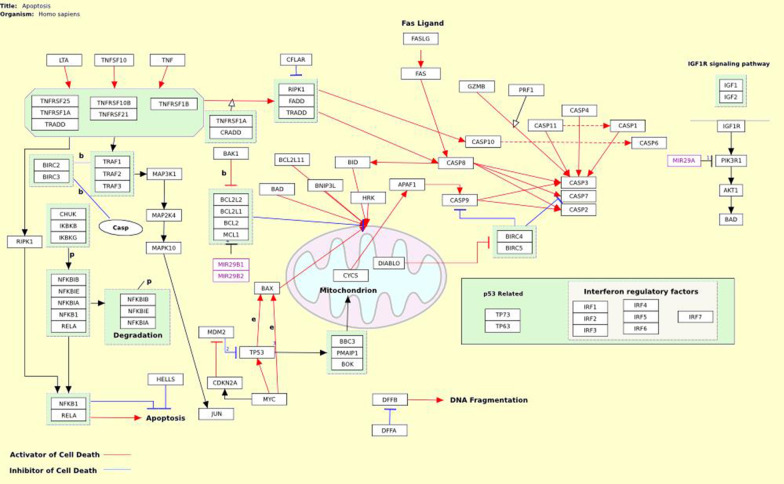
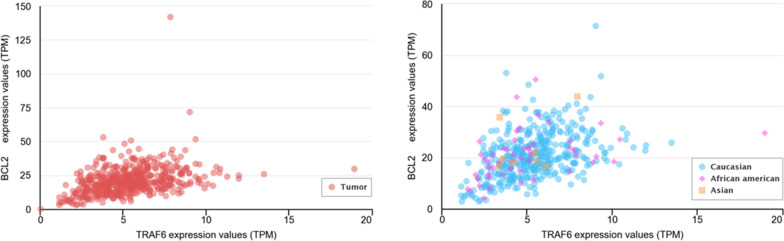
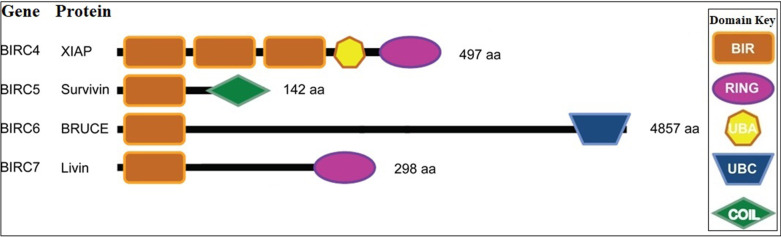
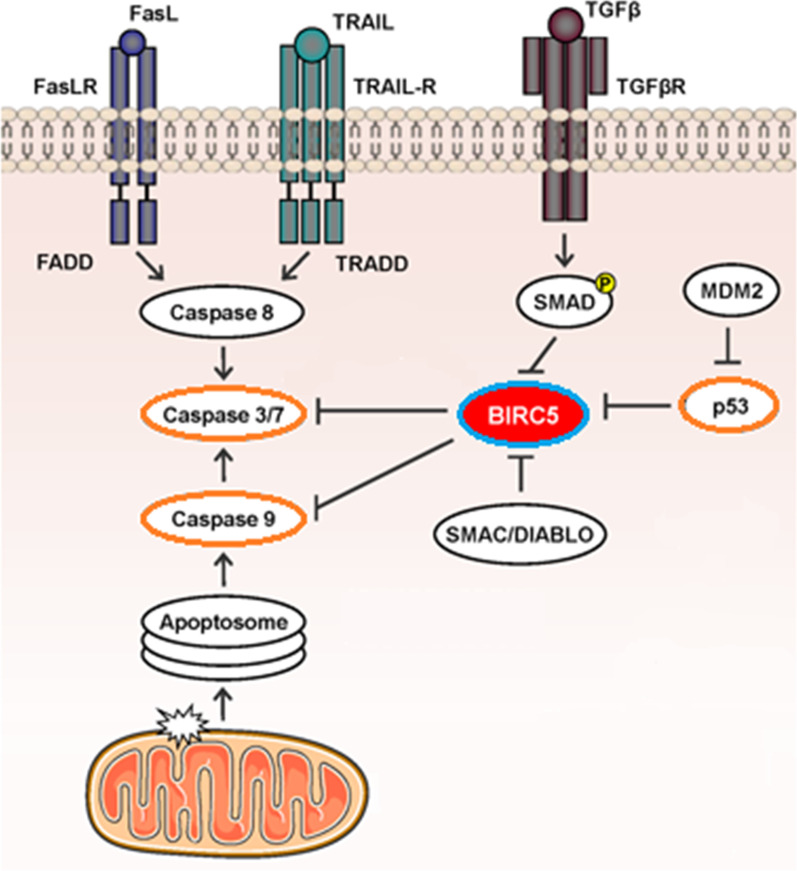
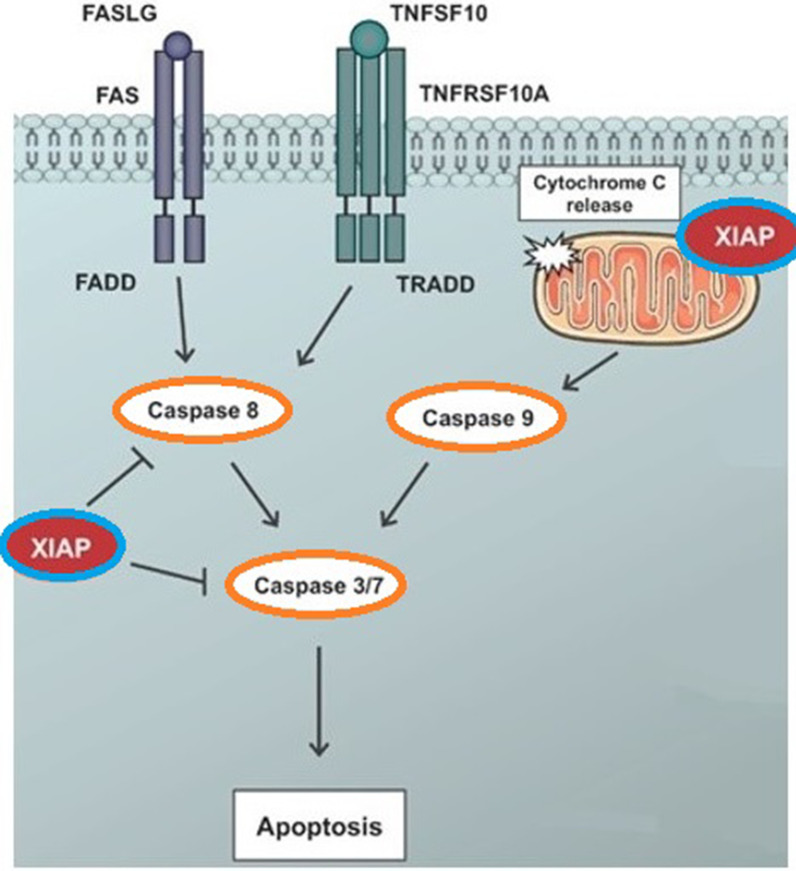
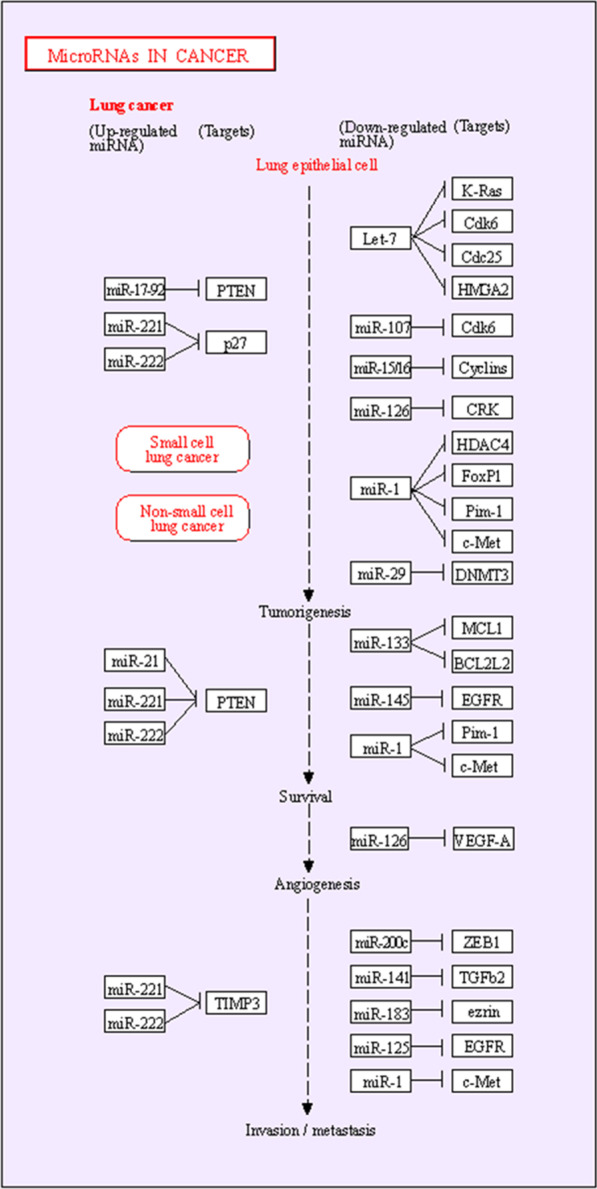
NF-κB, PI3K/AKT, and MAPK pathways play critical roles in the regulation of apoptosis. MiR-146b, 146a, 21, 23a, 135a, 30a, 202, and 181 were identified as the involved microRNAs in the apoptosis signaling pathway, and IRAK1, TRAF6, Bcl-2, PTEN, Akt, PIK3, KRAS, and MAPK1 were classified as the target genes of the mentioned microRNAs respectively. The essential roles of these signaling pathways and miRNAs/target genes were approved through both databases and clinical studies. Moreover, surviving, living, BRUCE, and XIAP was the main inhibitor of apoptosis which act by regulating the apoptosis-involved genes and miRNAs.
Identifying the abnormal expression and regulation of miRNAs and signaling pathways in apoptosis of lung cancer can represent a novel class of biomarkers that can facilitate the early diagnosis, personalized treatment, and prediction of drug response for lung cancer patients. Therefore, studying the mechanisms of apoptosis including signaling pathways, miRNAs/target genes, and the inhibitors of apoptosis are advantageous for finding the most practical approach and reducing the pathological demonstrations of lung cancer.
肺癌是全球主要死因之一,也是所有癌症中最致命的一种。细胞凋亡是调节细胞生长速度、增殖和肺癌发生的关键途径。这一过程受到许多分子的控制,如 microRNAs 及其靶基因。因此,需要寻找新的医学方法,如探索参与细胞凋亡的诊断和预后生物标志物,用于治疗这种疾病。在本研究中,我们旨在鉴定可能用于肺癌预后和诊断的关键 microRNAs 及其靶基因。
通过生物信息学分析和最近的临床研究,确定了细胞凋亡途径中涉及的信号通路、基因和 microRNAs。在包括 NCBI、TargetScan、UALCAN、UCSC、KEGG、miRPathDB 和 Enrichr 在内的数据库中进行生物信息学分析,并从 PubMed、web of science 和 SCOPUS 数据库中提取临床研究。
NF-κB、PI3K/AKT 和 MAPK 通路在调节细胞凋亡中发挥关键作用。miR-146b、146a、21、23a、135a、30a、202 和 181 被鉴定为细胞凋亡信号通路中涉及的 microRNAs,IRAK1、TRAF6、Bcl-2、PTEN、Akt、PIK3、KRAS 和 MAPK1 分别被归类为上述 microRNAs 的靶基因。这些信号通路和 microRNAs/靶基因的重要作用通过数据库和临床研究得到了证实。此外,surviving、living、BRUCE 和 XIAP 是凋亡抑制物的主要抑制剂,通过调节凋亡相关基因和 microRNAs 发挥作用。
鉴定肺癌细胞凋亡中 microRNAs 和信号通路的异常表达和调控,可以为肺癌患者的早期诊断、个体化治疗和药物反应预测提供一类新的生物标志物。因此,研究细胞凋亡包括信号通路、microRNAs/靶基因和凋亡抑制剂的机制,有利于找到最实用的方法,减少肺癌的病理表现。