Gerami Mohammad Hadi, Khorram Roya, Rasoolzadegan Soheil, Mardpour Saeid, Nakhaei Pooria, Hashemi Soheyla, Al-Naqeeb Bashar Zuhair Talib, Aminian Amir, Samimi Sahar
Bone and Joint Diseases Research Center, Shiraz University of Medical Sciences, Shiraz, Iran.
Bone and Joint Diseases Research Center, Department of Orthopedic Surgery, Shiraz University of Medical Sciences, Shiraz, Iran.
Eur J Med Res. 2023 Feb 20;28(1):86. doi: 10.1186/s40001-023-01034-5.
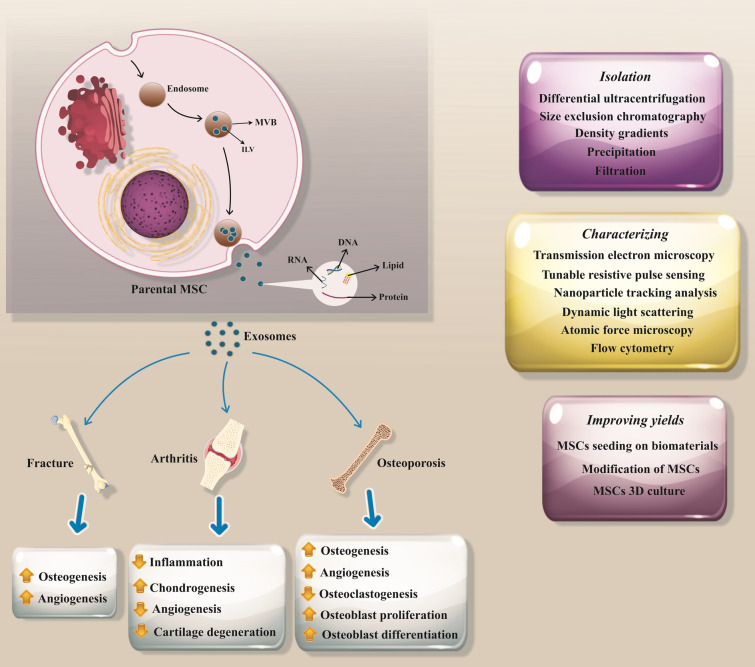
Exosomes are membranous vesicles with a 30 to 150 nm diameter secreted by mesenchymal stem/stromal cells (MSCs) and other cells, such as immune cells and cancer cells. Exosomes convey proteins, bioactive lipids, and genetic components to recipient cells, such as microRNAs (miRNAs). Consequently, they have been implicated in regulating intercellular communication mediators under physiological and pathological circumstances. Exosomes therapy as a cell-free approach bypasses many concerns regarding the therapeutic application of stem/stromal cells, including undesirable proliferation, heterogeneity, and immunogenic effects. Indeed, exosomes have become a promising strategy to treat human diseases, particularly bone- and joint-associated musculoskeletal disorders, because of their characteristics, such as potentiated stability in circulation, biocompatibility, low immunogenicity, and toxicity. In this light, a diversity of studies have indicated that inhibiting inflammation, inducing angiogenesis, provoking osteoblast and chondrocyte proliferation and migration, and negative regulation of matrix-degrading enzymes result in bone and cartilage recovery upon administration of MSCs-derived exosomes. Notwithstanding, insufficient quantity of isolated exosomes, lack of reliable potency test, and exosomes heterogeneity hurdle their application in clinics. Herein, we will deliver an outline respecting the advantages of MSCs-derived exosomes-based therapy in common bone- and joint-associated musculoskeletal disorders. Moreover, we will have a glimpse the underlying mechanism behind the MSCs-elicited therapeutic merits in these conditions.
外泌体是间充质干/基质细胞(MSCs)以及其他细胞(如免疫细胞和癌细胞)分泌的直径为30至150纳米的膜性囊泡。外泌体将蛋白质、生物活性脂质和遗传成分(如微小RNA,miRNAs)传递给受体细胞。因此,它们参与了生理和病理情况下细胞间通讯介质的调节。外泌体疗法作为一种无细胞方法,绕过了许多与干/基质细胞治疗应用相关的问题,包括不良增殖、异质性和免疫原性效应。事实上,由于外泌体具有循环稳定性增强、生物相容性好、免疫原性低和毒性低等特点,已成为治疗人类疾病,特别是骨和关节相关肌肉骨骼疾病的一种有前景的策略。有鉴于此,大量研究表明,在施用间充质干细胞衍生的外泌体后,抑制炎症、诱导血管生成、促进成骨细胞和软骨细胞增殖与迁移以及对基质降解酶的负调控可导致骨和软骨恢复。尽管如此,外泌体分离量不足、缺乏可靠的效力测试以及外泌体异质性阻碍了它们在临床上的应用。在此,我们将概述间充质干细胞衍生的外泌体疗法在常见骨和关节相关肌肉骨骼疾病中的优势。此外,我们还将了解在这些情况下间充质干细胞产生治疗效果的潜在机制。