Huang Xinqia, Zhao Ziquan, Zhan Weiqiang, Deng Mingzhu, Wu Xuyang, Chen Zhoutao, Xie Jiahao, Ye Wei, Zhao Mingyan, Chu Jiaqi
Orthopaedic Center, Affiliated Hospital of Guangdong Medical University, Zhanjiang, Guangdong, 524001, People's Republic of China.
Department of Dermatology, Affiliated Hospital of Guangdong Medical University, Zhanjiang, Guangdong, 524001, People's Republic of China.
Int J Nanomedicine. 2024 Dec 6;19:13095-13112. doi: 10.2147/IJN.S484751. eCollection 2024.
To investigate the osteogenic potential of human embryonic stem cell-derived exosomes (hESC-Exos) and their effects on the differentiation of human umbilical cord mesenchymal stem cells (hUCMSCs).
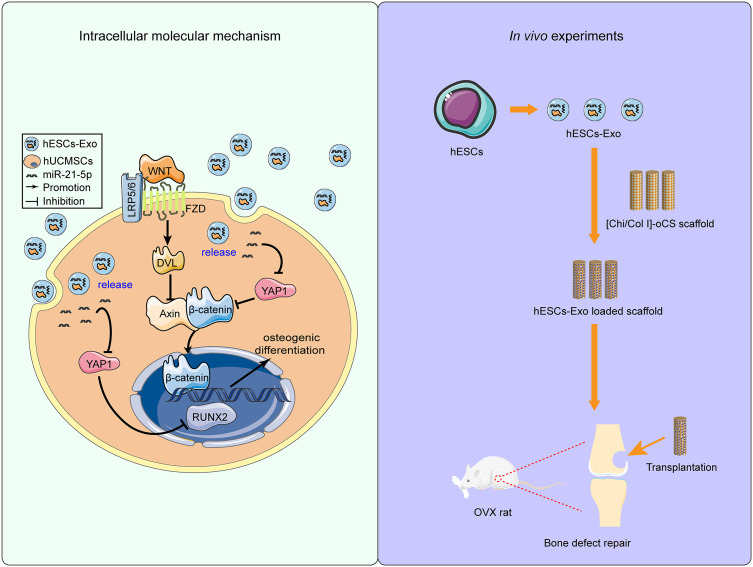
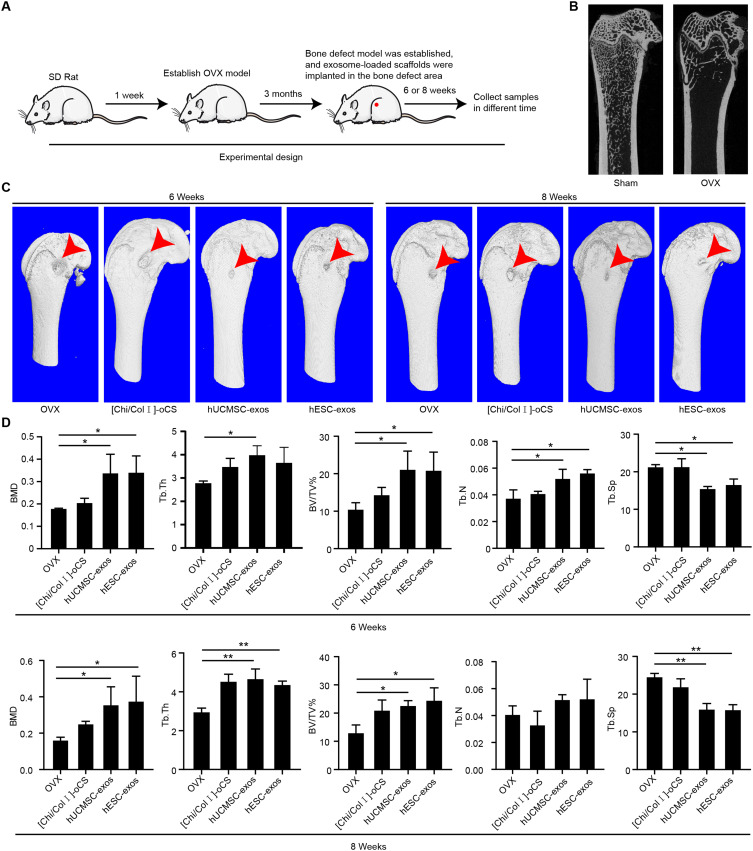
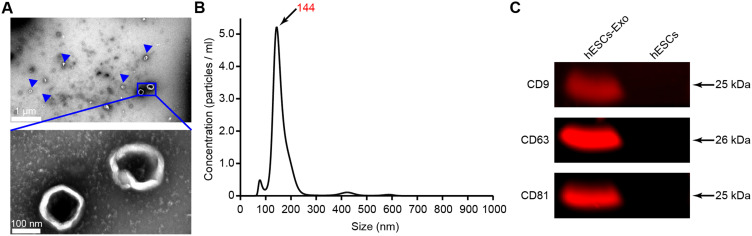
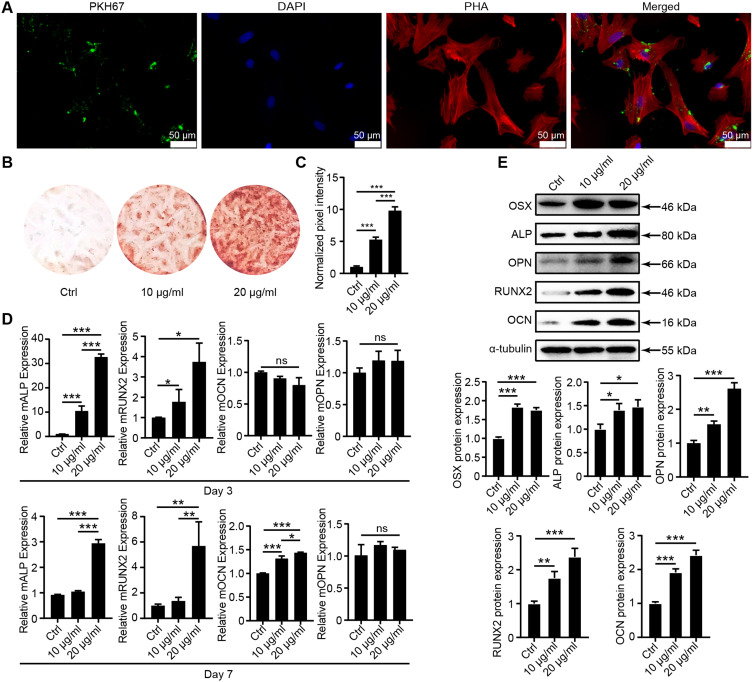
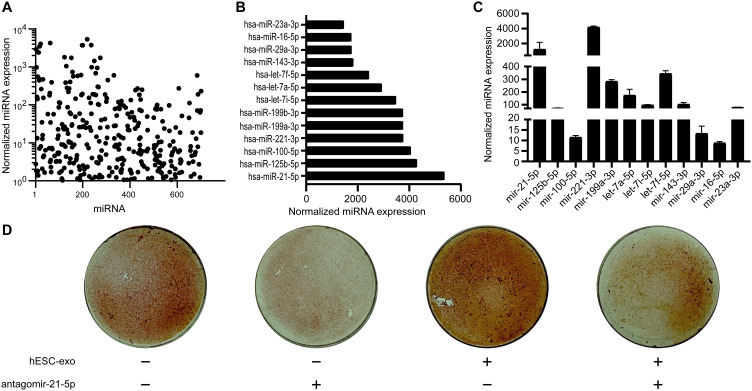
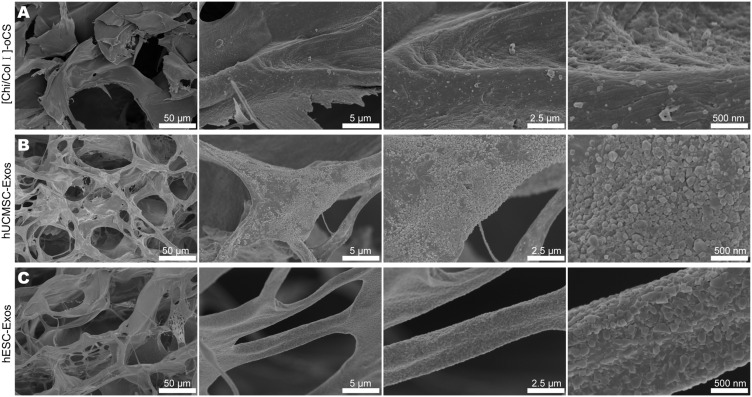
hESC-Exos were isolated and characterized using transmission electron microscopy (TEM), nanoparticle tracking analysis (NTA), and Western blotting. hUCMSCs were cultured with hESC-Exos to assess osteogenic differentiation through alizarin red staining, quantitative PCR (qPCR), and Western blotting. miRNA profiling of hESC-Exos was performed using miRNA microarray analysis. In vivo bone regeneration was evaluated using an ovariectomized rat model with bone defects treated with exosome-loaded scaffolds.
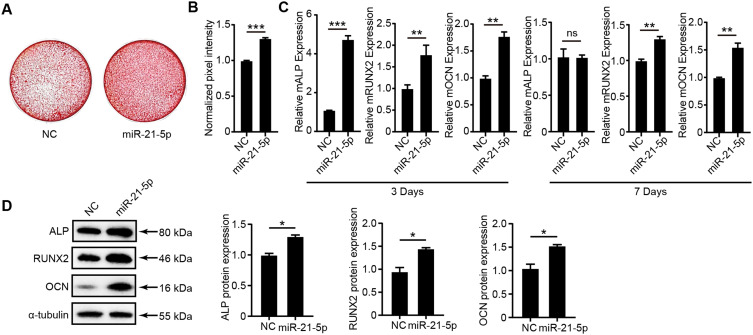
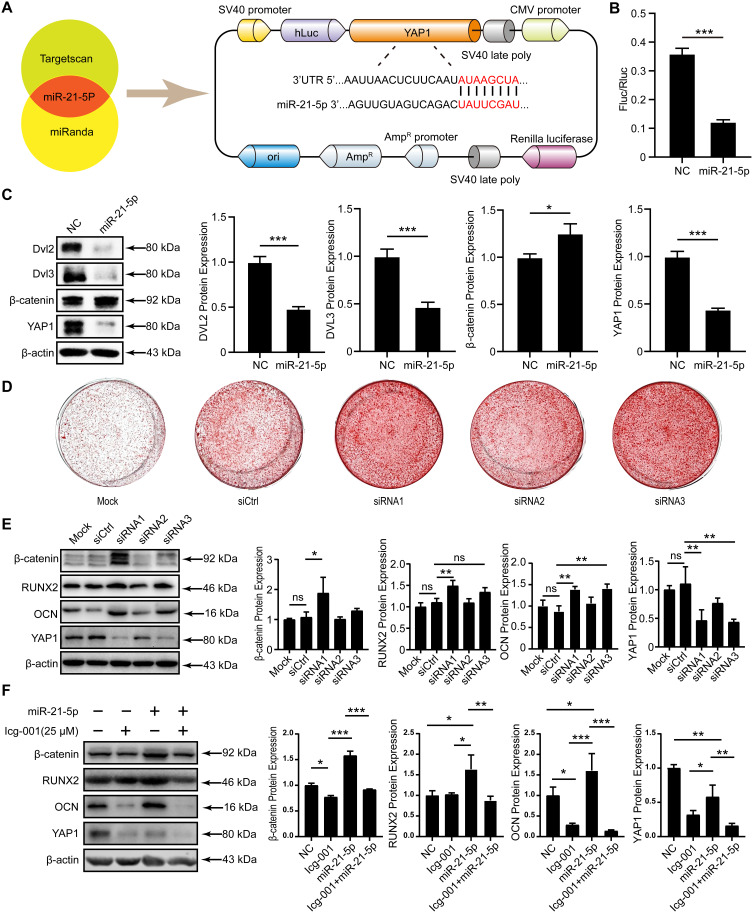
hESC-Exos significantly promoted the osteogenic differentiation of hUCMSCs, as evidenced by increased alizarin red staining and the upregulation of osteogenesis-related genes and proteins (ALP, RUNX2, OCN). miRNA analysis revealed that miR-21-5p is a key regulator that targets YAP1 and activates the Wnt/β-catenin signaling pathway. In vivo, hESC-Exos enhanced bone repair in ovariectomized rats, as demonstrated by increased bone mineral density and improved bone microarchitecture compared to those in controls.
hESC-Exos exhibit significant osteogenic potential by promoting the differentiation of hUCMSCs and enhancing bone regeneration in vivo. This study revealed that the miR-21-5p-YAP1/β-catenin axis is a critical pathway, suggesting that the use of hESC-Exos is a promising therapeutic strategy for bone regeneration and repair.
研究人胚胎干细胞来源的外泌体(hESC-Exos)的成骨潜力及其对人脐带间充质干细胞(hUCMSCs)分化的影响。
采用透射电子显微镜(TEM)、纳米颗粒跟踪分析(NTA)和蛋白质免疫印迹法对hESC-Exos进行分离和鉴定。将hUCMSCs与hESC-Exos共培养,通过茜素红染色、定量聚合酶链反应(qPCR)和蛋白质免疫印迹法评估成骨分化情况。使用miRNA芯片分析对hESC-Exos进行miRNA谱分析。采用去卵巢大鼠模型,对加载外泌体的支架治疗的骨缺损进行体内骨再生评估。
hESC-Exos显著促进hUCMSCs的成骨分化,茜素红染色增加以及成骨相关基因和蛋白质(碱性磷酸酶、RUNX2、骨钙素)上调证明了这一点。miRNA分析显示,miR-21-5p是靶向Yes相关蛋白1(YAP1)并激活Wnt/β-连环蛋白信号通路的关键调节因子。在体内,与对照组相比,hESC-Exos提高了去卵巢大鼠的骨密度,改善了骨微结构,增强了骨修复能力。
hESC-Exos通过促进hUCMSCs的分化和增强体内骨再生表现出显著的成骨潜力。本研究表明,miR-21-5p-YAP1/β-连环蛋白轴是一条关键途径,提示使用hESC-Exos是一种有前景的骨再生和修复治疗策略。