Yang Guiyan, Jena Prasant K, Hu Ying, Sheng Lili, Chen Shin-Yu, Slupsky Carolyn M, Davis Ryan, Tepper Clifford G, Wan Yu-Jui Yvonne
Department of Pathology and Laboratory Medicine, University of California, Davis Health. Room 3400B, Research Building III, 4645 2nd Ave, Sacramento, CA, 95817, USA.
Department of Nutrition, University of California, Davis, CA, USA.
Biomark Res. 2023 Feb 18;11(1):20. doi: 10.1186/s40364-023-00458-9.
Aging and diet are risks for metabolic diseases. Bile acid receptor farnesoid X receptor (FXR) knockout (KO) mice develop metabolic liver diseases that progress into cancer as they age, which is accelerated by Western diet (WD) intake. The current study uncovers the molecular signatures for diet and age-linked metabolic liver disease development in an FXR-dependent manner.
Wild-type (WT) and FXR KO male mice, either on a healthy control diet (CD) or a WD, were euthanized at the ages of 5, 10, or 15 months. Hepatic transcriptomics, liver, serum, and urine metabolomics as well as microbiota were profiled.
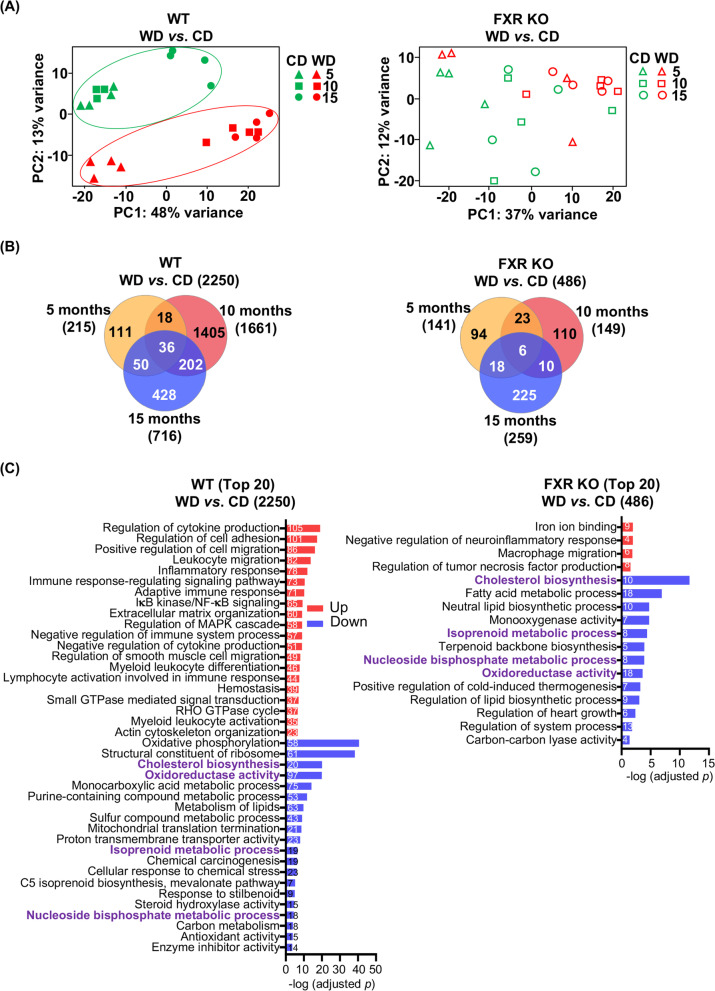
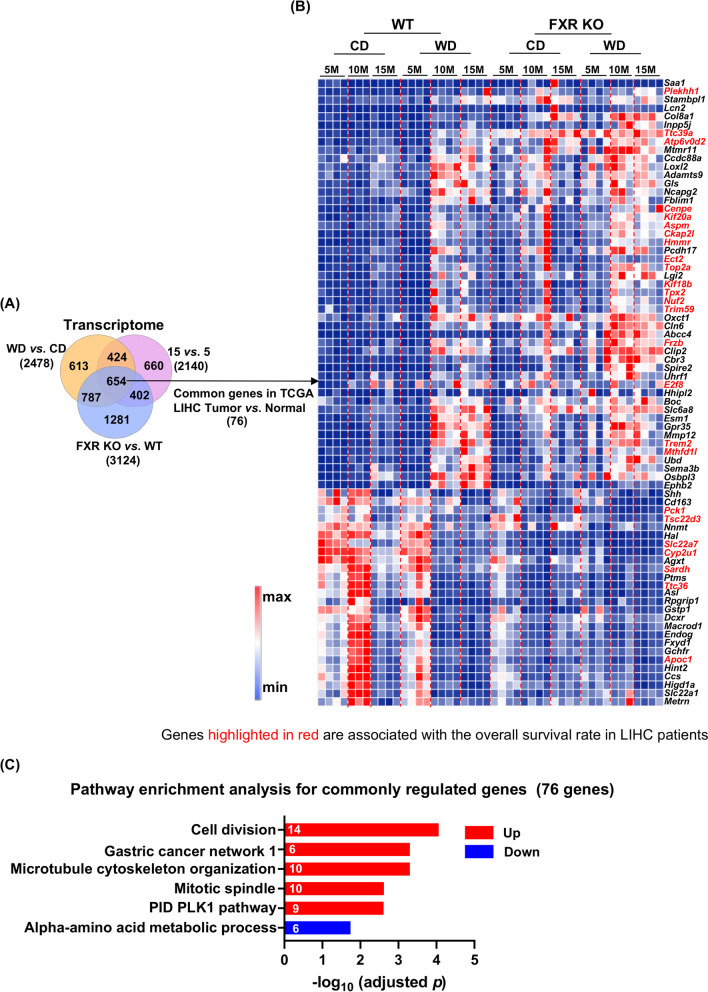
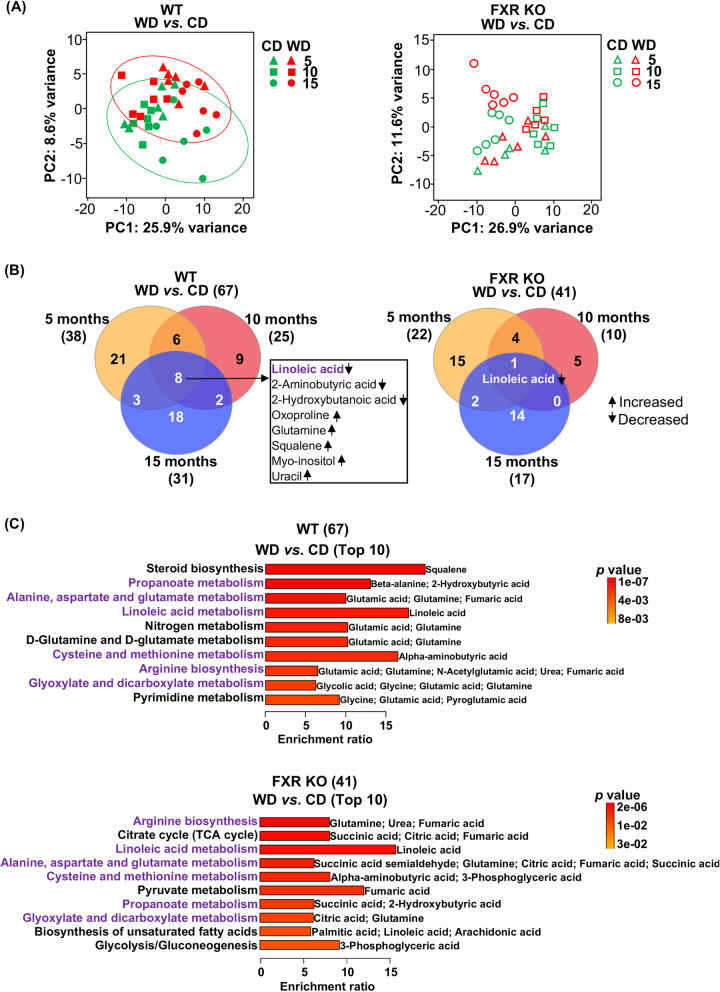
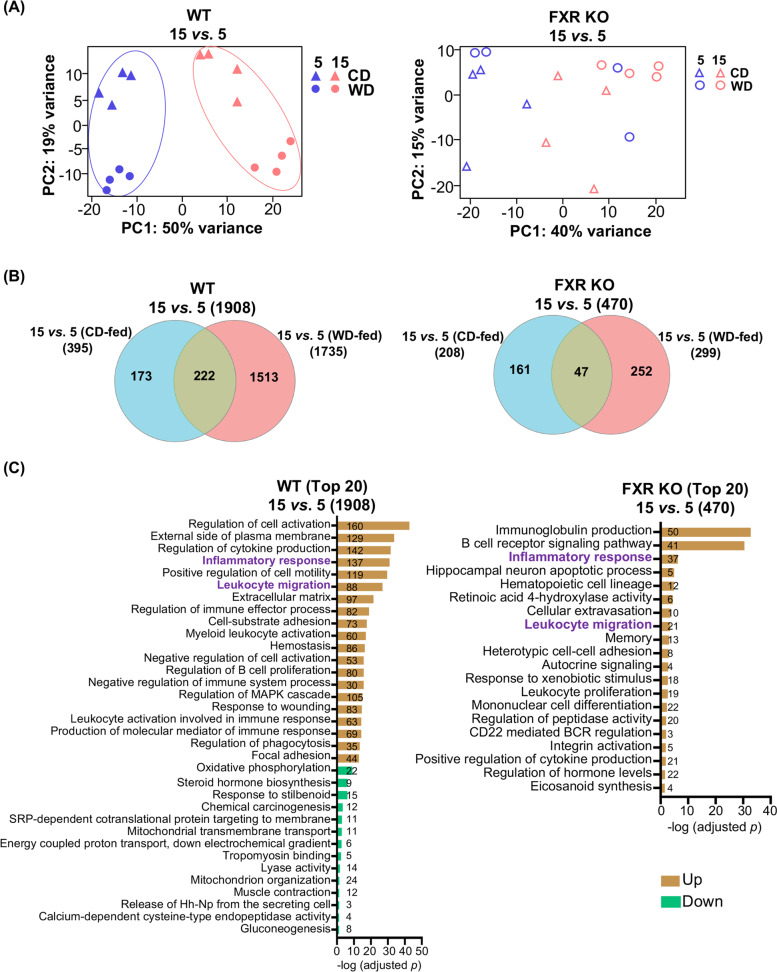
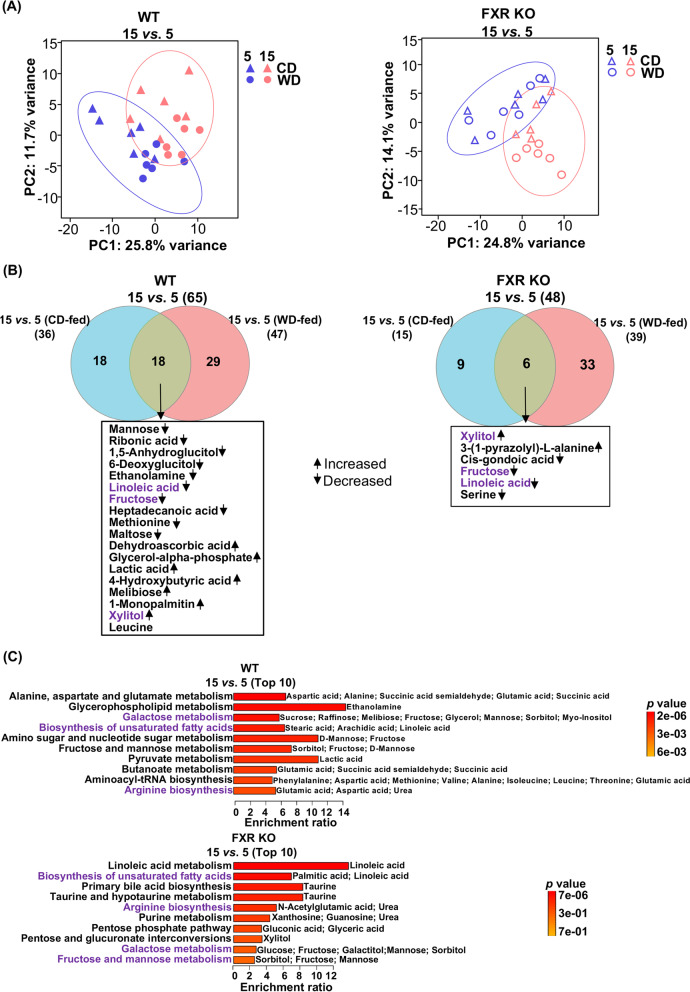
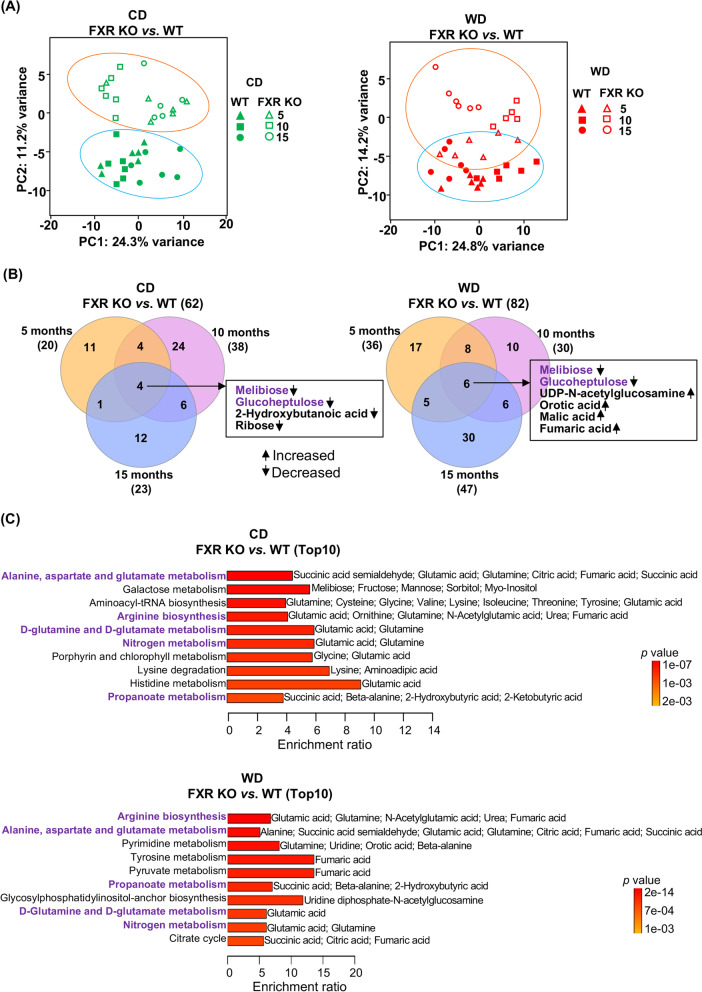
WD intake facilitated hepatic aging in WT mice. In an FXR-dependent manner, increased inflammation and reduced oxidative phosphorylation were the primary pathways affected by WD and aging. FXR has a role in modulating inflammation and B cell-mediated humoral immunity which was enhanced by aging. Moreover, FXR dictated neuron differentiation, muscle contraction, and cytoskeleton organization in addition to metabolism. There were 654 transcripts commonly altered by diets, ages, and FXR KO, and 76 of them were differentially expressed in human hepatocellular carcinoma (HCC) and healthy livers. Urine metabolites differentiated dietary effects in both genotypes, and serum metabolites clearly separated ages irrespective of diets. Aging and FXR KO commonly affected amino acid metabolism and TCA cycle. Moreover, FXR is essential for colonization of age-related gut microbes. Integrated analyses uncovered metabolites and bacteria linked with hepatic transcripts affected by WD intake, aging, and FXR KO as well as related to HCC patient survival.
FXR is a target to prevent diet or age-associated metabolic disease. The uncovered metabolites and microbes can be diagnostic markers for metabolic disease.
衰老和饮食是代谢性疾病的风险因素。胆汁酸受体法尼醇X受体(FXR)基因敲除(KO)小鼠会随着年龄增长发展为代谢性肝病,并进而发展为癌症,而西式饮食(WD)的摄入会加速这一进程。本研究以FXR依赖的方式揭示了饮食和年龄相关的代谢性肝病发展的分子特征。
将野生型(WT)和FXR KO雄性小鼠分为健康对照饮食(CD)组或WD组,在5、10或15月龄时实施安乐死。对肝脏转录组学、肝脏、血清和尿液代谢组学以及微生物群进行分析。
WD摄入促进了WT小鼠的肝脏衰老。以FXR依赖的方式,炎症增加和氧化磷酸化减少是受WD和衰老影响的主要途径。FXR在调节炎症和B细胞介导的体液免疫方面发挥作用,而衰老会增强这种作用。此外,FXR除了调节代谢外,还决定神经元分化、肌肉收缩和细胞骨架组织。饮食、年龄和FXR KO共同改变了654个转录本,其中76个在人类肝细胞癌(HCC)和健康肝脏中差异表达。尿液代谢物区分了两种基因型的饮食效应,血清代谢物则清楚地分离了不同年龄的小鼠,而与饮食无关。衰老和FXR KO共同影响氨基酸代谢和三羧酸循环。此外,FXR对于与年龄相关的肠道微生物的定殖至关重要。综合分析揭示了与受WD摄入、衰老和FXR KO影响的肝脏转录本相关的代谢物和细菌,以及与HCC患者生存相关的代谢物和细菌。
FXR是预防饮食或年龄相关代谢性疾病的靶点。所发现的代谢物和微生物可作为代谢性疾病的诊断标志物。