Department of Clinical Laboratory, Shenzhen Hospital, Southern Medical University, No. 1333 of Xinhu Road, Shenzhen, 518101, Guangdong, China.
Eur J Med Res. 2023 Feb 20;28(1):90. doi: 10.1186/s40001-023-01058-x.
Although the tumor mutation burden (TMB) was reported as a biomarker for immunotherapy of various cancers, whether it can effectively predict the survival prognosis in breast cancer patients remains unclear. In this study, the prognostic value of TMB and its correlation with immune infiltration were explored by using multigroup studies.
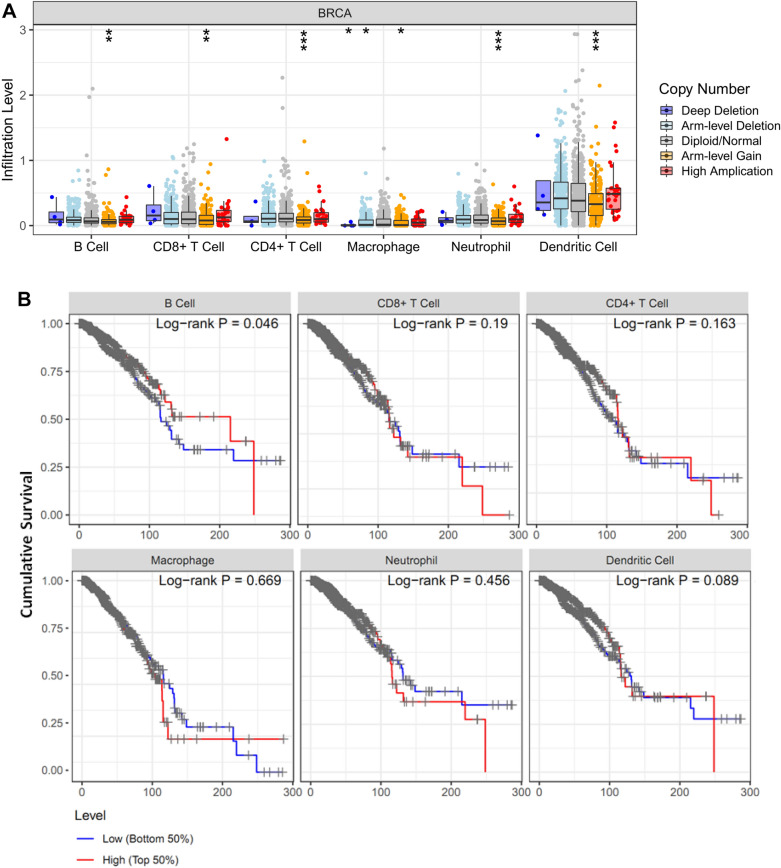
The somatic mutation data of 986 breast cancer patients were obtained from TCGA database. Breast cancer patients were divided into a low-TMB group and a high-TMB group according to the quartile of TMB scores. The differentially expressed genes (DEGs) were identified by the "limma" R program. The CIBERSORT algorithm was utilized to estimate the immune cell fraction of each sample. The TIMER database was utilized to evaluate the association between CNVs of immune genes and tumor immune cell infiltration and the prognostic value of the immune cells in breast cancer.
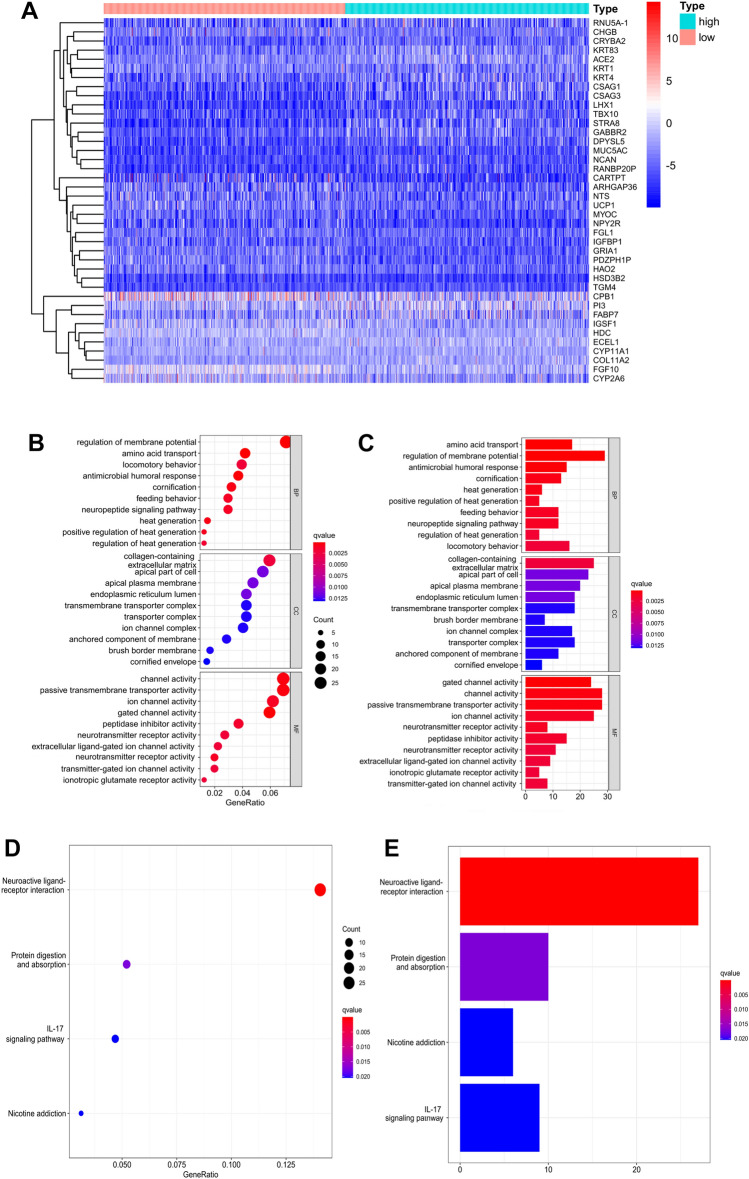
In breast cancer, TP53, PIK3CA, TTN, CDH1 and other genes were the most important mutated genes. Higher survival rate of patients was found in the low-TMB group. Among the top 10 DEGs, three of them belong to the KRT gene family. GSEA enrichment analysis showed that MAPK, Hedgehog, mTOR, TGF-bate and GnRH signaling pathways were enriched in the low-TMB group. The infiltration levels of the most of immune cells were higher in the low-TMB group (P < 0.01). Higher expression of CCL18 and TRGC1 was correlated with poor prognosis. Breast cancer patients with CCL18 copy number variations, especially arm-level gains, showed significantly decreased immune cell infiltration. In the low B cell infiltration group, the survival prognosis of breast cancer patients was poor.
TMB is a potential prognosis marker in breast cancer. Immune-related gene CCL18 and TRGC1 are biomarkers of poor prognosis while immune (B cell) infiltration is a biomarker of good prognosis.
尽管肿瘤突变负担(TMB)已被报道为多种癌症免疫治疗的生物标志物,但它是否能有效预测乳腺癌患者的生存预后尚不清楚。在这项研究中,我们使用多组研究探讨了 TMB 的预后价值及其与免疫浸润的相关性。
从 TCGA 数据库中获取了 986 例乳腺癌患者的体细胞突变数据。根据 TMB 评分的四分位数,将乳腺癌患者分为低 TMB 组和高 TMB 组。使用“limma”R 程序鉴定差异表达基因(DEGs)。利用 CIBERSORT 算法估计每个样本的免疫细胞分数。利用 TIMER 数据库评估免疫基因的 CNV 与肿瘤免疫细胞浸润的相关性以及免疫细胞在乳腺癌中的预后价值。
在乳腺癌中,TP53、PIK3CA、TTN、CDH1 等基因是最重要的突变基因。低 TMB 组患者的生存率更高。在排名前 10 的 DEGs 中,有 3 个属于 KRT 基因家族。GSEA 富集分析显示,低 TMB 组中 MAPK、Hedgehog、mTOR、TGF-bate 和 GnRH 信号通路富集。大多数免疫细胞的浸润水平在低 TMB 组中较高(P < 0.01)。CCL18 和 TRGC1 的高表达与预后不良相关。乳腺癌患者 CCL18 拷贝数变异,尤其是臂级增益,表现出明显降低的免疫细胞浸润。在低 B 细胞浸润组中,乳腺癌患者的生存预后较差。
TMB 是乳腺癌潜在的预后标志物。免疫相关基因 CCL18 和 TRGC1 是预后不良的生物标志物,而免疫(B 细胞)浸润是预后良好的生物标志物。