German Center for Neurodegenerative Diseases (DZNE), Munich, Germany.
Neuroproteomics, School of Medicine, Klinikum rechts der Isar, Technical University of Munich, Munich, Germany.
Mol Neurodegener. 2023 Feb 21;18(1):13. doi: 10.1186/s13024-023-00596-6.
The protease BACE1 is a major drug target for Alzheimer's disease, but chronic BACE1 inhibition is associated with non-progressive cognitive worsening that may be caused by modulation of unknown physiological BACE1 substrates.
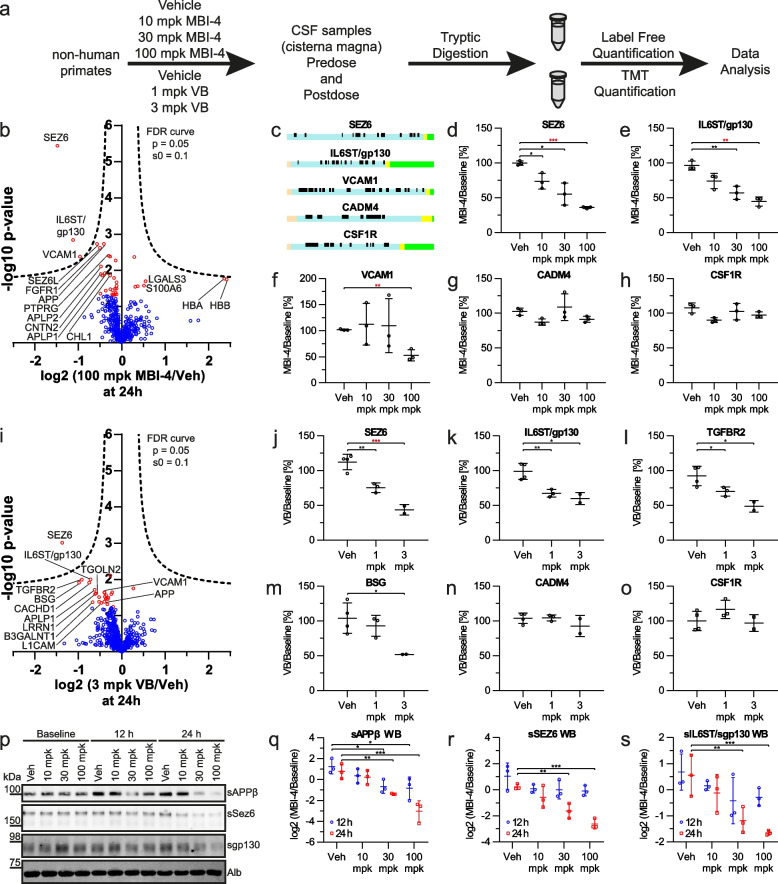
To identify in vivo-relevant BACE1 substrates, we applied pharmacoproteomics to non-human-primate cerebrospinal fluid (CSF) after acute treatment with BACE inhibitors.
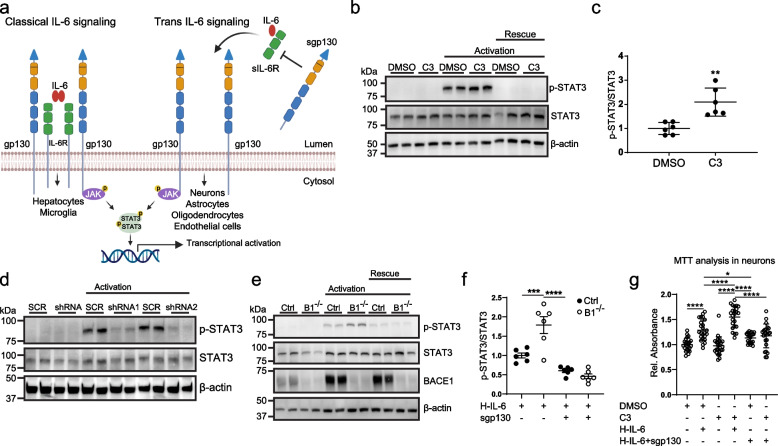
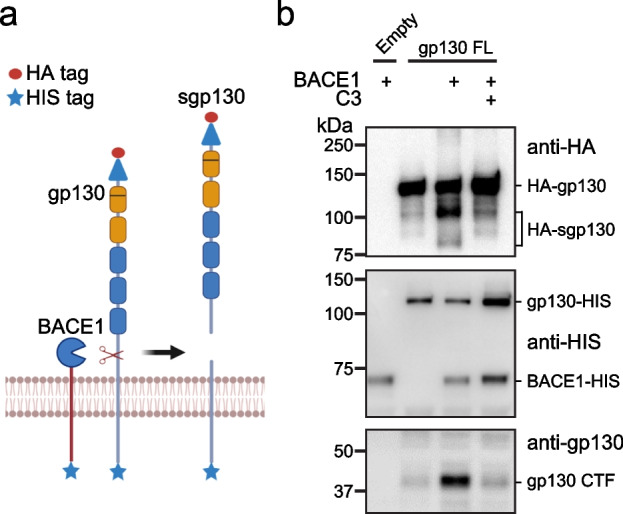
Besides SEZ6, the strongest, dose-dependent reduction was observed for the pro-inflammatory cytokine receptor gp130/IL6ST, which we establish as an in vivo BACE1 substrate. Gp130 was also reduced in human CSF from a clinical trial with a BACE inhibitor and in plasma of BACE1-deficient mice. Mechanistically, we demonstrate that BACE1 directly cleaves gp130, thereby attenuating membrane-bound gp130 and increasing soluble gp130 abundance and controlling gp130 function in neuronal IL-6 signaling and neuronal survival upon growth-factor withdrawal.
BACE1 is a new modulator of gp130 function. The BACE1-cleaved, soluble gp130 may serve as a pharmacodynamic BACE1 activity marker to reduce the occurrence of side effects of chronic BACE1 inhibition in humans.
蛋白酶 BACE1 是阿尔茨海默病的主要药物靶点,但慢性 BACE1 抑制与认知恶化无进展相关,这可能是由于对未知生理 BACE1 底物的调节所致。
为了鉴定体内相关的 BACE1 底物,我们在急性 BACE 抑制剂治疗后应用药物蛋白质组学分析非人类灵长类动物的脑脊液(CSF)。
除 SEZ6 外,最强的、剂量依赖性降低的是促炎细胞因子受体 gp130/IL6ST,我们将其确定为体内 BACE1 底物。在一项 BACE 抑制剂临床试验中,人 CSF 中的 gp130 以及 BACE1 缺陷型小鼠的血浆中也有降低。从机制上讲,我们证明 BACE1 可直接切割 gp130,从而减弱膜结合 gp130 并增加可溶性 gp130 的丰度,并控制神经元 IL-6 信号传导和生长因子撤出时神经元存活中的 gp130 功能。
BACE1 是 gp130 功能的新调节剂。BACE1 切割的可溶性 gp130 可作为药效学 BACE1 活性标志物,以减少慢性 BACE1 抑制在人类中发生副作用的可能性。