Department of Gastroenterology, Shanxi Provincial People's Hospital, Taiyuan, China.
Center for Microecological Medical Technology, Xiamen Institute of Union Respiratory Health, Xiamen, China.
Front Cell Infect Microbiol. 2023 Feb 6;13:1124256. doi: 10.3389/fcimb.2023.1124256. eCollection 2023.
Ulcerative colitis (UC) has become a global public health concern, and is in urgent need of novel therapies. Fecal microbiota transplantation (FMT) targeting gut microbiota has recently been applied to the treatment of UC. Despite its recent successes, it is still largely unknown how FMT functionally modulates the gut microbiota and improves the disease.
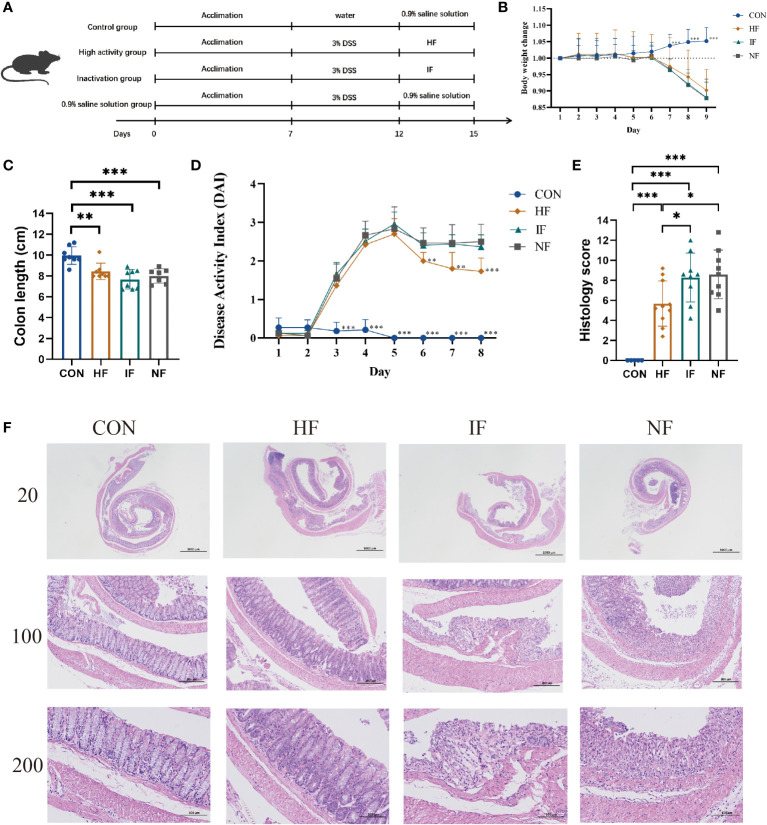
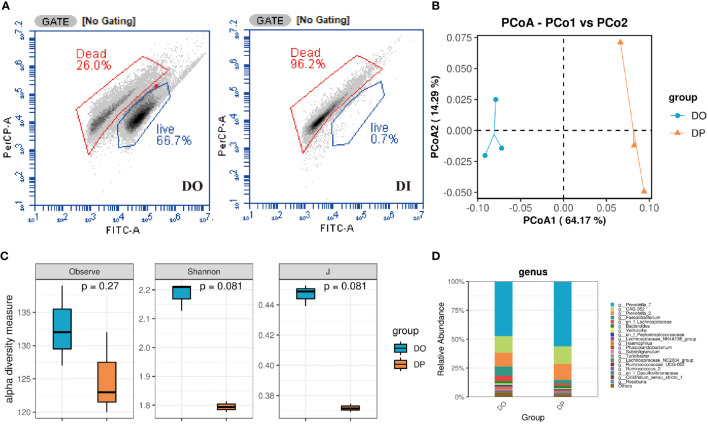
We prospectively collected fecal samples from the 40 mice (30 mice for dextran sulfate sodium (DSS)-induced, 10 for controls), followed by Propidium monoazide treatment for 16S rRNA gene sequencing. These 30 mice were divided equally into 3 groups, which were transplanted with original donor microbiota (DO), inactivated donor microbiota (DI) and saline, respectively. Subsequently, we used 16S rRNA gene sequencing to analyze the viable gut bacteria of ulcerative colitis (UC) mice and histological analysis to evaluate the effects of fecal microbiota transplantation (FMT) with viable microbiota.
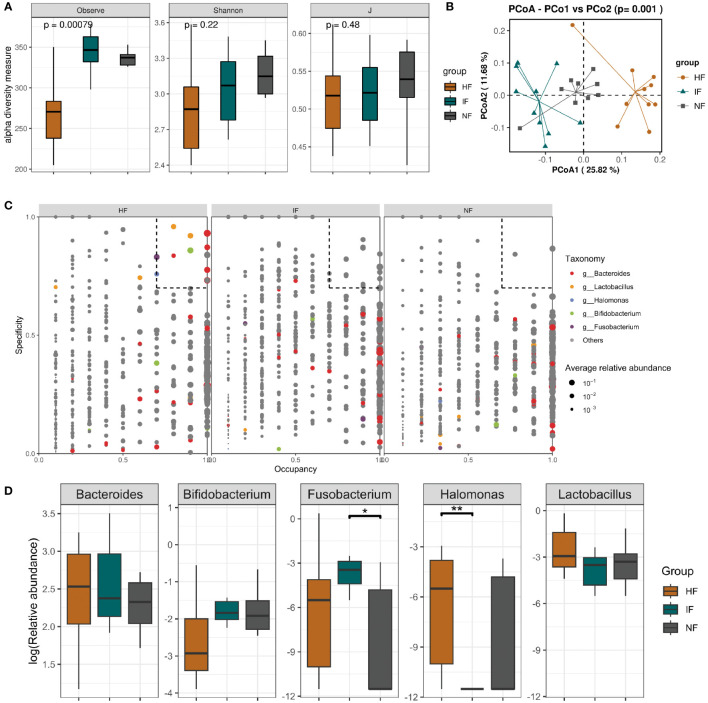
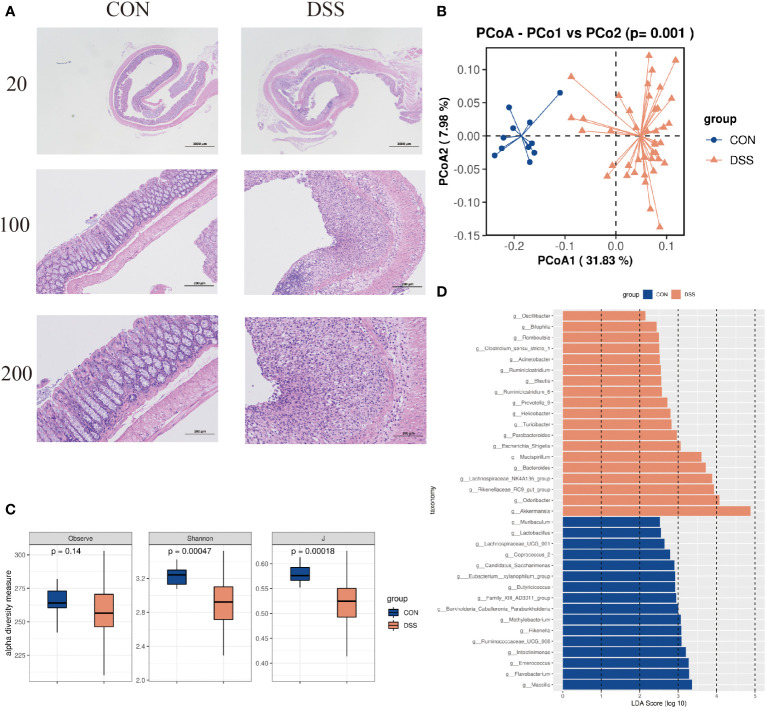
We demonstrated that the community structure of viable bacteria was significantly different from fecal bacteria based on total DNA. Furthermore, the intestinal viable microbiota and colonic mucosal structure of mice were significantly changed by DSS induction. The histological analysis showed that only the mice treated with original donor microbiota group (HF) achieved a significant improvement. Compared with inactivated donor microbiota group (IF) and saline (NF), Lactobacillus and Halomonas were significantly enriched in the HF group.
We inferred that only live bacteria from human donor reversed the histopathology and symptoms of UC in mice and altered the gut microbiota. The activity of gut microbiota in donor samples should be considered in FMT and that detailed analysis of viable microbiota is essential to understand the mechanisms by which FMT produces therapeutic effects in the future.
溃疡性结肠炎(UC)已成为全球公共卫生关注的问题,迫切需要新的治疗方法。针对肠道微生物群的粪便微生物群移植(FMT)最近已应用于 UC 的治疗。尽管最近取得了成功,但人们对 FMT 如何在功能上调节肠道微生物群并改善疾病仍然知之甚少。
我们前瞻性地从 40 只小鼠(30 只为葡聚糖硫酸钠(DSS)诱导,10 只为对照)中收集粪便样本,随后用吖啶橙处理进行 16S rRNA 基因测序。这 30 只小鼠平均分为 3 组,分别接受原始供体菌群(DO)、失活供体菌群(DI)和生理盐水移植。随后,我们使用 16S rRNA 基因测序分析溃疡性结肠炎(UC)小鼠的可存活肠道细菌,并进行组织学分析评估具有可存活微生物群的粪便微生物群移植(FMT)的效果。
我们证明了基于总 DNA,可存活细菌的群落结构与粪便细菌明显不同。此外,DSS 诱导显著改变了小鼠的肠道可存活微生物群和结肠黏膜结构。组织学分析表明,只有接受原始供体菌群治疗的小鼠(HF)实现了显著改善。与失活供体菌群组(IF)和生理盐水组(NF)相比,HF 组中乳杆菌和盐单胞菌明显富集。
我们推断只有来自人类供体的活细菌才能逆转 UC 小鼠的组织病理学和症状,并改变肠道微生物群。在 FMT 中应考虑供体样本中的微生物群活性,并且详细分析可存活微生物群对于理解 FMT 在未来产生治疗效果的机制至关重要。