Chu Yongchao, Luo Yifan, Su Boyu, Li Chao, Guo Qin, Zhang Yiwen, Liu Peixin, Chen Hongyi, Zhao Zhenhao, Zhou Zheng, Wang Yu, Jiang Chen, Sun Tao
Key Laboratory of Smart Drug Delivery (Ministry of Education), Minhang Hospital, State Key Laboratory of Medical Neurobiology and MOE Frontiers Center for Brain Science, Department of Pharmaceutics, School of Pharmacy, Research Center on Aging and Medicine, Fudan University, Shanghai 201203, China.
Acta Pharm Sin B. 2023 Jan;13(1):298-314. doi: 10.1016/j.apsb.2022.05.027. Epub 2022 May 29.
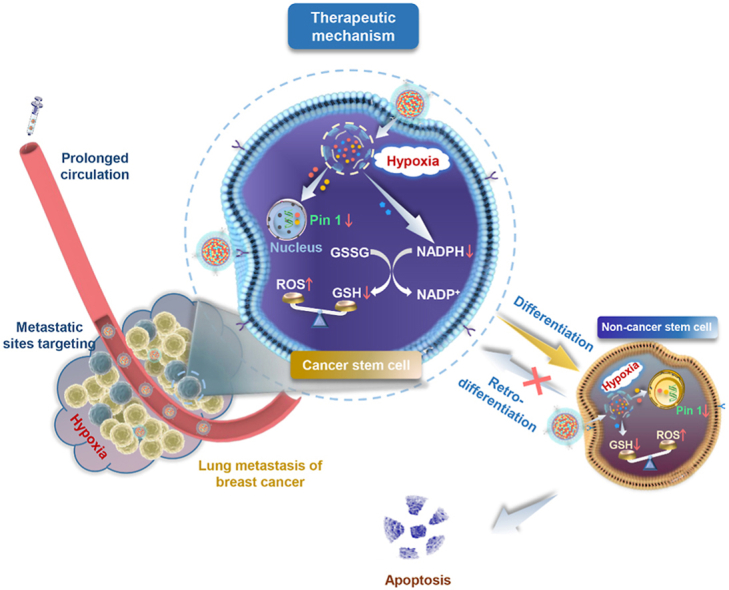
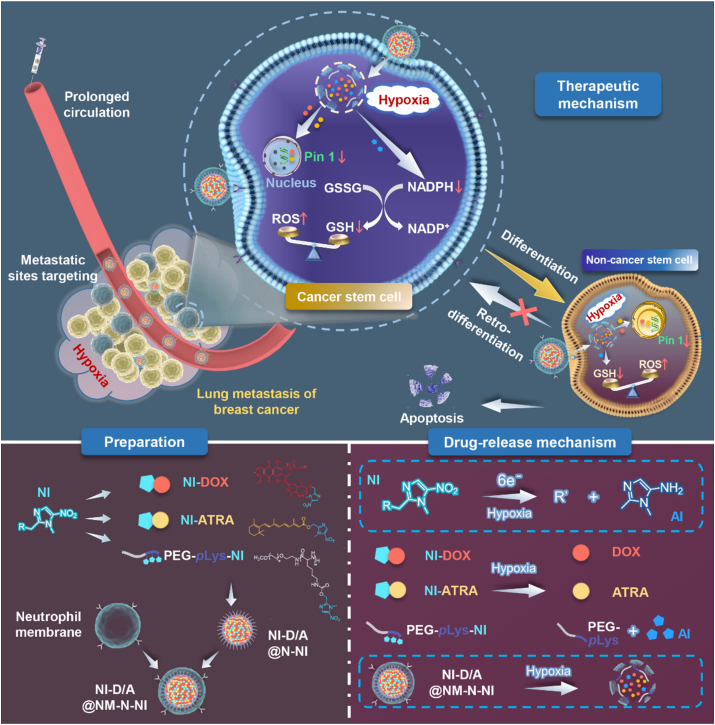
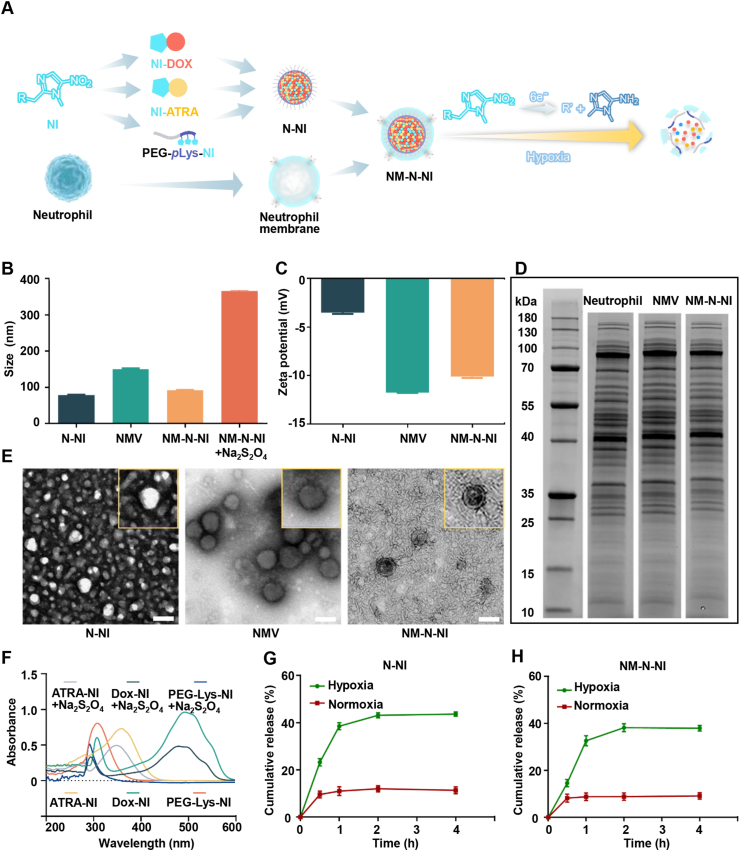
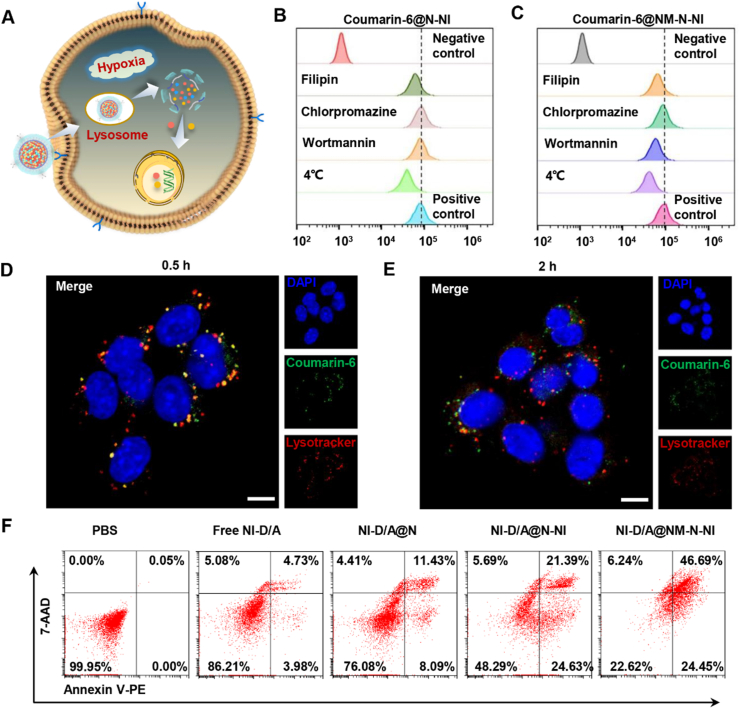
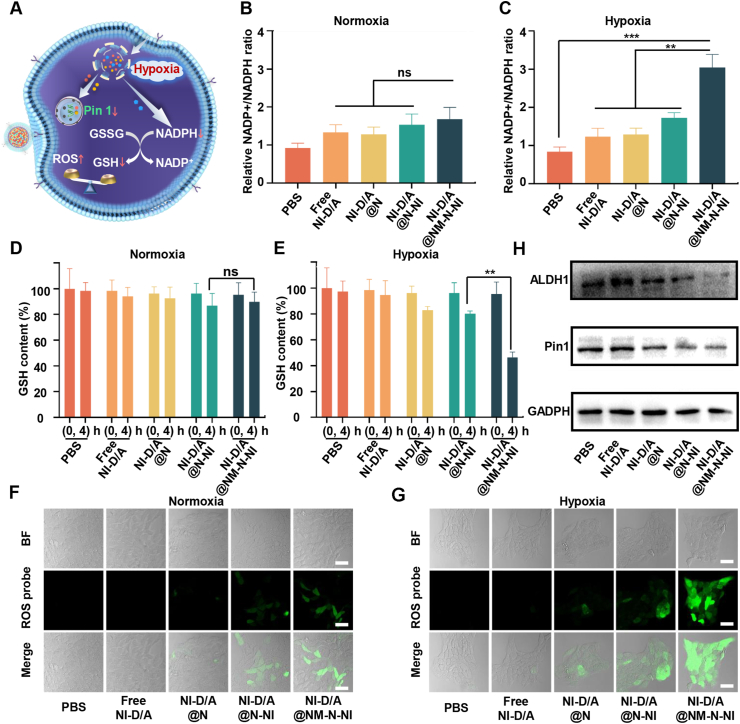
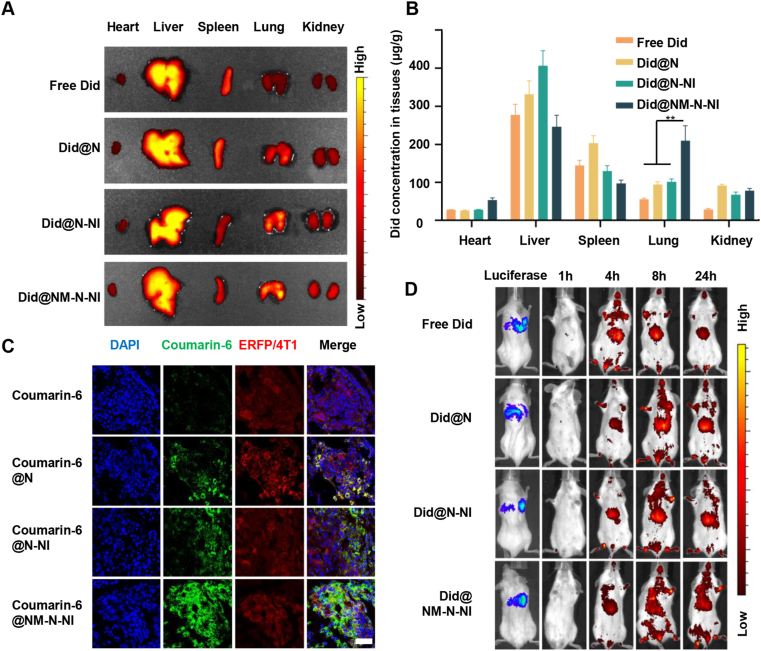
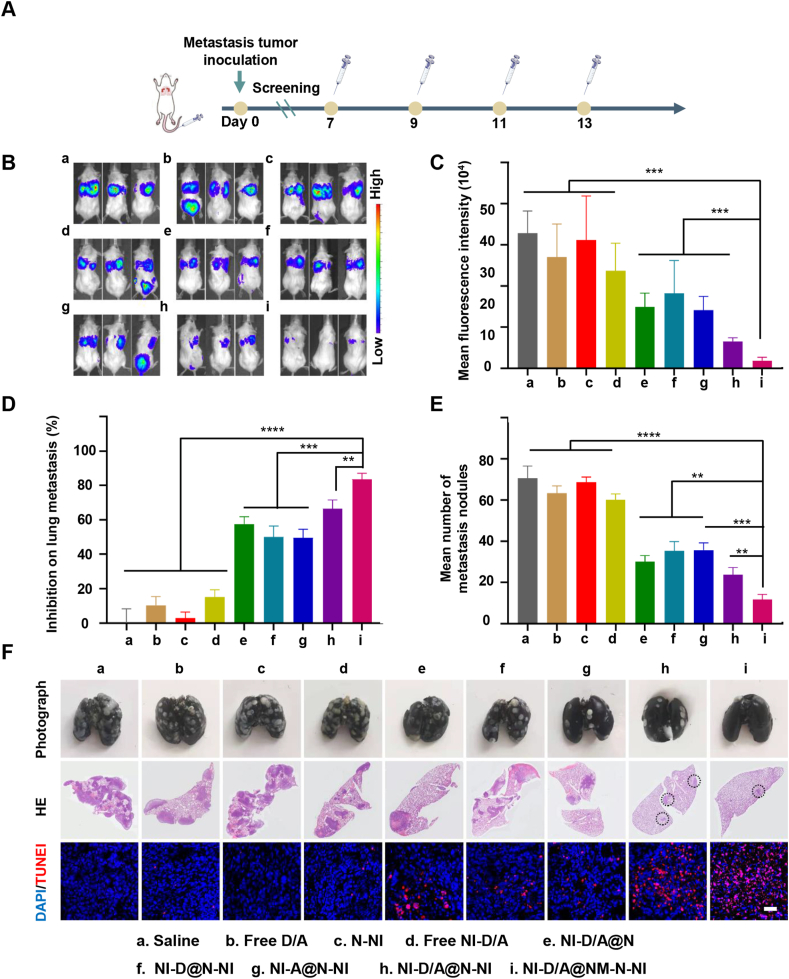
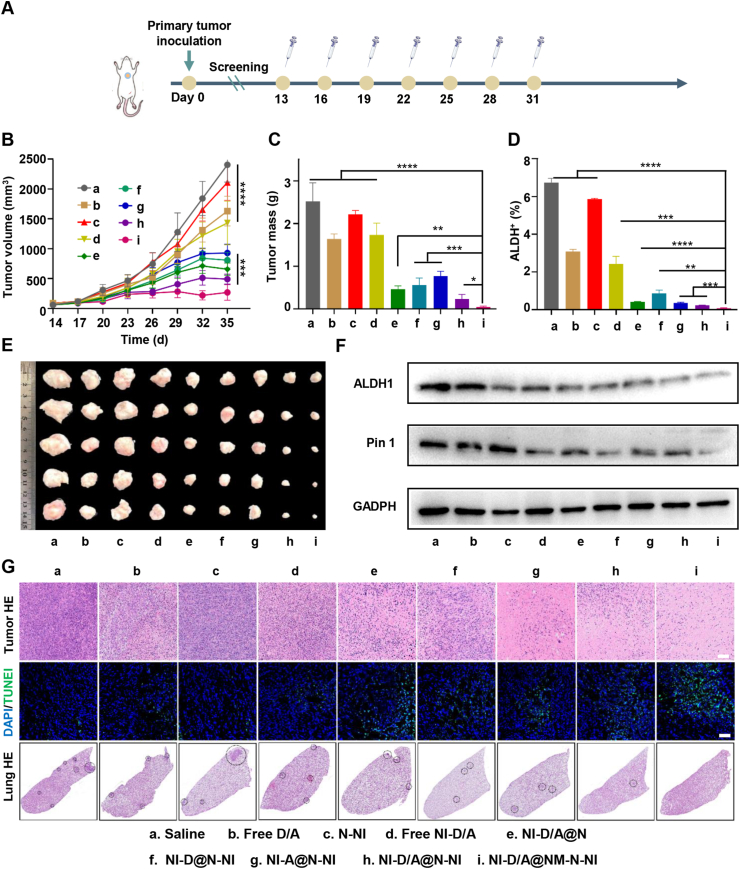
Metastasis accounts for 90% of breast cancer deaths, where the lethality could be attributed to the poor drug accumulation at the metastatic loci. The tolerance to chemotherapy induced by breast cancer stem cells (BCSCs) and their particular redox microenvironment further aggravate the therapeutic dilemma. To be specific, therapy-resistant BCSCs can differentiate into heterogeneous tumor cells constantly, and simultaneously dynamic maintenance of redox homeostasis promote tumor cells to retro-differentiate into stem-like state in response to cytotoxic chemotherapy. Herein, we develop a specifically-designed biomimic platform employing neutrophil membrane as shell to inherit a neutrophil-like tumor-targeting capability, and anchored chemotherapeutic and BCSCs-differentiating reagents with nitroimidazole (NI) to yield two hypoxia-responsive prodrugs, which could be encapsulated into a polymeric nitroimidazole core. The platform can actively target the lung metastasis sites of triple negative breast cancer (TNBC), and release the escorted drugs upon being triggered by the hypoxia microenvironment. During the responsiveness, the differentiating agent could promote transferring BCSCs into non-BCSCs, and simultaneously the nitroimidazole moieties conjugated on the polymer and prodrugs could modulate the tumor microenvironment by depleting nicotinamide adenine dinucleotide phosphate hydrogen (NADPH) and amplifying intracellular oxidative stress to prevent tumor cells retro-differentiation into BCSCs. In combination, the BCSCs differentiation and tumor microenvironment modulation synergistically could enhance the chemotherapeutic cytotoxicity, and remarkably suppress tumor growth and lung metastasis. Hopefully, this work can provide a new insight in to comprehensively treat TNBC and lung metastasis using a versatile platform.
转移导致了90%的乳腺癌死亡,其致死性可归因于转移性位点药物蓄积不佳。乳腺癌干细胞(BCSCs)诱导的化疗耐受性及其特殊的氧化还原微环境进一步加剧了治疗困境。具体而言,对治疗耐药的BCSCs可不断分化为异质性肿瘤细胞,同时氧化还原稳态的动态维持促使肿瘤细胞在细胞毒性化疗作用下逆向分化为干细胞样状态。在此,我们开发了一种特殊设计的仿生平台,以中性粒细胞膜为外壳,以继承类似中性粒细胞的肿瘤靶向能力,并将化疗药物和BCSCs分化试剂与硝基咪唑(NI)锚定,以产生两种缺氧响应前药,它们可被封装在聚合物硝基咪唑核中。该平台可主动靶向三阴性乳腺癌(TNBC)的肺转移位点,并在缺氧微环境触发时释放所护送的药物。在响应过程中,分化剂可促进BCSCs向非BCSCs转化,同时聚合物和前药上共轭的硝基咪唑部分可通过消耗烟酰胺腺嘌呤二核苷酸磷酸氢(NADPH)和放大细胞内氧化应激来调节肿瘤微环境,以防止肿瘤细胞逆向分化为BCSCs。综合起来,BCSCs分化和肿瘤微环境调节协同作用可增强化疗细胞毒性,并显著抑制肿瘤生长和肺转移。有望这项工作能为使用通用平台全面治疗TNBC和肺转移提供新的见解。