Sun Yixin, Zhao Dongyang, Wang Gang, Wang Yang, Cao Linlin, Sun Jin, Jiang Qikun, He Zhonggui
Wuya College of Innovation, Shenyang Pharmaceutical University, Shenyang 110016, China.
School of Pharmacy, Guangxi University of Chinese Medicine, Nanning 530200, China.
Acta Pharm Sin B. 2020 Aug;10(8):1382-1396. doi: 10.1016/j.apsb.2020.01.004. Epub 2020 Jan 13.
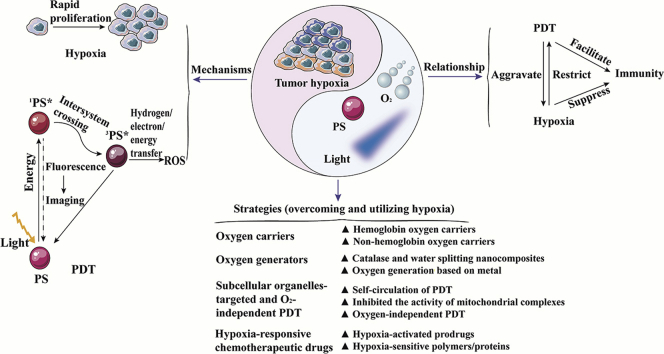
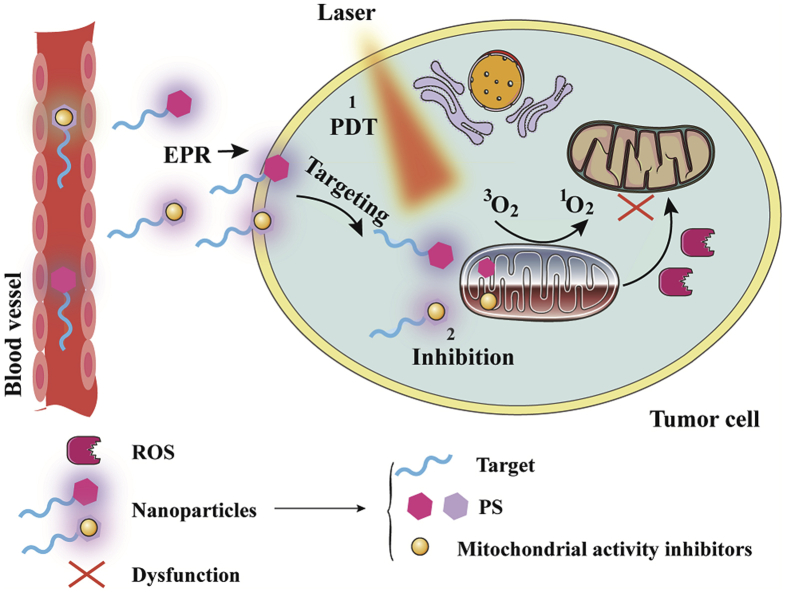
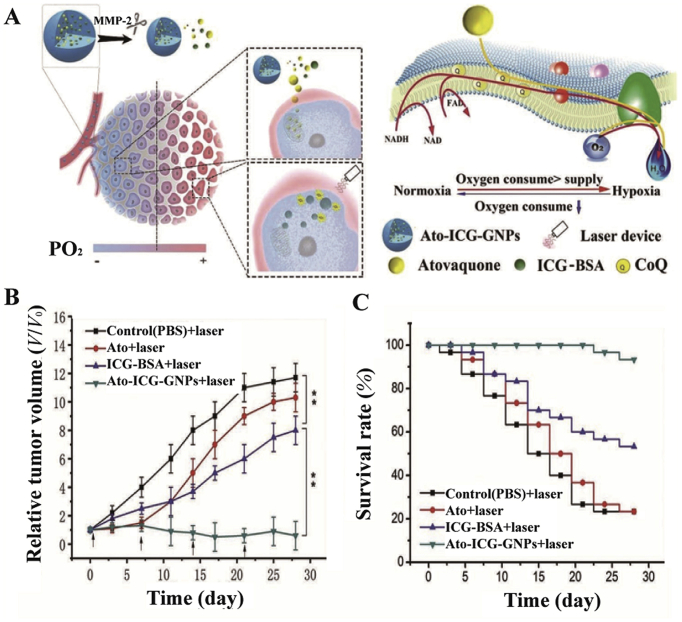
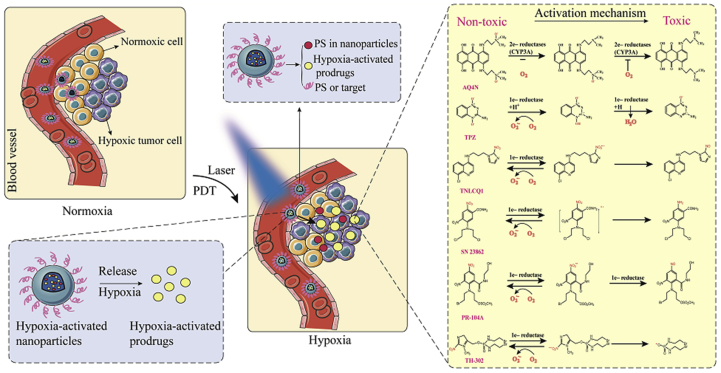
Hypoxia, a salient feature of most solid tumors, confers invasiveness and resistance to the tumor cells. Oxygen-consumption photodynamic therapy (PDT) suffers from the undesirable impediment of local hypoxia in tumors. Moreover, PDT could further worsen hypoxia. Therefore, developing effective strategies for manipulating hypoxia and improving the effectiveness of PDT has been a focus on antitumor treatment. In this review, the mechanism and relationship of tumor hypoxia and PDT are discussed. Moreover, we highlight recent trends in the field of nanomedicines to modulate hypoxia for enhancing PDT, such as oxygen supply systems, down-regulation of oxygen consumption and hypoxia utilization. Finally, the opportunities and challenges are put forward to facilitate the development and clinical transformation of PDT.
缺氧是大多数实体瘤的一个显著特征,赋予肿瘤细胞侵袭性和耐药性。耗氧光动力疗法(PDT)受到肿瘤局部缺氧这一不良阻碍的影响。此外,PDT会进一步加重缺氧。因此,开发有效策略来调控缺氧并提高PDT的疗效一直是抗肿瘤治疗的重点。在本综述中,我们讨论了肿瘤缺氧与PDT的机制及关系。此外,我们强调了纳米药物领域中为增强PDT而调节缺氧的最新趋势,如氧气供应系统、耗氧下调和缺氧利用。最后,提出了机遇与挑战,以促进PDT的发展和临床转化。