Hani Hamed, Souchereau Reid, Kachlan Anas, Harris Halle, Dufour Jonathan, Aurand Alexander, Mageswaran Prasath, Hyer Madison, Marras William
Spine Research Institute, The Ohio State University, USA.
Department of Integrated Systems Engineering, The Ohio State University, USA.
Adv Complement Altern Med. 2022;7(2):672-683. doi: 10.31031/acam.2022.07.000660. Epub 2022 Jul 6.
Low back pain is the leading cause of disability worldwide. Subjective assessments are often used to assess extent of functional limitations and treatment response. However, these measures have poor sensitivity and are influenced by the patient's perception of their condition. Currently, there are no objective tools to effectively assess the extent of an individual's functional disability and inform clinical decision-making.
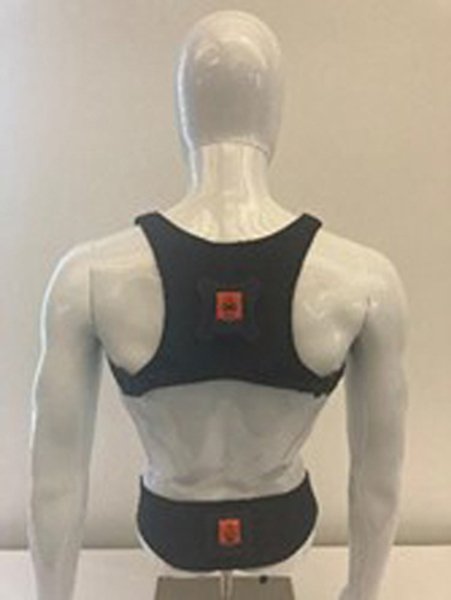
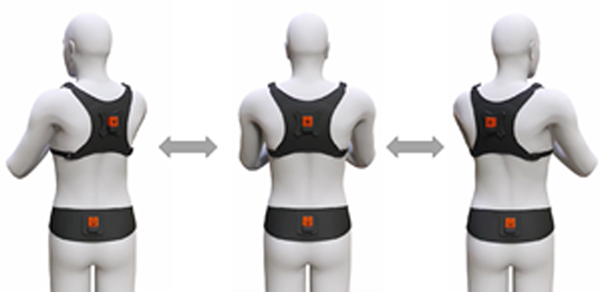
The purpose of this study was to evaluate the reliability of a wearable motion system based on Inertial Measurement Unit (IMU) sensors for use in quantifying low back function.
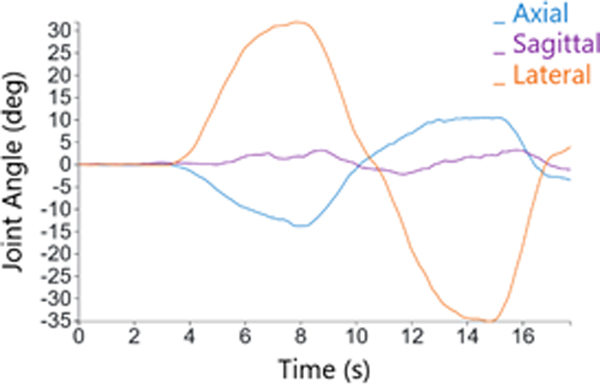
Low back motion assessments were conducted by 3 novice raters on 20 participants using an IMU-based motion system. These assessments were conducted over 3 days with 2 days of rest in between tests. A total of 37 kinematic parameters were extracted from the low back motion assessment in all three anatomical planes. Intra-rater and inter-rater reliability were assessed using Intraclass Correlation Coefficients (ICCs) calculated from repeated measures, mixed-effects regression models.
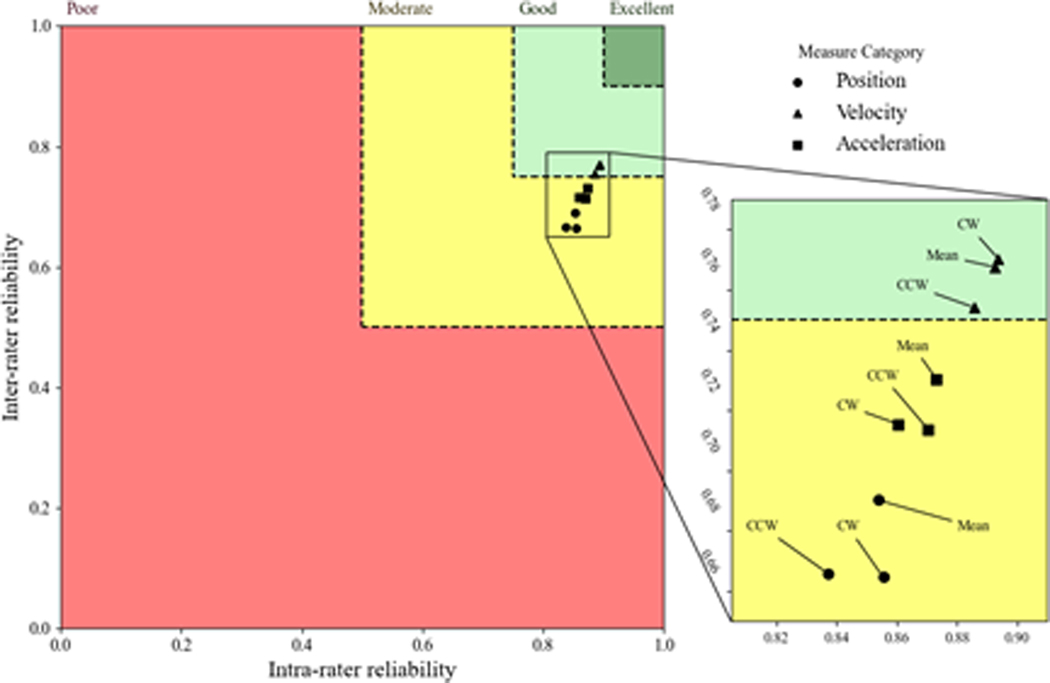
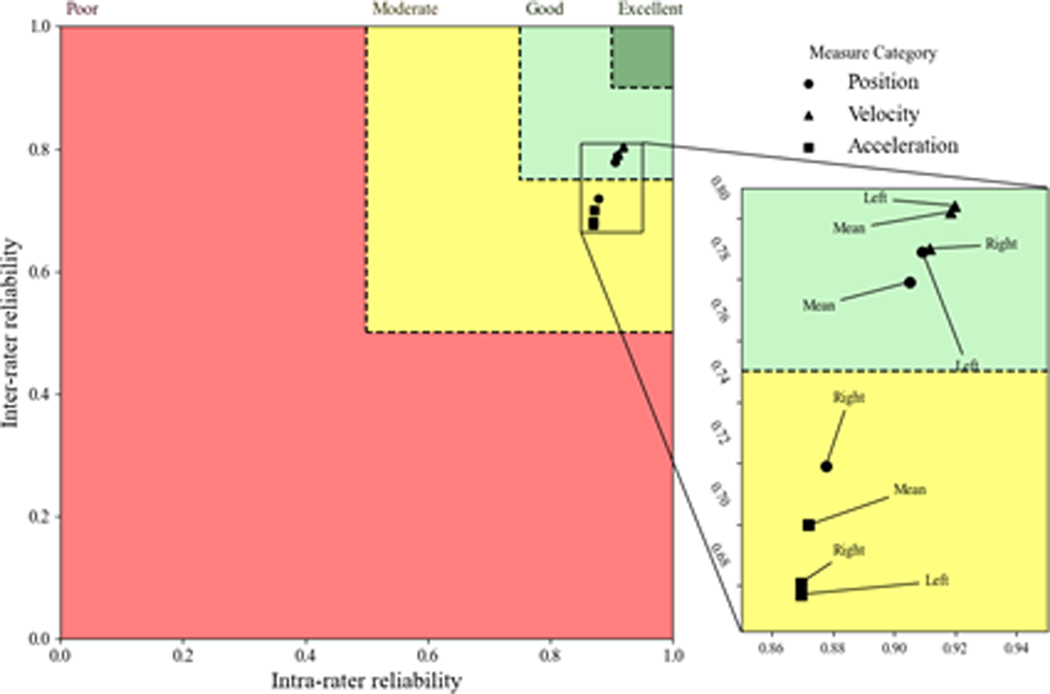
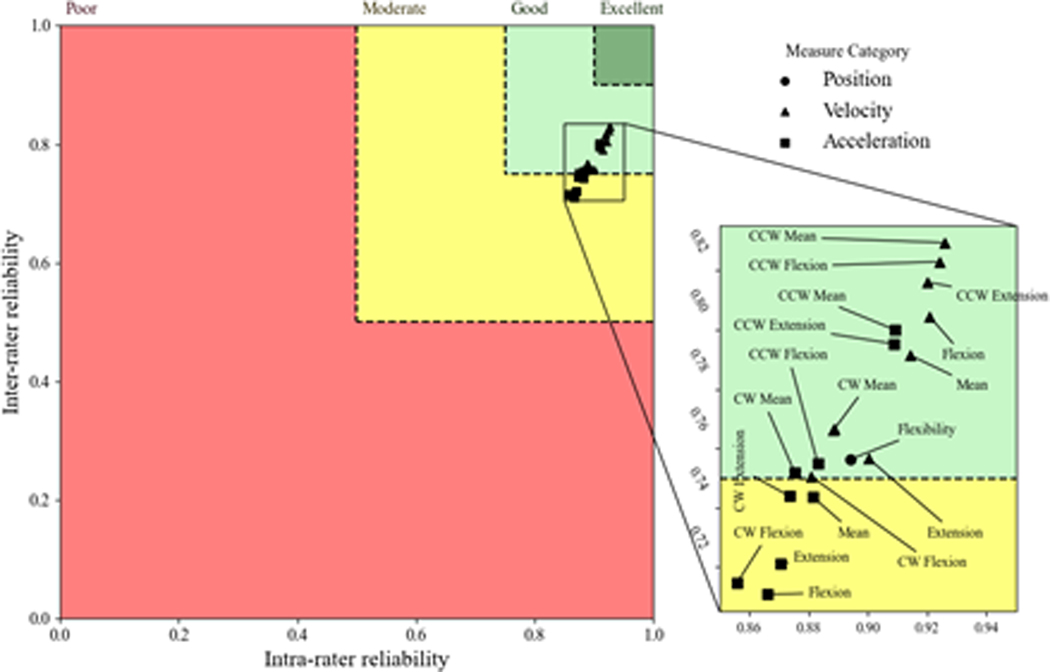
Lumbar spine-specific kinematic parameters showed moderate to excellent reliability across all kinematic parameters. The ICC values ranged between 0.84-0.93 for intra-rater reliability and 0.66 - 0.83 for inter-rater reliability. In particular, velocity measures showed higher reliabilities than other kinematic variables.
The IMU-based wearable motion system is a valid and reliable tool to objectively assess low back function. This study demonstrated that lumbar spine-specific kinematic metrics have the potential to provide good, repeatable metrics to assess clinical function over time.
腰痛是全球致残的主要原因。主观评估常用于评估功能受限程度和治疗反应。然而,这些措施敏感性较差,且受患者对自身病情认知的影响。目前,尚无客观工具能有效评估个体功能残疾程度并为临床决策提供依据。
本研究旨在评估基于惯性测量单元(IMU)传感器的可穿戴运动系统在量化腰椎功能方面的可靠性。
3名新手评估者使用基于IMU的运动系统对20名参与者进行腰椎运动评估。这些评估在3天内进行,测试之间休息2天。从所有三个解剖平面的腰椎运动评估中总共提取了37个运动学参数。使用从重复测量、混合效应回归模型计算的组内相关系数(ICC)评估评估者内和评估者间的可靠性。
腰椎特定运动学参数在所有运动学参数中显示出中度至极好的可靠性。评估者内可靠性的ICC值在0.84 - 0.93之间,评估者间可靠性的ICC值在0.66 - 0.83之间。特别是,速度测量显示出比其他运动学变量更高的可靠性。
基于IMU的可穿戴运动系统是客观评估腰椎功能的有效且可靠的工具。本研究表明,腰椎特定运动学指标有可能提供良好的、可重复的指标,以长期评估临床功能。