State Key Laboratory of Oral Diseases, National Clinical Research Center for Oral Diseases, Chengdu, Sichuan, China.
Front Cell Infect Microbiol. 2023 Feb 1;13:1093967. doi: 10.3389/fcimb.2023.1093967. eCollection 2023.
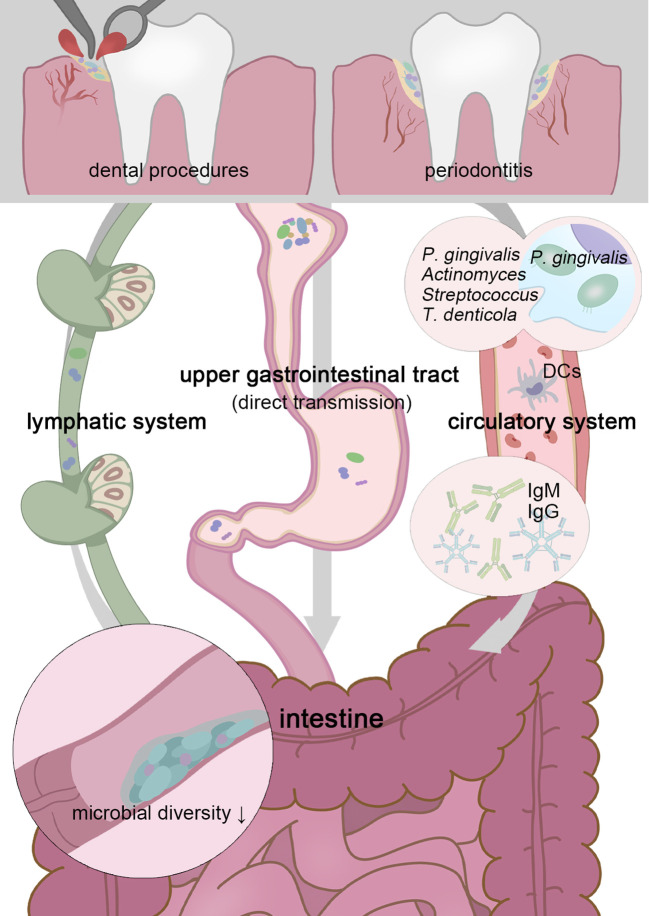
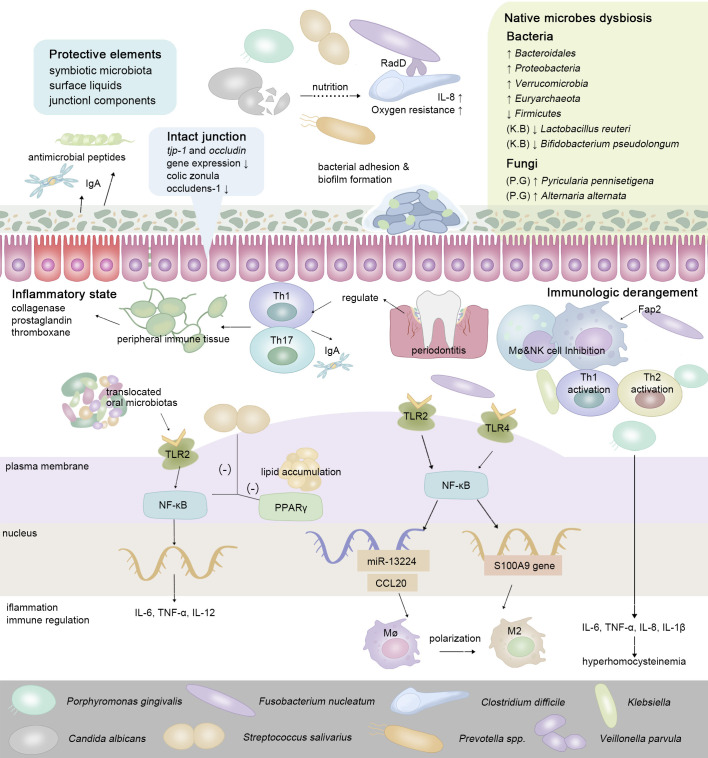
Over the past decade, the association between oral health, intestinal microbiota, and systemic diseases has been further validated. Some oral microbial species have been isolated from pathological intestine mucosa or feces and identified as biomarkers for intestinal diseases. A small proportion of oral microbiome passes through or colonizes the lower gastrointestinal tract, even in healthy individuals. Opportunistic pathogens from the oral cavity may expand and participate in the occurrence and progression of intestinal diseases when the anatomical barrier is disrupted. These disruptors interact with the intestinal microbiota, disturbing indigenous microorganisms, and mucosal barriers through direct colonization, blood circulation, or derived metabolite pathways. While interacting with the host's immune system, oral-derived pathogens stimulate inflammation responses and guide the transition of the intestinal microenvironment from a healthy state to a pre-disease state. Therefore, the oral-gut microbiome axis sheds light on new clinical therapy options, and gastrointestinal tract ecology balance necessitates simultaneous consideration of both oral and gut microbiomes. This review summarizes possible routes of oral microbes entering the intestine and the effects of certain oral bacteria on intestinal microbiota and the host's immune responses.
在过去的十年中,口腔健康、肠道微生物群和全身性疾病之间的关联得到了进一步的验证。一些口腔微生物物种已从病理性肠黏膜或粪便中分离出来,并被鉴定为肠道疾病的生物标志物。一小部分口腔微生物组通过或定植于下消化道,即使在健康个体中也是如此。当解剖屏障被破坏时,口腔中的机会性病原体可能会扩张并参与肠道疾病的发生和发展。这些破坏者通过直接定植、血液循环或衍生代谢物途径与肠道微生物群相互作用,扰乱内源性微生物和黏膜屏障。在与宿主免疫系统相互作用的同时,口腔来源的病原体刺激炎症反应,并引导肠道微环境从健康状态向疾病前状态转变。因此,口腔-肠道微生物组轴为新的临床治疗选择提供了思路,而胃肠道生态平衡需要同时考虑口腔和肠道微生物组。本综述总结了口腔微生物进入肠道的可能途径,以及某些口腔细菌对肠道微生物群和宿主免疫反应的影响。