Lin Lan, Zhang Jianqiong
Department of Bioengineering, Medical School, Southeast University, Nanjing, 210009, People's Republic of China.
Key Laboratory of Developmental Genes and Human Disease, Ministry of Education, Department of Microbiology and Immunology, Medical School, Southeast University, Nanjing, 210009, People's Republic of China.
BMC Immunol. 2017 Jan 6;18(1):2. doi: 10.1186/s12865-016-0187-3.
A vast diversity of microbes colonizes in the human gastrointestinal tract, referred to intestinal microbiota. Microbiota and products thereof are indispensable for shaping the development and function of host innate immune system, thereby exerting multifaceted impacts in gut health.
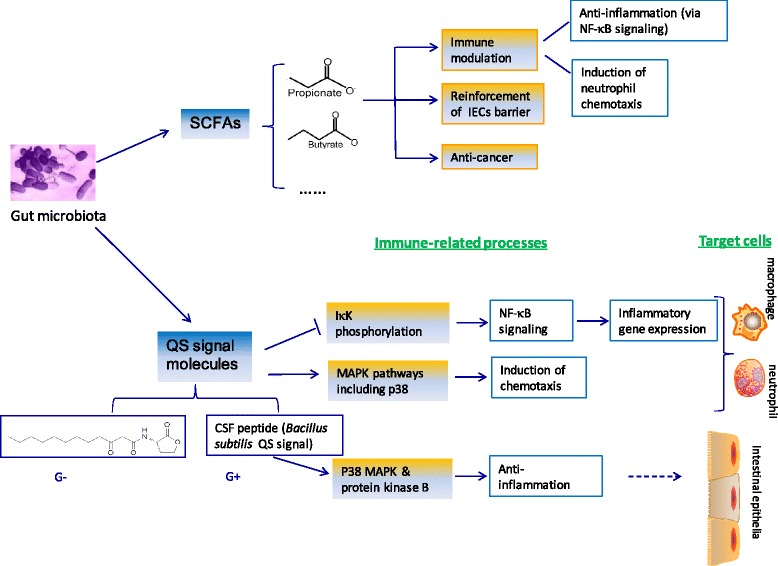
This paper reviews the effects on immunity of gut microbe-derived nucleic acids, and gut microbial metabolites, as well as the involvement of commensals in the gut homeostasis. We focus on the recent findings with an intention to illuminate the mechanisms by which the microbiota and products thereof are interacting with host immunity, as well as to scrutinize imbalanced gut microbiota (dysbiosis) which lead to autoimmune disorders including inflammatory bowel disease (IBD), Type 1 diabetes (T1D) and systemic immune syndromes such as rheumatoid arthritis (RA).
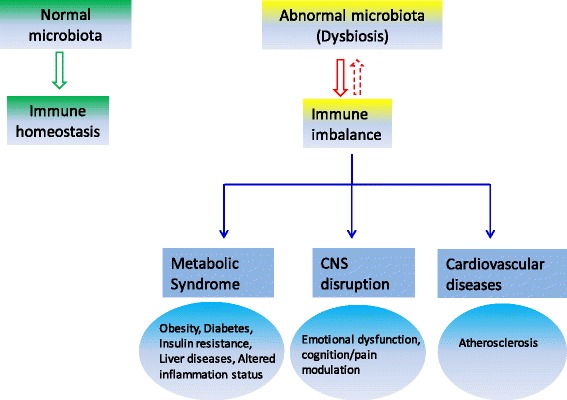
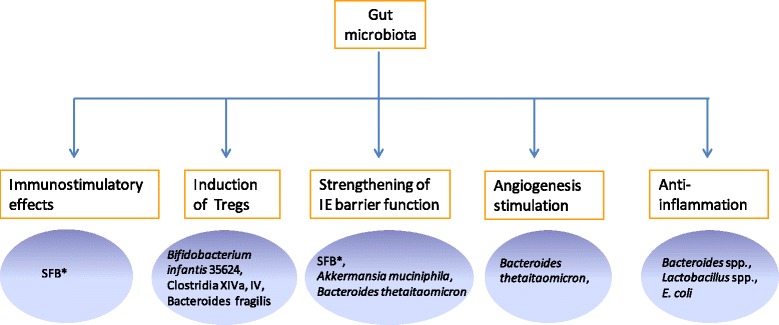
In addition to their well-recognized benefits in the gut such as occupation of ecological niches and competition with pathogens, commensal bacteria have been shown to strengthen the gut barrier and to exert immunomodulatory actions within the gut and beyond. It has been realized that impaired intestinal microbiota not only contribute to gut diseases but also are inextricably linked to metabolic disorders and even brain dysfunction.
A better understanding of the mutual interactions of the microbiota and host immune system, would shed light on our endeavors of disease prevention and broaden the path to our discovery of immune intervention targets for disease treatment.
大量微生物定殖于人类胃肠道,即肠道微生物群。微生物群及其产物对于塑造宿主固有免疫系统的发育和功能不可或缺,从而对肠道健康产生多方面影响。
本文综述了肠道微生物衍生核酸和肠道微生物代谢产物对免疫的影响,以及共生菌在肠道稳态中的作用。我们聚焦于近期研究结果,旨在阐明微生物群及其产物与宿主免疫相互作用的机制,并审视导致自身免疫性疾病(包括炎症性肠病(IBD)、1型糖尿病(T1D))以及类风湿关节炎(RA)等全身性免疫综合征的肠道微生物群失衡(生态失调)情况。
除了在肠道中占据生态位和与病原体竞争等公认益处外,共生菌还被证明可强化肠道屏障,并在肠道内外发挥免疫调节作用。现已认识到,肠道微生物群受损不仅会导致肠道疾病,还与代谢紊乱甚至脑功能障碍密切相关。
更好地理解微生物群与宿主免疫系统的相互作用,将有助于我们开展疾病预防工作,并拓宽发现疾病治疗免疫干预靶点的途径。