Mboya Innocent B, Mamseri Redempta, Leyaro Beatrice J, George Johnston, Msuya Sia E, Mgongo Melina
Department of Epidemiology and Biostatistics, Institute of Public Health, Kilimanjaro Christian Medical University College, Moshi, 255, Tanzania.
School of Mathematics, Statistics & Computer Science, University of Kwazulu-Natal, Pietermaritzburg, Kwazulu-Natal, Private Bag X01, Scottsville 3209, South Africa.
F1000Res. 2020 Sep 7;9:1102. doi: 10.12688/f1000research.24707.3. eCollection 2020.
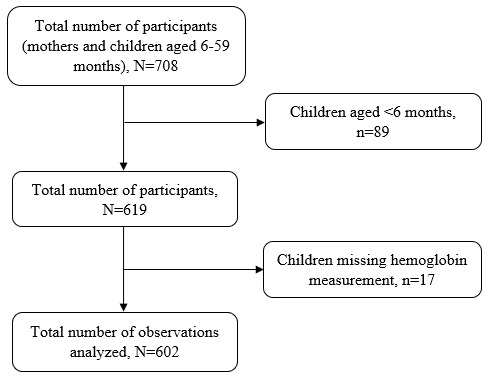
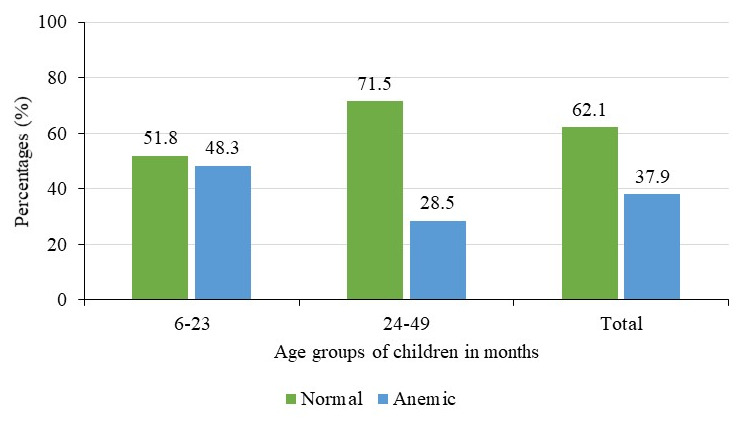
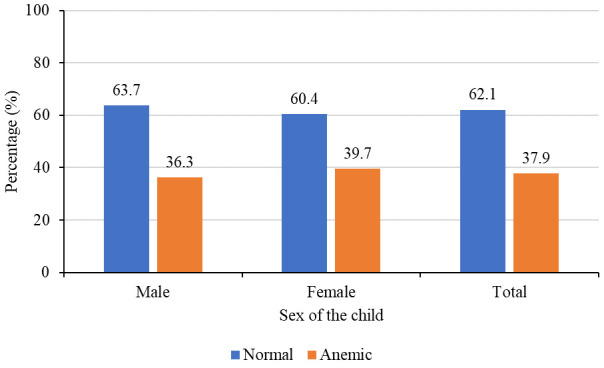
Anemia is a severe public health problem affecting more than half of children under five years of age in low-, middle- and high-income countries. The study aimed to determine the prevalence and factors associated with anemia among children under five years of age in northern Tanzania. This community-based cross-sectional study was conducted in Rombo district, Kilimanjaro region, northern Tanzania, in April 2016. Multistage sampling technique was used to select a total of 602 consenting mothers and their children aged 6-59 months and interviewed using a questionnaire. Data were analyzed using Stata version 15.1. We used generalized linear models (binomial family and logit link function) with a robust variance estimator to determine factors associated with anemia. Prevalence of anemia was 37.9%, and it was significantly higher among children aged 6-23 months (48.3%) compared to those aged 24-59 months (28.5%). There were no significant differences in anemia prevalence by sex of the child. Adjusted for other factors, children aged 6-23 months had over two times higher odds of being anemic (OR=2.47, 95% CI 1.73, 3.53, p<0.001) compared to those aged 24-59 months. No significant association was found between maternal and nutritional characteristics with anemia among children in this study. Prevalence of anemia was lower than the national and regional estimates, and it still constitutes a significant public health problem, especially among children aged 6-23 months. The study recommends iron supplementation, food fortification, dietary diversification, and management of childhood illnesses interventions for mothers and children under two years.
贫血是一个严重的公共卫生问题,在低收入、中等收入和高收入国家,影响着超过半数的五岁以下儿童。该研究旨在确定坦桑尼亚北部五岁以下儿童贫血的患病率及其相关因素。这项基于社区的横断面研究于2016年4月在坦桑尼亚北部乞力马扎罗地区的隆博区开展。采用多阶段抽样技术,共选取了602名同意参与的母亲及其6至59个月大的孩子,并通过问卷调查进行访谈。数据使用Stata 15.1版本进行分析。我们使用具有稳健方差估计器的广义线性模型(二项式族和logit链接函数)来确定与贫血相关的因素。贫血患病率为37.9%,6至23个月大的儿童(48.3%)的患病率显著高于24至59个月大的儿童(28.5%)。儿童贫血患病率在性别上无显著差异。在对其他因素进行调整后,6至23个月大的儿童贫血几率是24至59个月大儿童的两倍多(OR=2.47,95% CI 1.73,3.53,p<0.001)。在本研究中,未发现母亲和营养特征与儿童贫血之间存在显著关联。贫血患病率低于国家和地区估计值,但仍是一个重大的公共卫生问题,尤其是在6至23个月大的儿童中。该研究建议对母亲和两岁以下儿童进行铁补充、食品强化、饮食多样化以及儿童疾病管理干预。