Nephrology Division, Department of Medicine, and.
Endocrine Unit, Department of Medicine, Massachusetts General Hospital, Boston, Massachusetts, USA.
J Clin Invest. 2023 Apr 17;133(8):e164610. doi: 10.1172/JCI164610.
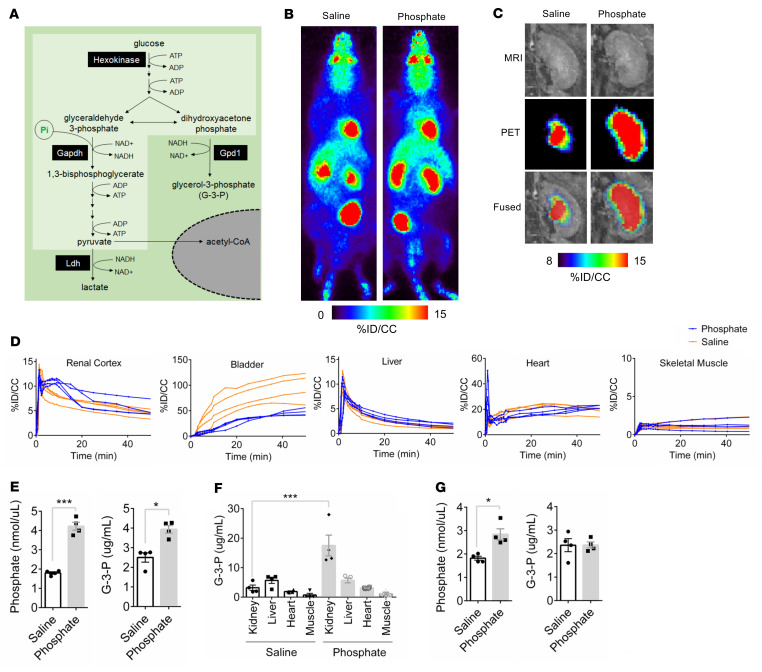
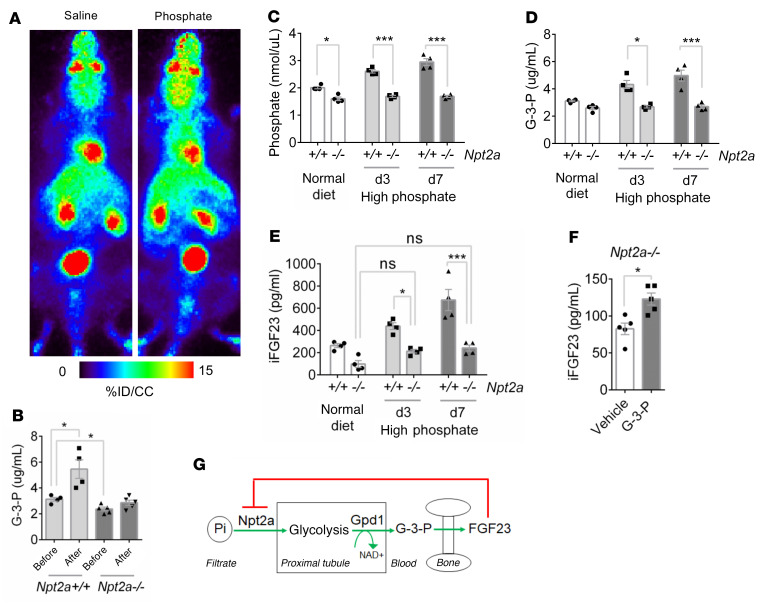
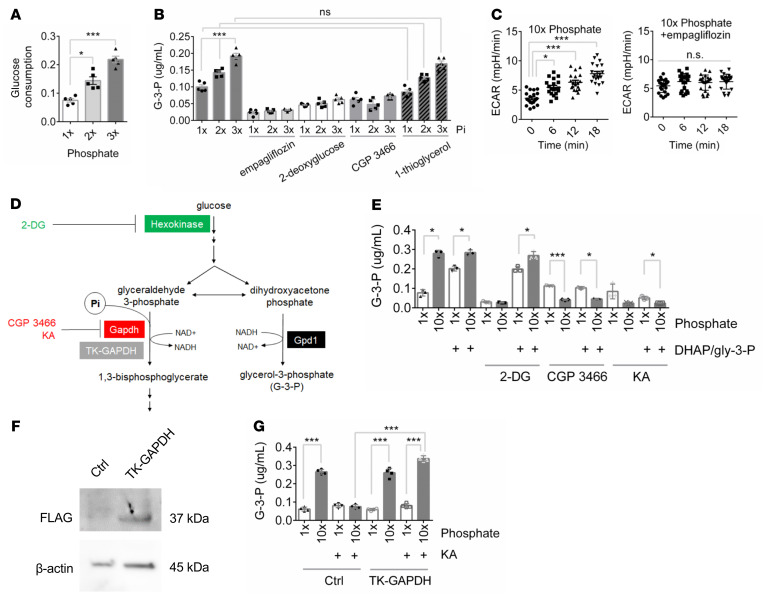
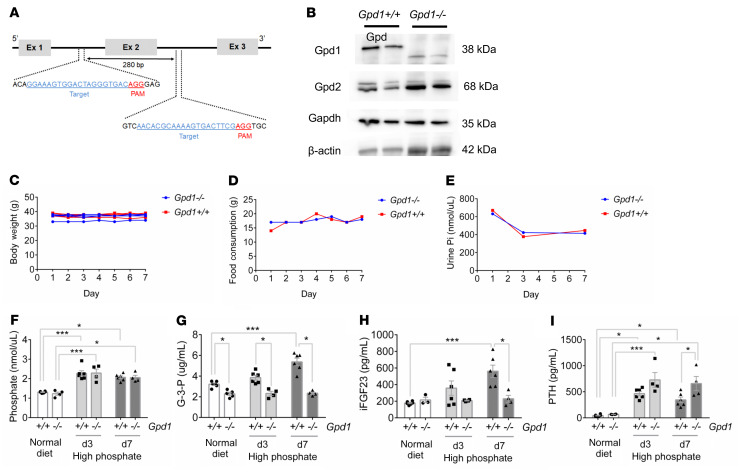
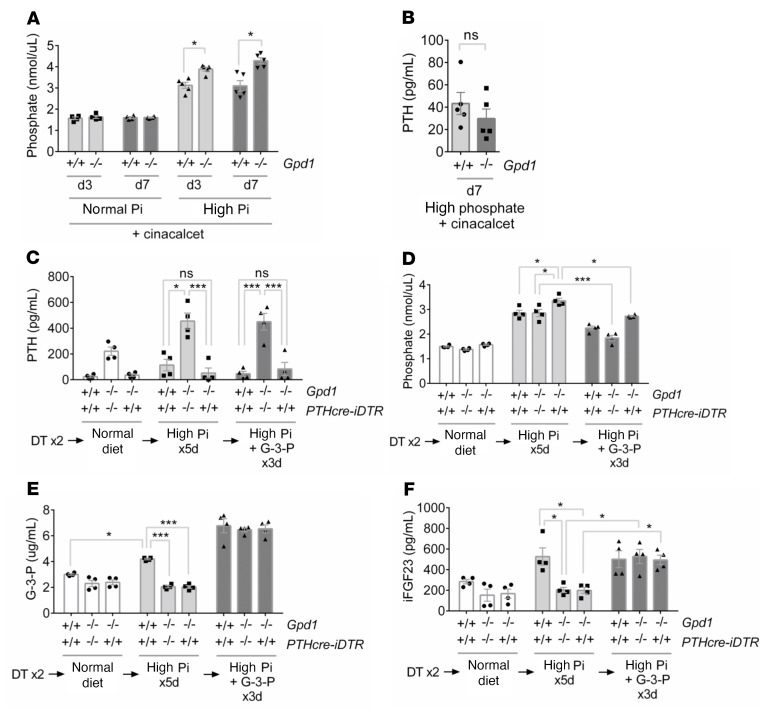
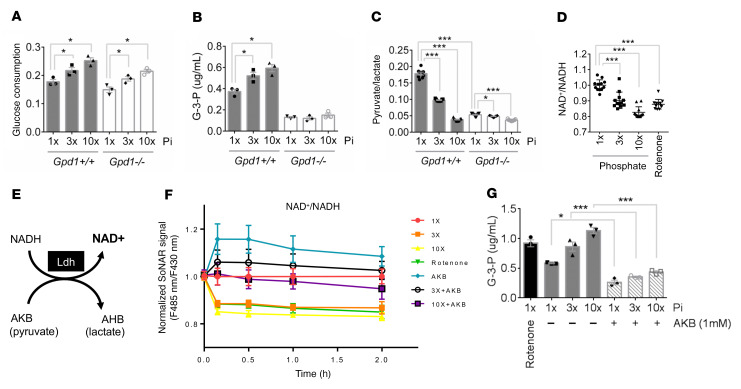
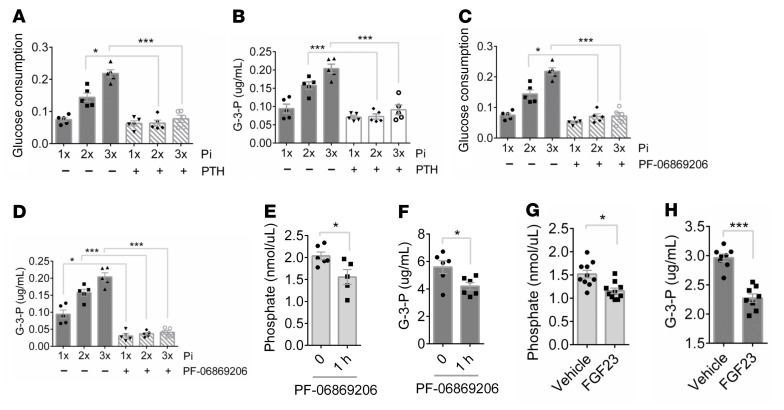
How phosphate levels are detected in mammals is unknown. The bone-derived hormone fibroblast growth factor 23 (FGF23) lowers blood phosphate levels by reducing kidney phosphate reabsorption and 1,25(OH)2D production, but phosphate does not directly stimulate bone FGF23 expression. Using PET scanning and LC-MS, we found that phosphate increases kidney-specific glycolysis and synthesis of glycerol-3-phosphate (G-3-P), which then circulates to bone to trigger FGF23 production. Further, we found that G-3-P dehydrogenase 1 (Gpd1), a cytosolic enzyme that synthesizes G-3-P and oxidizes NADH to NAD+, is required for phosphate-stimulated G-3-P and FGF23 production and prevention of hyperphosphatemia. In proximal tubule cells, we found that phosphate availability is substrate-limiting for glycolysis and G-3-P production and that increased glycolysis and Gpd1 activity are coupled through cytosolic NAD+ recycling. Finally, we show that the type II sodium-dependent phosphate cotransporter Npt2a, which is primarily expressed in the proximal tubule, conferred kidney specificity to phosphate-stimulated G-3-P production. Importantly, exogenous G-3-P stimulated FGF23 production when Npt2a or Gpd1 were absent, confirming that it was the key circulating factor downstream of glycolytic phosphate sensing in the kidney. Together, these findings place glycolysis at the nexus of mineral and energy metabolism and identify a kidney-bone feedback loop that controls phosphate homeostasis.
目前尚不清楚哺乳动物如何检测磷酸盐水平。骨源激素成纤维细胞生长因子 23(FGF23)通过降低肾脏磷酸盐重吸收和 1,25(OH)2D 的产生来降低血液磷酸盐水平,但磷酸盐不会直接刺激骨 FGF23 的表达。通过 PET 扫描和 LC-MS,我们发现磷酸盐增加了肾脏特异性糖酵解和甘油-3-磷酸(G-3-P)的合成,然后循环到骨骼以触发 FGF23 的产生。此外,我们发现甘油-3-磷酸脱氢酶 1(Gpd1),一种合成 G-3-P 并将 NADH 氧化为 NAD+的细胞质酶,是磷酸盐刺激 G-3-P 和 FGF23 产生以及预防高磷酸盐血症所必需的。在近端肾小管细胞中,我们发现磷酸盐的可用性是糖酵解和 G-3-P 产生的底物限制因素,并且增加的糖酵解和 Gpd1 活性通过细胞质 NAD+ 循环偶联。最后,我们表明主要在近端小管中表达的 II 型钠依赖性磷酸盐协同转运蛋白 Npt2a 赋予了磷酸盐刺激的 G-3-P 产生的肾脏特异性。重要的是,当 Npt2a 或 Gpd1 缺失时,外源性 G-3-P 刺激 FGF23 的产生,这证实了它是肾脏糖酵解磷酸盐感应下游的关键循环因子。总之,这些发现将糖酵解置于矿物质和能量代谢的交汇点,并确定了控制磷酸盐稳态的肾脏-骨骼反馈回路。